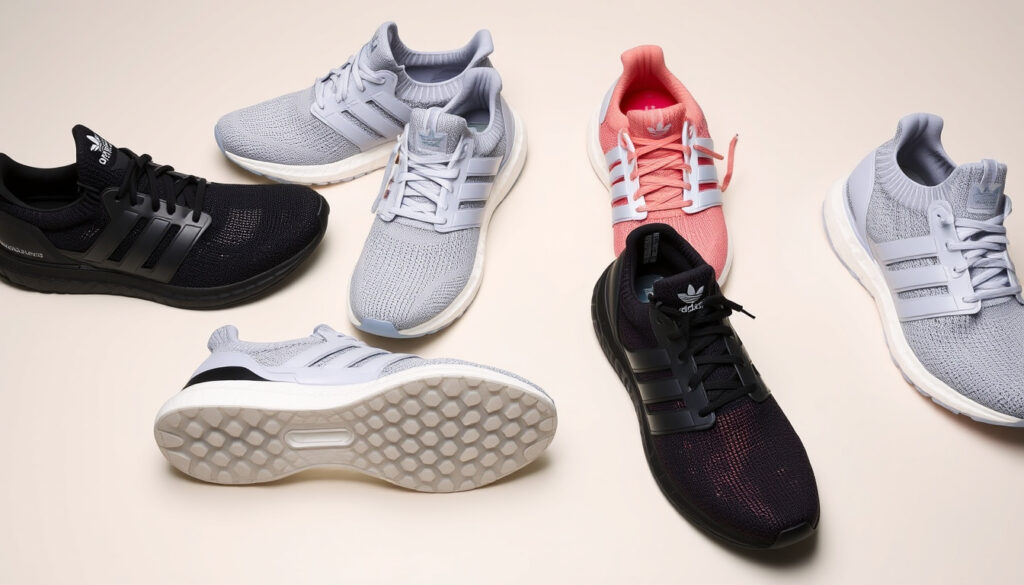
Adidas Shoes Guide: Styles, Tech & Buying Tips
Adidas shoes have crossed from performance gear to cultural icon, but that crossover didn’t happen by accident—it’s the result of engineering choices that actually matter when you buy. This guide sorts through the signature technologies, the best models for women and men, and what distinguishes a smart purchase from a mistake.
Founded: 1949 ·
Headquarters: Herzogenaurach, Germany ·
Key Technologies: Boost, Primeknit, 4D ·
Popular Series: Ultraboost, NMD, Superstar ·
Market Position: Second-largest sportswear brand globally ·
Sustainability Initiative: Parley Ocean Plastic
Quick snapshot
- Adidas was founded in 1949 (adidas Group official factsheet)
- Boost foam launched in 2013 (adidas blog)
- Headquarters in Herzogenaurach, Germany (adidas Group official factsheet)
- Over 400 million pairs produced annually (adidas Group official factsheet)
- Exact number of shoe models currently in production
- Future of Yeezy line after termination of partnership
- Precise market share in each region
- 1949: Company founded in Herzogenaurach (adidas Group official factsheet)
- 2013: First Boost shoe (Energy Boost) introduced (adidas blog)
- 2023: Adizero Adios Pro Evo 1 launched at 138g (adidas Group official factsheet)
- Strung textile technology uses athlete data for adaptive materials (adidas Group history page)
- Sustainability push: 100% recycled polyester goal (adidas Group history page)
- continued innovation in Lightstrike Pro and 4D printing (adidas Group history page)
The table below grounds the Adidas shoe story in six verifiable data points, from founding year to sustainability rating.
| Attribute | Value |
|---|---|
| Founded | 1949 |
| Headquarters | Herzogenaurach, Germany |
| CEO | Bjørn Gulden (as of 2023) |
| Shoe Production Estimates | Over 400 million pairs annually |
| Number of Employees | Approximately 60,000 |
| Sustainability Rating | B- from CDP (2022) |
What are the best Adidas shoes for women?
Women-specific fits aren’t just marketing. Adidas designs certain models with a narrower heel and a lower instep, which changes how the shoe wraps your foot during a run or a long walk.
Top women’s running shoes
- Ultraboost 23: Widely reviewed as one of the most cushioned daily trainers. RunnersWorld.com (running gear review authority) noted its responsive Boost midsole and improved upper fit for women.
- Adizero Adios Pro Evo 1: At 138 grams, this is Adidas’s lightest race shoe. adidas Group official factsheet confirms it uses Lightstrike Pro foam and a forefoot rocker extending to 60% of shoe length.
- Solarboost 5: Combines Boost with a supportive cage for overpronators.
Stylish women’s lifestyle sneakers
- NMD_R1: Streetwear staple with a sock-like Primeknit upper and EVA plug detailing.
- Superstar: Shell-toe icon that’s been in continuous production for decades.
- Gazelle Bold: A chunkier take on the classic Gazelle, popular in women’s casual styling.
For a woman buying Adidas today, the choice is between a performance runner with real tech (Ultraboost for daily miles) or a heritage sneaker that’s become a fashion statement (Gazelle, Superstar). The crossover is the biggest win: you get decades of sport engineering in a shoe that looks good at a café.
The pattern: three tiers exist for women—daily training, race day, and lifestyle. Each serves a different use case, and the tech that powers one often trickles down to the others.
What are the best Adidas shoes for men?
Men’s Adidas shoes cover everything from 5K races to standing in line at a sneaker drop. The key is matching the shoe to how you actually spend your day.
Men’s performance trainers
- Ultraboost Light: Uses Light Boost, a lighter formulation of the original Boost foam. Adidas US shop lists it as the brand’s most cushioned running shoe.
- Adizero SL: A budget-friendly daily trainer with Lightstrike foam, reviewed as a solid workhorse for new runners.
- Solarboost 5: Features a Continental™ rubber outsole for wet-weather grip.
Men’s everyday casual sneakers
- Forum Low: A basketball heritage shoe from the 80s, now styled as a chunky street sneaker.
- Stan Smith: Minimalist tennis shoe that’s been reissued for decades as a blank-canvas style.
- Samba: Originally a handball shoe, now arguably the most popular Adidas silhouette in 2024. The revival was so strong that Highsnobiety (streetwear culture publication) called it “the shoe of the year” in 2023.
Men buying Adidas often make the mistake of picking one shoe for everything. The brand’s strength is that it deliberately builds different foams and lasts for different activities. Using an Ultraboost as a gym shoe wastes its running-specific geometry; using a Samba for 10K runs will wear the gum sole flat in weeks.
The catch: no single Adidas shoe does it all. The trade-off between cushioning (Boost) vs. stability (Lightstrike) vs. weight (Adizero) is real, and picking the wrong one means a worse experience.
What makes black Adidas shoes so popular?
Walk down any city street and you’ll see them: all-black Adidas trainers that work with jeans, joggers, suits, and shorts. It’s not just fashion—it’s utility.
Versatility in styling
- Black leather and mesh combinations hide dirt, scuffs, and wear better than any other colorway.
- All-black versions of the Ultraboost, NMD, and Superstar became wardrobe staples for streetwear enthusiasts because they match everything without looking like a uniform.
- The “Triple Black” colorway is often restocked more than any other single color for core silhouettes.
Common black leather and mesh options
- Ultraboost 1.0 Triple Black: The gold standard of the all-black running-shoe-as-lifestyle look.
- NMD_R1 Triple Black: A sleeker, more fashion-forward take with a black Boost midsole.
- Forum Low Triple Black: Leather upper with a black chunky sole, fitting into the “dad shoe” trend.
Black shoes are popular because they simplify a wardrobe, but the rubber sole on some all-black Adidas models (especially the Continental outsole) can mark light-colored floors. It’s a small trade-off for a shoe that otherwise hides every other bit of wear.
The implication: black Adidas shoes succeed because they solve a real problem—how to dress comfortably without thinking about whether your shoes clash with your outfit.
What is the Adidas Spezial line?
If the Samba is the celebrity, the Spezial is the quiet cousin that sneakerheads actually prefer. It started as a handball shoe in the 1970s and found a second life in the British casual subculture.
Origins of Spezial
- The Spezial was designed for indoor handball, with a suede upper and a gum rubber sole for grip on wooden courts.
- In the 1980s and 1990s, it was adopted by the “casual” football terrace culture in the UK, alongside brands like Fila and Ellesse.
- Adidas relaunched the Spezial as part of its Originals line, with the classic blue suede and gum sole version being the most iconic.
Modern Spezial releases
- The line now includes colorblocked suede versions and occasional mesh panel iterations.
- Adidas has collaborated with sneaker boutiques (like END.) on limited Spezial releases that sell out instantly.
- The Spezial is often compared to the Samba but has a slightly narrower silhouette and a lower profile—preferred by those who find the Samba too chunky.
The trade-off: the Spezial’s suede upper requires careful cleaning (no machine washing), and the gum sole lacks the grip of modern rubber compounds for actual sport. It’s a shoe for low-impact daily wear, not training.
Which Adidas shoes are best for runners?
Adidas’s running category is where its most serious engineering lives. From the energy return of Boost to the data-driven Strung upper, the technology is real, and it’s built around specific runner needs.
Daily training shoes
- Ultraboost: The most cushioned option. RunnersWorld.com describes it as a premium daily trainer for easy miles and recovery runs.
- Solarboost 5: Offers more structure than the Ultraboost for runners who need stability without a rigid medial post.
- Adizero SL: A lighter, less expensive trainer using Lightstrike foam, best for new runners or short distances.
Race day performance shoes
- Adizero Adios Pro Evo 1: Adidas claims this is its lightest and fastest shoe. At 138 grams, it’s designed for elite marathon times. adidas Group official factsheet confirms it uses a forefoot rocker that extends to 60% of the shoe’s length.
- Adizero Boston 12: A lighter daily-plus-race hybrid with Lightstrike Pro and a rod-driven carbon-infused plate.
- Adios 8: A lightweight, low-stack trainer for fast paced runs, with Continental rubber outsole.
The table below separates Adidas’s running line by cushioning vs. speed—the choice depends on your pace and distance.
| Category | Model | Foam | Best for | Weight (approx) |
|---|---|---|---|---|
| Daily cushioned | Ultraboost | Boost | Easy miles, recovery | 310g |
| Stability | Solarboost | Boost + cage | Overpronation, long runs | 320g |
| Race day | Adios Pro Evo 1 | Lightstrike Pro | Marathon racing | 138g |
The Ultraboost is Adidas’s most famous shoe, but it’s not the best one for serious runners. The highest-performing running tech is in the Adizero line, not the lifestyle-heavy Ultraboost. For a runner who wants both, the Boston 12 is the honest middle ground.
Sustainability: How green are Adidas shoes?
Adidas has publicly committed to using 100% recycled polyester in all products by 2024. The question is how far that commitment has reached shoe production.
- Parley Ocean Plastic: Adidas partners with Parley for the Oceans to create shoes from recycled plastic waste intercepted from shorelines. adidas Group history page notes that Parley yarn is used in ultraboosts and other models.
- Futurecraft 4D: The 4D midsole uses Digital Light Synthesis, which Adidas says reduces waste compared to traditional foam molding. adidas Group history page confirms the technology is developed in partnership with Carbon.
- CDP rating: Adidas received a B- sustainability rating from CDP in 2022, which is below industry leaders but above average for apparel and footwear.
For a buyer in Ireland or the EU, the sustainability question increasingly affects purchasing decisions. Adidas is ahead of many competitors in using recycled materials, but the real test is whether shoes can be fully recyclable at end of life—which no major brand has achieved yet.
The implication: Adidas’s sustainability efforts are genuine but incomplete. The Parley line offers a tangible way to reduce plastic waste, but the overall product line still relies heavily on virgin petrochemical-based foams.
adidas-group.com, en.wikipedia.org, adidas.com, adidassler.org, adidas-group.com, 4diamonds.pbworks.com, timepath.org, britannica.com, adidas-group.com, lsfellowship.missouri.edu
Frequently asked questions
How do I care for my Adidas shoes?
Most Adidas shoes with mesh or Primeknit uppers can be hand-washed with mild soap and cold water. Avoid machine washing—it can delaminate the foam midsole. For suede models like the Spezial, use a suede brush and eraser block, not water.
What is the return policy for Adidas shoes?
Adidas offers a 30-day return policy on unworn shoes with original packaging. Exceptions apply for custom designs and limited editions. Check Adidas.ie for Ireland-specific terms.
Are Adidas shoes waterproof?
Most standard Adidas shoes are not waterproof, but the brand offers a Gore-Tex version of the Ultraboost and a Terrex line for outdoor, wet-weather use. For everyday rain, a water-resistant spray helps extend wear.
How do I choose between Adidas Originals and Performance?
Originals is the heritage lifestyle line—Stan Smith, Superstar, Samba—designed for daily wear and style. Performance shoes are built for training and sport, with tech like Boost and Lightstrike. If you plan to run or train, choose Performance. If you want a durable street shoe, choose Originals.
What is the sizing like for Adidas shoes?
Adidas shoes generally fit true to size, but some models run narrow. The Ultraboost runs slightly snug; the Samba and Gazelle have a wider toebox. If you are between sizes, it’s safer to size up by half a size. RunnersWorld.com recommends wider-fitting runners go half a size up for performance models.
Do Adidas shoes come in wide widths?
Some models are available in wide widths, but availability varies by region. The Ultraboost and NMD typically offer a “Wide” option on Adidas.com. The Superstar and Stan Smith only come in standard width.
How can I tell if Adidas shoes are authentic?
Check the size tag inside the shoe—it should have a model number and manufacture date. The three stripes should be evenly spaced and firmly attached. Buy from authorized retailers (Adidas.com, Schuh.ie, JD Sports) to guarantee authenticity. Avoid deals from marketplace sellers that lack a retail receipt.
Related reading
More related posts
 The Lord of the Rings – Books Movies Timeline Guide
 Rampage Jackson: From UFC Champion to Kick Streamer
 Donald Duck Real Name, Gender & Franchise Profile
 Igor Thiago: Brentford Striker’s Stats & Career
 Tim Minchin: Biography, Career, and Key Facts
 Paul Reubens: Life, Career, Arrest, and Legacy
 Sam Fender: Biography, Health, Relationships, and Music Career
 John Textor: Net Worth, Clubs Owned, and Financial Issues
