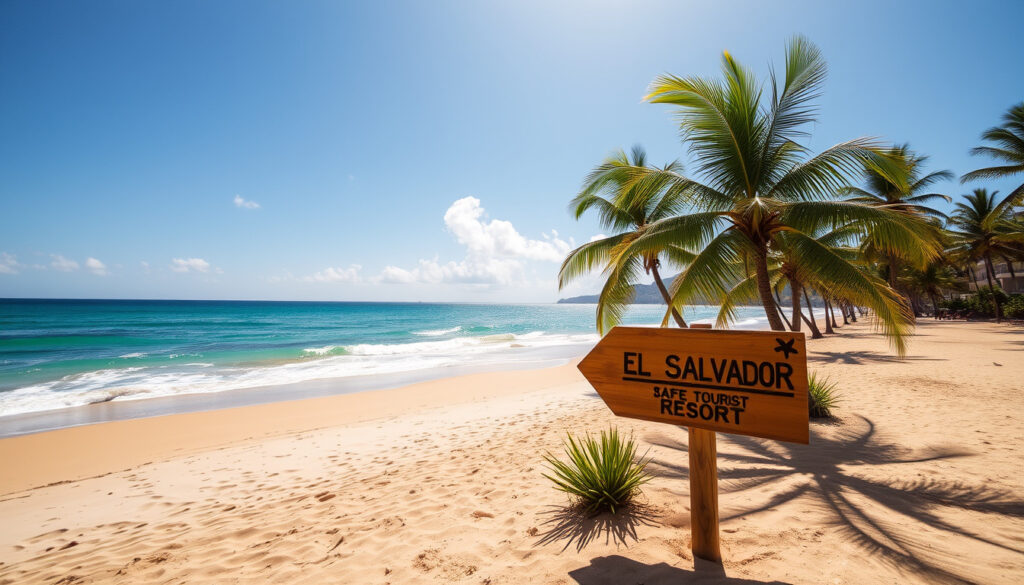
Is El Salvador Safe Now? 2026 Travel Guide
El Salvador’s travel reputation has rewritten itself faster than almost any country in the Americas, yet the gap between a Level 1 U.S. advisory and Canada’s “high degree of caution” tells the real story. The national homicide rate dropped to 2.4 per 100,000 in 2023, the lowest in Central America, but that security rests on a State of Emergency that still raises questions.
Population (2024 est.): 6.3 million · Capital: San Salvador · Homicide Rate (2023): 2.4 per 100,000 · Primary Language: Spanish · Official Currency: US Dollar (USD) and Bitcoin
Quick snapshot
- The U.S. State Department rates El Salvador Level 1 — Exercise Normal Precautions — and the homicide rate has fallen to 2.4 per 100,000, the lowest in Central America (Travel.State.gov official U.S. travel advisory).
- Tap water is not generally safe to drink; bottled water from major brands is the safe default. (Travel.State.gov official U.S. travel advisory)
- Whether the low homicide rate survives the end of the State of Emergency. (Government of Canada official travel advice)
- Why Canada and Australia keep a higher warning level than the U.S. (Government of Canada official travel advice).
- Water safety varies by hotel and region; some areas lack daily tap water. (Government of Canada official travel advice)
- March 2022: State of Emergency declared; the homicide rate fell the following year. (El Salvador Travel official national tourism board)
- 2026: the official tourism calendar is active again, with events listed nationwide (El Salvador Travel official national tourism board).
- New flight routes and tourism investment are expanding capacity for 2026. (El Salvador Travel official national tourism board)
- The official agenda already lists live events in Cuscatlán on September 26–27, 2026 (El Salvador Travel official national tourism board).
- Advisory levels can change quickly; check them before you fly. (El Salvador Travel official national tourism board)
Eight facts, one pattern: El Salvador is small, dollarized, and far easier to plan for than its reputation suggests.
| Label | Value |
|---|---|
| Official Name | Republic of El Salvador |
| Capital City | San Salvador |
| Population | 6.3 million (2024 est.) |
| Area | 21,041 sq km (8,124 sq mi) |
| Official Language | Spanish |
| Currency | US Dollar (USD); Bitcoin also legal tender |
| Government | Unitary presidential republic (President Nayib Bukele) |
| Homicide Rate (2023) | 2.4 per 100,000 |
Is it safe to go to El Salvador now?
Current crime statistics and government travel advisories
- United States: Level 1 — Exercise Normal Precautions, with the advisory updated on June 25, 2026.
- Canada: Exercise a high degree of caution (Government of Canada official travel advice).
- Australia: Exercise a high degree of caution, citing violent crime (Smartraveller official Australian government advisory).
The U.S. Level 1 rating and the 2.4 homicide rate are the two numbers that changed the country’s travel standing. Canada and Australia’s caution is the counterweight: the improvement is real, but it rests on a State of Emergency that still raises civil-liberties questions.
The gap between a Level 1 rating and a “high degree of caution” comes down to risk tolerance, not contradictory facts. Every official source agrees security has improved; they differ on how much caution a tourist should carry.
How the security situation changed after 2022
- — Civil war, with more than 75,000 deaths.
- — MS-13 and Barrio 18 drive homicide rates among the world’s highest.
- — Nayib Bukele is elected president on a security-first platform.
- — A State of Emergency is declared after a spike in homicides; mass arrests follow.
- — The homicide rate falls to 2.4 per 100,000, one of the lowest in the Western Hemisphere.
- — Tourism rebounds and the official events calendar fills up again.
The pattern is clear on paper: a country that was effectively at war with gangs is now marketing its waves and volcanoes. The unresolved question is whether the security model — mass arrests and emergency powers — outlasts its political moment.
What’s confirmed vs. what’s still unclear
- Homicide rate fell sharply after the 2022 crackdown, reaching 2.4 per 100,000 in 2023.
- Tap water is not generally safe for drinking.
- The U.S. dollar is widely used, and Bitcoin is also legal tender.
- Many tourist nationalities can enter visa-free for up to 90 days.
What’s unclear
- Whether the low homicide rate is sustainable once the State of Emergency winds down.
- The long-term effect of emergency powers on civil liberties.
- Tap water reliability varies by region and hotel — some areas don’t get daily service.
The confirmed facts make the country a reasonable travel bet; the unclear items explain why Canada and Australia still hedge. Planning around both is the honest strategy.
Is El Salvador safe and worth visiting?
Top attractions: beaches, volcanoes, and historic towns
- El Tunco and El Zonte — Pacific surf towns; El Tunco’s boardwalk and beach anchor the standard Surf City itinerary (Viator tour booking platform).
- Ruta de las Flores — a coffee-town route through the western highlands (GetYourGuide travel experience platform).
- Parque Nacional El Boquerón — San Salvador’s volcanic crater park, consistently listed among the top attractions (Tripadvisor traveler review site).
- Santa Ana Volcano (Ilamatepec) — a guided summit hike with views over the coffee highlands (Tripadvisor traveler review site).
- Joya de Cerén — a UNESCO-listed Maya farming village preserved in volcanic ash.
- Centro Monseñor Romero — a San Salvador museum focused on the life of Archbishop Óscar Romero (Expedia travel booking and information platform).
Expedia’s travel guide frames the country honestly: worth seeing, but high crime still demands special precautions (Expedia travel booking and information platform). The practical version of that warning is simple — stick to the well-policed zones, avoid empty streets after dark, and let your hotel arrange the driver.
Upsides
- Homicide rate at 2.4 per 100,000 — the lowest in Central America.
- Compact geography: beaches, volcano hikes, and colonial towns within short drives.
- Tourist police presence in popular zones like El Tunco and the Historic Center.
- US dollar pricing removes one layer of currency stress.
Downsides
- State of Emergency remains in effect, with civil-liberties concerns.
- Petty theft and patchy infrastructure outside tourist hubs.
- Tap water is not reliably safe; food and water planning is a daily task.
Practical safety tips for visitors
- Stay in the better-reviewed, well-patrolled neighborhoods of San Salvador and the beach towns.
- Use hotel-recommended drivers at night instead of hailing taxis on the street.
- Keep phones and wallets out of sight in markets and on buses; petty theft is the most common tourist risk.
- Book a guide for the Santa Ana Volcano and remote trails — for safety and for local context.
El Salvador’s transformation has shortened the list of genuinely risky places, but “safer” still doesn’t mean “carefree.” The trade-off is the whole pitch: plan a little, see a lot.
Can I brush my teeth with tap water in El Salvador?
Tap water safety analysis
The U.S. State Department’s advisory is direct: tap water in El Salvador is generally unsafe to drink or use in cooking, and in some areas it is not available every day. Impure water can bring typhoid, cholera, hepatitis, and dysentery, so bottled water from major brands with the seal intact is the safe default (Travel.State.gov official U.S. travel advisory).
For brushing teeth, the same standard applies. A single rinsing mouthful of tap water rarely causes problems, but a week of cumulative exposure is a gamble with your vacation.
The advisory also recommends avoiding ice unless you know it was made from safe water, and it warns that uncooked vegetables and fruits can make travelers sick.
When to use bottled or boiled water for dental hygiene
- Brushing: use bottled, filtered, or boiled water — especially for the first few days.
- Ice: skip it unless you’re certain it was made from treated water.
- Cooking and produce: treat water as non-potable by default and rinse vegetables with safe water.
Filtering, boiling, disinfecting, or distilling all make water safe, so a hotel kettle or a portable filter solves the problem without a case of bottled water.
Why this matters: water is the easiest travel risk in El Salvador to eliminate. A one-dollar bottle beats a three-day stomach bug every time.
What is safer, Mexico or El Salvador?
Comparative homicide rates
El Salvador (2023): 2.4 homicides per 100,000 · Mexico (2023): ≈23 homicides per 100,000
One metric, two very different national stories: homicides per 100,000 residents.
| Metric | El Salvador | Mexico |
|---|---|---|
| National homicide rate (2023) | 2.4 per 100,000 — lowest in Central America | ≈23 per 100,000 national average |
| U.S. advisory picture | Level 1 nationwide | State-by-state levels, several higher |
| Main risk for tourists | Petty theft and uneven infrastructure | Cartel-linked violence in specific states |
| Tourist infrastructure in safe zones | Compact, improving, easy to cover | Huge and well developed, but variable by region |
| Best suited to | First-time Central America visitors | Travelers with regional experience |
The comparison flatters El Salvador on averages, and averages hide the real story: safety in both countries varies enormously by region. Mexico’s national number is dragged up by high-conflict states, while El Salvador’s tourism zones — the coast, the volcano towns, the Historic Center — sit comfortably on the safe side of the national average.
Violent crime vs. petty crime risks
El Salvador’s national homicide rate is roughly a tenth of Mexico’s average, but the two countries concentrate risk differently: cartel-style violence in parts of Mexico, opportunistic petty theft in crowded tourist spots in El Salvador.
For a traveler, the honest comparison is not “El Salvador vs. Mexico” but “this itinerary vs. that itinerary.” A driver-based beach trip around El Salvador carries a different risk profile than an unplanned road trip through cartel-affected Mexican states.
The pattern: for a first-time visitor who wants highlights without a crash course in regional risk, El Salvador’s compact geography is the easier bet. For travelers who already know Mexico’s safe zones, the comparison barely matters — they’ll pick based on taste, not fear.
Can tourists visit El Salvador?
Visa requirements for US, UK, and EU citizens
- US, UK, and most EU passport holders enter visa-free for up to 90 days.
- Most nationalities receive a tourist card — Tarjeta de Turista — on arrival for $12 USD.
- No mandatory vaccination requirements for typical tourist entry.
The visa question is one of the simplest travel logistics in the region: no embassy visit, no advance fee, no paperwork marathon. The country’s official tourism board keeps a live agenda of festivals and events — a useful planning tool that also shows how active the destination has become (El Salvador Travel official national tourism board).
Entry fees and tourist card (Tarjeta de Turista)
- Tourist card: $12 USD, paid on arrival at immigration.
- Duration: up to 90 days, matching the visa-free window.
- Keep the entry stamp — you’ll need it at departure.
US dollars work everywhere in El Salvador, so the $12 fee is one less currency headache. For most Western passport holders, the entry process is simpler than Mexico’s or Costa Rica’s.
What this means: entry logistics shouldn’t be the reason you skip El Salvador. The real decisions come after you land.
What officials and travelers are saying
“Travelers should exercise a high degree of caution in El Salvador.”
— Government of Canada official travel advice
“Exercise a high degree of caution in El Salvador due to violent crime.”
“The country’s beauty is worth seeing, but high crime requires special travel precautions.”
The three advisories land in slightly different places, and that divergence is itself the signal: the security picture has improved enough for one government to drop its warning to the lowest level, while others still want their citizens to stay alert. For a traveler, the honest read sits somewhere between the two.
What this means for your trip
El Salvador in 2026 is not the country that topped global homicide rankings a decade ago. The Level 1 advisory, the 2.4 per 100,000 homicide rate, and a tourism calendar that is filling up again all point the same way: the transformation is real, and the window for visiting before prices jump is open now. For the cautious traveler, the choice is clear: book the trip, respect the water rules, and treat safety planning as part of the fun.
Frequently asked questions
What is the current travel advisory for El Salvador from the US government?
The U.S. State Department rates El Salvador Level 1 — Exercise Normal Precautions — with the advisory updated on June 25, 2026.
Do I need a visa to visit El Salvador as a tourist?
Most US, UK, and EU passport holders enter visa-free for up to 90 days. The arrival process includes a tourist card (Tarjeta de Turista) that costs $12 USD.
Is El Salvador a rich or poor country?
El Salvador is classified as a lower-middle-income economy. Costs for tourists are modest by North American or Western European standards, which is one reason the country is attracting attention while it’s still under the radar.
Can you swim in the lakes in El Salvador?
Yes, at Lake Coatepeque, where lakeside restaurants make it easy to combine a swim with a meal. Lake Ilopango is less developed — check local conditions before swimming.
What are the top beaches to visit in El Salvador?
El Tunco and El Zonte are the most famous surf beaches and the center of the beach tourism rebound.
Is it safe to use Bitcoin in El Salvador as a tourist?
Bitcoin is legal tender in El Salvador, but practical tourist life runs on dollars and cards. Treat Bitcoin as optional, not required.
Is it safe to eat street food in El Salvador?
Street food is popular. Stick to busy stalls with high turnover and apply the same water rules you would in any tropical destination.
How do I get from El Salvador International Airport (SAL) to San Salvador?
The airport is less than an hour from central San Salvador by road. Official airport taxis and pre-booked shuttles are the standard options.
More related posts
 Josh Windass: Salary, Career, Family & Latest News
 Best Electric Toothbrush 2025: Which One Should You Buy
 Mollie Sugden: Life, Career, and Mrs. Slocombe’s Wigs (1922–2009)
 Will Inbetweeners: Character, Actor, Virginity, Memes & Net Worth
 Laura Robson: From Tennis Retirement to Marathon Runner
 Tim Minchin: Biography, Career, and Key Facts
 Rochelle Humes: Biography, Kids, Teeth & Split Rumors
 Maisie Adam: Partner, Age, Height, Pronouns, and Show
