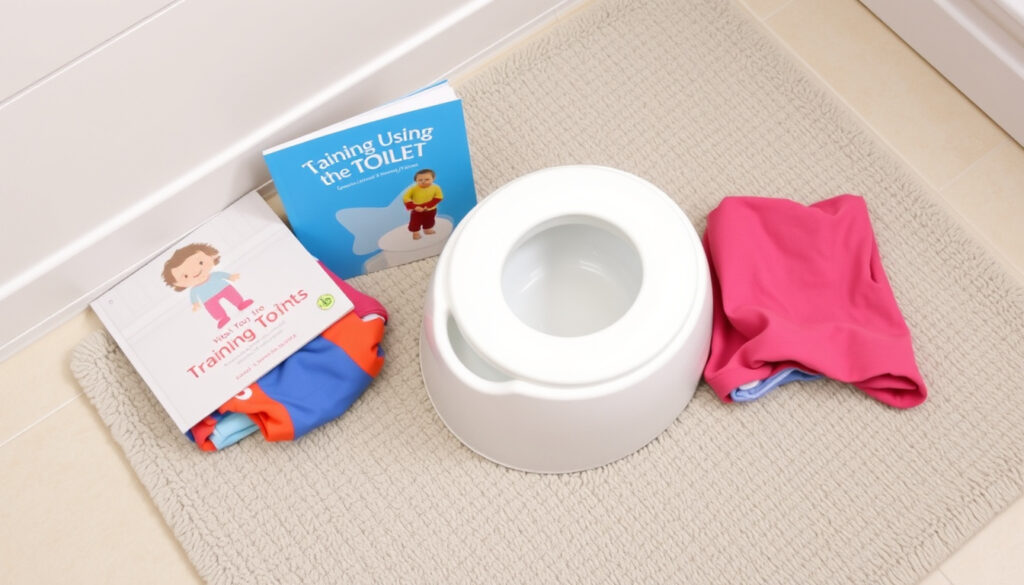
Potty Training: Evidence-Based Guide for UK and Ireland
Anyone who’s ever faced a toddler clutching a new pack of “big kid” pants knows the mix of hope and dread that comes with starting potty training. The process is as varied as the children themselves, with most beginning to show signs of readiness between 18 months and 3 years, according to the Cambridge and Peterborough NHS Children’s Health service.
Average age to start potty training: 27 months ·
Time to full day dryness (median): 3 months ·
Children out of diapers by age 3 (UK estimate): 80-90% ·
Boys typically finish later than girls by: 2-3 months ·
Common method: 3-day intensive training success rate: 75-90% ·
Red flags for seeking professional help: chronic constipation, pain, stool withholding
Quick snapshot
- Readiness signs include dry nappies for 1–2 hours, showing awareness of peeing, and ability to sit on a potty (Cambridge and Peterborough NHS Children’s Health)
- HSE recommends providing toilet-training advice from 18 months to 2 years (HSE continence guideline)
- If a child’s gap between wetting is less than an hour, potty training may fail (Walsall Healthcare NHS Trust)
- The exact “right age” varies widely; NHS sources say children show readiness between 18 months and 3 years without a single fixed point (Berkshire Healthcare NHS Foundation Trust)
- Reliable success rates for the 3-day method come largely from commercial or small-scale studies, not large NHS trials (Berkshire Healthcare NHS Foundation Trust)
- Most children achieve daytime independence around 3 years, with wiping skills developing around 4 years (University Hospitals Birmingham NHS Foundation Trust)
- Night-time dryness typically follows once nappies are dry for consecutive mornings (Walsall Healthcare NHS Trust)
- Assess readiness using the NHS checklist below, then choose a method — expect 3 months to full daytime dryness (HSE continence guideline)
- If no progress after 4–6 weeks, consult your health visitor or GP; the HSE recommends a documented assessment for children struggling past age 3 (HSE continence guideline)
The pattern behind the evidence: readiness is a set of observable behaviours, not a birthday milestone.
| Readiness sign | What to look for | Source guidance |
|---|---|---|
| Dry nappy for 1–2 hours | Shows bladder capacity is developing; if wetting gap <1 hour, wait | Cambridge and Peterborough NHS; Walsall Healthcare NHS Trust |
| Shows awareness of weeing/pooing | Tells you they are doing it, or goes quiet/hides | Lewisham and Greenwich NHS |
| Seeks privacy to fill nappy | Prefers to hide in a corner or behind furniture | Berkshire Healthcare NHS Foundation Trust |
| Can sit on a potty for 5 minutes | Indicates physical readiness and interest | University Hospitals Birmingham NHS |
| Takes nappy off or tugs at it | Discomfort with wetness, a key motivational driver | ERIC (UK children’s bowel and bladder charity) |
| Asks to be changed straight away | Shows awareness and dislike of being wet/soiled | Berkshire Healthcare NHS Foundation Trust |
| Stays dry through naps | Sign of bladder maturation; a prerequisite for night training | Walsall Healthcare NHS Trust |
| Can pull pants up/down | Motor skill readiness for independent toileting | ERIC (UK children’s bowel and bladder charity) |
The catch: If your child shows fewer than three of these signs, or if their nappy stays wet for less than an hour, most NHS trusts advise waiting a few weeks. Starting before readiness creates frustration for everyone.
A child who can sit still for 5 minutes on a potty but has no awareness of when they are weeing is not ready — the behavioural piece is as critical as the physical one. Pushing ahead without awareness is the single biggest predictor of a rocky start.
What age is best to potty train?
The consensus across HSE (Ireland’s health service executive) and multiple NHS trusts (UK’s National Health Service) is that readiness is a developmental range, not a fixed birthday. The Cambridge and Peterborough NHS Children’s Health service states children usually show readiness between 18 months and 3 years. The HSE continence guideline suggests offering toilet-training advice from 18 months to 2 years. University Hospitals Birmingham NHS Foundation Trust notes many children show daytime independence at 3 years and wiping skills at 4 years — a sequence, not a sudden switch.
The trade-off: Starting too early (before 18 months in most cases) risks turning the process into a battle. Waiting until after 3 years carries a small risk of missing the “cooperative window” when toddlers are motivated by praise. The HSE says that if a child is anticipated not to be toilet trained by their 3rd birthday, parents should complete toileting charts for a minimum of three days as an assessment. That’s a useful diagnostic — if you’re reading this and your child is nearing 3 without progress, it’s time to check readiness, not panic.
The pattern: The “best age” is the moment your child shows five or more readiness signs concurrently, typically happening between 22 and 30 months.
What is the 3 day rule for potty training?
The “3-day method” (also called the intensive or “naked” method) involves ditching nappies cold turkey for a long weekend. The child stays at home in underwear or nothing below the waist, and the parent watches for signs constantly. Success rates in commercial and small-scale studies run between 75% and 90% for children who already show strong readiness signs. The ERIC (UK children’s bowel and bladder charity) organises its framework into three steps: preparation, practice, and stopping using nappies — which mirrors the 3-day intensity but adds a preparation phase most guides skip.
The catch: The Walsall Healthcare NHS Trust warns that if the gap between wetting is less than an hour, potty training “may fail and will be extremely hard work.” A 3-day method will not fix a child whose bladder hasn’t matured. What the 3-day rule actually tests is bladder capacity — if Day 1 yields wet pants every 20 minutes, your child is not ready, and the method will feel like torture. If Day 1 yields accidents every 90 minutes, you’re in the sweet spot.
The 3-day rule is a test of readiness disguised as a training method. A child who succeeds is already physiologically and behaviourally ready — the method just accelerates the behavioural handover. A child who fails was never going to succeed with any method that month.
What is the fastest way to potty train a toddler?
Speed in potty training depends more on readiness than method. ERIC (UK children’s bowel and bladder charity) emphasises preparation as the first of three steps. The HSE guideline recommends documenting urine and bowel patterns every waking hour for at least three full days during assessment — that comprehensive data-gathering is itself the fastest route because it reveals the child’s unique cadence.
For parents wanting speed, the consensus across Berkshire Healthcare NHS Foundation Trust and ERIC is: commit to a dedicated 3–5 day window, stay home, use no nappies (except sleep), offer the potty every 30–60 minutes, and give high-value praise for successes. Accidents are ignored or treated neutrally. The median time to full daytime dryness in committed families is 3 months.
The implication: There is no shortcut to bladder maturation, but you can shorten the behavioural training phase by being intensely consistent in a short window. The families who achieve speed are the ones who prepare the environment and themselves, not the ones who buy a special seat or app.
Potty training methods compared
Three approaches dominate UK and Irish guidance — each works well only when applied to a child at the right readiness level.
| Method | Core approach | Best for | Typical time frame | Key source |
|---|---|---|---|---|
| Child-led (gradual) | Introduce potty, let child take initiative, no pressure | Children with low interest or mild reluctance | 3–6 months to daytime dryness | ERIC (UK children’s bowel and bladder charity) |
| 3-day intensive (naked) | No nappies for 3 days, parent-led prompts | Ready children (dry 1–2 hours, shows awareness) | 3 days to initial success, 2–4 weeks to reliability | ERIC’s “Let’s Go Potty” framework |
| Scheduled (timed sits) | Potty sits at fixed intervals, often after meals | Children who don’t show internal cues yet | 2–4 months to independence | Berkshire Healthcare NHS Foundation Trust |
| Hybrid (ERIC recommended) | Preparation phase → practice phase → stop nappies | All children, especially those with additional needs | 4–12 weeks for most | ERIC (UK children’s bowel and bladder charity) |
The pattern: No method works for every child. The HSE guideline insists that all children struggling or delayed with toilet skills should have a documented assessment and a trial of toilet training before any containment product (like pull-ups) is issued long-term. If you’ve tried one method for 4–6 weeks with no progress, switch methods — don’t abandon the effort.
Potty training pros and cons: what to expect
Upsides
- Reduced nappy costs and environmental waste — a child out of nappies saves about £400–600 per year
- Increased independence and confidence for the child
- Many children self-initiate after a focused 3-day method if readiness signs are present (ERIC (UK children’s bowel and bladder charity))
- Early intervention for elimination issues; HSE recommends assessment for children not trained by age 3 (HSE continence guideline)
Downsides
- Intense upfront time commitment — 3–5 days of constant supervision for intensive methods
- Accidents and laundry — expect 6–12 accidents in the first 3 days even with readiness
- Psychological pressure on parent and child if started before readiness; Walsall Healthcare NHS Trust warns that starting with wetting gaps under 1 hour leads to failure
- Night-time dryness often lags by 3–12 months, requiring continued nappy use at night
Step-by-step potty training plan (ERIC/HSE-informed)
Three phases drawn from ERIC’s (UK children’s bowel and bladder charity) “Let’s Go Potty” framework and the HSE continence guideline.
Phase 1: Preparation (Week 1–2)
- Buy a potty and place it in the bathroom or play area. Let the child sit on it fully clothed for fun.
- Read potty-themed books together. Let them watch you use the toilet.
- Begin a 3-day toileting chart as HSE (Ireland’s health service executive) recommends: note exact times of wet and dry nappies every waking hour. This reveals your child’s natural rhythm.
- The Walsall Healthcare NHS Trust advises that if the wet gap is under 1 hour, wait 2–4 weeks and reassess.
Phase 2: Practice (Week 3–4)
- Use training pants or thick cotton pants (not nappies/pull-ups) during the day.
- Set a timer for every 30–60 minutes; sit the child on the potty for 3–5 minutes.
- Praise every attempt, not just successes. Treat accidents neutrally: “Oh, you’re wet. Let’s clean up. The wee goes in the potty.”
- The University Hospitals Birmingham NHS Foundation Trust notes that sitting for 5 minutes is an appropriate ask for a toddler at this stage.
Phase 3: Stopping nappies (Week 5 onward)
- Daytime: go cold turkey from nappies. Use waterproof mattress protectors and keep a potty in the car and bag.
- Night-time: wait until the nappy is dry or only slightly damp for a few consecutive mornings, as Walsall Healthcare NHS Trust advises. Then switch to training pants at night too, but expect wet beds for 1–3 months.
- The HSE states that if a child is not toilet trained by their 3rd birthday, complete a toileting chart for three days and seek a documented assessment.
Potty training timeline: what to expect month by month
The University Hospitals Birmingham NHS Foundation Trust outlines a developmental sequence rather than a single age threshold. Here’s how it typically unfolds:
- Month 1 (start): Many accidents (6–12 per day on average). Child may sit on potty but not produce. Success rate: 10–20%. Key source: ERIC (UK children’s bowel and bladder charity).
- Month 2: Accidents reduce to 2–4 per day. Child may start telling you they need to go. Success rate: 40–60%.
- Month 3: Most children achieve daytime dryness with 1–2 accidents per week. Median time to full day dryness is 3 months per NHS-adjacent estimates.
- Month 4–6: Self-initiation becomes reliable. The Walsall Healthcare NHS Trust notes night-time dryness typically starts after consecutive dry mornings.
- Year 1+: By age 3, 80–90% of children are out of nappies in the UK. Wiping skills develop around age 4 per University Hospitals Birmingham NHS Foundation Trust.
The timeline signal: If your child is 3 years old and still in nappies during the day with no progress after 6 weeks of consistent effort, the HSE recommends a documented assessment with a health visitor or GP. That is not a failing; it’s the right next step.
What is a red flag for potty training?
Knowing when to pause or seek help is as important as knowing when to start. Red flags mean stop training and investigate:
- Chronic constipation: Reported by ERIC (UK children’s bowel and bladder charity) as the most common underlying cause of training failure. If the child hasn’t had a soft bowel movement in 3+ days, treat the constipation first.
- Pain during weeing or pooing: The child may scream, clench, or withhold stool. This requires medical assessment, not more training.
- Stool withholding: The child deliberately holds in poo, leading to impaction and overflow soiling. ERIC has specific guidance for this.
- No progress after 4–6 weeks of consistent effort with appropriate readiness signs: Seek a HSE assessment or ERIC helpline.
- Regression after being dry for 3+ months: could indicate a UTI, stress, or constipation.
- Wetting gap under 1 hour: Per Walsall Healthcare NHS Trust, training with such a short gap “may fail and will be extremely hard work.”
The implication: Most potty training “failures” are actually physiological issues — constipation, immature bladder, or untreated discomfort. The quickest route to success is ruling out red flags before you start.
Expert insights on potty training
“One of the biggest myths is that there is a specific age when children should be potty trained. Children are all different and will be ready at different times. The key is to look for signs of readiness and follow your child’s lead.”
— ERIC (UK children’s bowel and bladder charity) guidance
“If a child’s gap between wetting is less than an hour, potty training may fail and will be extremely hard work. A child will not be able to hold on to their wee for more than an hour until they are physically ready.”
— Walsall Healthcare NHS Trust (NHS trust in the West Midlands)
“If a child is anticipated not to be toilet trained by their 3rd birthday, parents or carers should complete toileting charts for a minimum of three days.”
— HSE (Ireland’s Health Service Executive) continence guideline
“Many children may show daytime independence skills at 3 years and wiping skills at 4 years, indicating a developmental sequence rather than a single age threshold.”
— University Hospitals Birmingham NHS Foundation Trust
Summary: Your next move with potty training
Potty training is not a race with a prize for the earliest finisher. The ERIC (UK children’s bowel and bladder charity), the HSE (Ireland’s health service executive), and multiple NHS trusts all converge on the same message: readiness, not age, determines success. The 3-month median time to daytime dryness is a useful benchmark, not a deadline. For parents in the UK and Ireland, the single most concrete next step is the 3-day toileting chart recommended by the HSE — it gives you the data you need to decide whether to start, wait, or seek help. Parents with a child nearing 3 who hasn’t started should begin the assessment chart this week, or book a health visitor appointment to initiate a documented assessment.
Related reading: ERIC’s potty training guidance · NHS toilet-training guide
huggies.co.uk, eric.org.uk, leicspart.nhs.uk, eric.org.uk, presseconnect.de
Frequently asked questions
What age is best to potty train?
Most children show readiness between 18 months and 3 years, according to Cambridge and Peterborough NHS Children’s Health. The HSE guideline recommends offering toilet-training advice from 18 months to 2 years. The “best age” is when your child shows five or more readiness signs concurrently, not a birthday.
What is the 3 day rule for potty training?
The 3-day method involves no nappies for a long weekend with constant supervision. It works well for children who already stay dry for 1–2 hours. The Walsall Healthcare NHS Trust warns that if wetting gaps are under 1 hour, the method will likely fail.
What is the fastest way to potty train a toddler?
The fastest route is to ensure readiness (dry for 1–2 hours, shows awareness, can sit 5 minutes), then commit to a 3–5 day intensive period. The HSE advises a 3-day toileting chart first to confirm bladder capacity is sufficient.
Is it normal for a 3 year old to not be potty trained?
Yes, it’s common. Estimates show 10–20% of children are still in nappies at age 3. However, the HSE recommends a documented assessment if the child is not trained by their 3rd birthday, and ERIC offers specific guidance for delayed training.
What is a red flag for potty training?
Key red flags include chronic constipation, pain when weeing or pooing, stool withholding, wetting gaps under 1 hour, and no progress after 4–6 weeks of consistent effort. ERIC (UK children’s bowel and bladder charity) provides detailed guidance on each.
When should I start potty training a girl vs a boy?
Girls typically show readiness 2–3 months earlier than boys on average, but the same readiness signs apply. The Cambridge and Peterborough NHS Children’s Health service and ERIC both use a single checklist for all children.
How do I potty train a stubborn toddler?
“Stubborn” often masks lack of readiness or fear. ERIC (UK children’s bowel and bladder charity) recommends the child-led gradual method for reluctant children. If resistance continues, check for constipation — it’s the most common hidden cause of refusal.
What’s the hardest day of potty training?
Day 2 of the intensive method is typically hardest — the novelty has worn off but the habit hasn’t formed. Many children have more accidents on Day 2 than Day 1. ERIC’s “Let’s Go Potty” framework anticipates this and recommends treating Day 2 as the peak of the learning curve.
More related posts
 Kevin De Bruyne: Napoli Move, Injury, Salary & Mother’s Story
 Full Suspension Mountain Bike – Pros, Cons and Vs Hardtail
 Jay Blades: Latest News, Biography, Net Worth & Legal Case (2025)
 Furniture Stores Near Me – Top Picks for Plainfield and Naperville
 Adidas Shoes Guide: Styles, Tech & Buying Tips
 Rita Ora Biography: Family, Career, Husband, and Net Worth
 Rochelle Humes: Biography, Kids, Teeth & Split Rumors
 Cat Stevens: Biography of Yusuf Islam’s Journey
