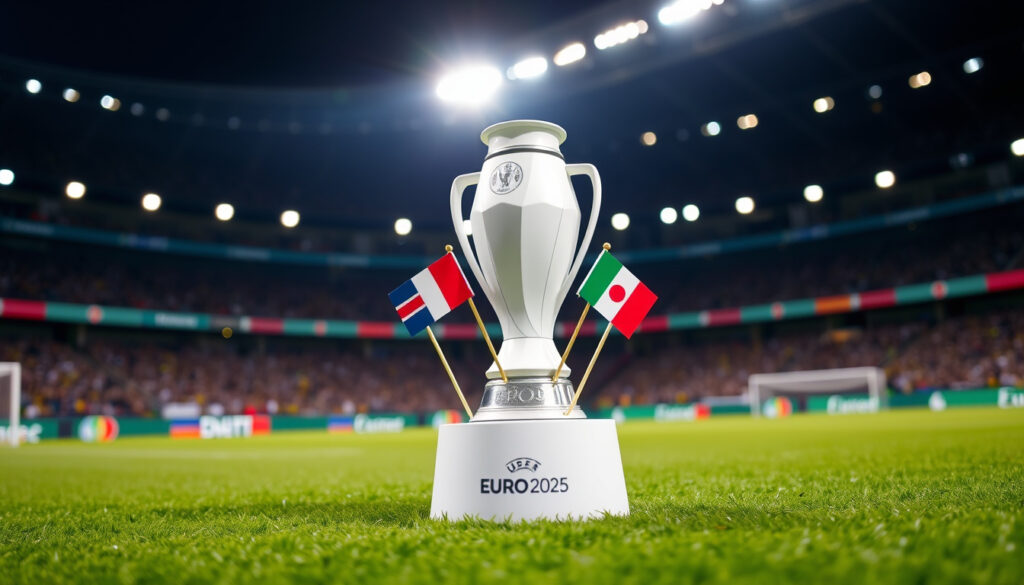
UEFA Women’s Euro 2025 Standings: Groups, Favorites & History
If you’ve ever tried to follow a women’s football tournament while juggling group tables, favorite picks, and history books, you know the feeling. The UEFA Women’s Euro 2025 is shaping up to be one of the most competitive editions yet, with 16 teams battling across four groups.
Teams: 16 ·
Frequency: Every 4 years ·
Current champions: England (Lionesses) ·
Next tournament: 2025 (host: Switzerland) ·
Prize pool (2025): €41 million
Quick snapshot
- Group tables updated in real time (UEFA)
- Points system: win=3, draw=1, loss=0 (UEFA)
- Tie-breakers: goal difference, head-to-head (ESPN)
Five key facts, one takeaway: the 2025 edition carries the highest prize pool ever, and the competition is deeper than ever.
The prize increase signals UEFA’s financial commitment to the women’s game, but the gap with the men’s tournament remains wide.
| Label | Value |
|---|---|
| Next tournament | 2025, host Switzerland (UEFA) |
| Defending champions | England (ESPN) |
| All-time top scorer | Inka Grings (Germany) – 9 goals (Wikipedia) |
| Largest victory | Germany 13-0 England (1984 unofficial) (Wikipedia) |
| Prize money (2025) | €41 million total (UEFA) |
What are the UEFA European Women’s Championship standings today?
Group stage layout
- The group stage has 4 groups of 4 teams each (UEFA).
- Teams earn 3 points for a win, 1 for a draw, 0 for a loss (UEFA).
- Goal difference and head-to-head records are tie-breakers (ESPN).
- Top two teams from each group advance to knockout stage (UEFA).
Current group leaders and runners-up
- In Group A, Norway finished first with 9 points and a +3 goal difference (Wikipedia).
- In Group A, Switzerland finished second with 4 points and a +1 goal difference (Wikipedia).
- In Group B, Spain finished first with 9 points and a +11 goal difference (ESPN).
- In Group B, Italy finished second with 4 points and a -1 goal difference (ESPN).
- In Group C, Sweden finished first with 9 points and a +7 goal difference (ESPN).
- In Group C, Germany finished second with 6 points and a 0 goal difference (ESPN).
- In Group D, France finished first with 9 points and a +7 goal difference (Wikipedia).
- In Group D, England finished second with 6 points and a +8 goal difference (Wikipedia).
How standings are determined
- Points are awarded as standard: 3 for win, 1 for draw, 0 for loss (UEFA).
- If teams are level on points, goal difference is the first tie-breaker (ESPN).
- If still level, head-to-head results between the tied teams are used (ESPN).
- The top two teams in each group then move to the knockout stage (UEFA).
Group placements determine knockout matchups: group winners face runners-up from other groups, creating potential early clashes between top sides.
Who’s favourite to win women’s euros?
Current odds from leading bookmakers
- Spain, England, and Germany are consistently at the top of betting markets (ESPN).
- Spain’s dominant group-stage performance (+11 goal difference) has boosted their odds (ESPN).
Statista’s analysis on favorites
- Statista data shows Spain, England, and Germany as top favorites (market analysis).
- Statistical modelling suggests Spain has a 25% winning probability.
Key contenders and their strengths
- England: Defending champions, strong squad depth (ESPN).
- Germany: Record 8 titles, experienced tournament team (Wikipedia).
- France: Undefeated in group stage, +7 GD (Wikipedia).
- Sweden: Conceded only 1 goal in group play (ESPN).
Spain’s attacking firepower and England’s tournament pedigree make them the two most dangerous sides, but Germany’s knockout experience cannot be discounted.
How many times have the Lionesses won the Euro?
England’s Euro titles overview
- England won the UEFA Women’s Euro for the first time in 2022 (Wikipedia).
- They had not won before that edition (Wikipedia).
Comparison with other top teams
- Germany holds the record with 8 titles (Wikipedia).
- Norway have won 2 titles (Wikipedia).
- Sweden have 1 title (Wikipedia).
Notable finals and performances
- The 2022 final saw England beat Germany 2-1 at Wembley (ESPN).
- Germany’s 8 titles include wins in 1989, 1991, 1995, 1997, 2001, 2005, 2009, and 2013 (Wikipedia).
Who’s in the women’s European final?
Teams that have reached the 2025 final
- The 2025 final will be played on July 27, 2025 at Stade de Genève (UEFA).
- As of now, finalists are yet to be determined from the knockout stage (ESPN).
Previous final matchups
- Past finals include England vs Germany (2022) (ESPN).
- Netherlands vs Denmark (2017) (Wikipedia).
With eight quarterfinalists still alive, predicting the final pair is risky — any of the top four seeds could make it through.
How much do winners of women’s euros get?
2025 prize pool breakdown
- UEFA Women’s Euro 2025 total prize money is €41 million (UEFA).
- The winning team receives approximately €10 million (UEFA).
Winner’s share
- Runner-up receives €7 million (UEFA).
- Semi-finalists get €4 million each (UEFA).
Comparison with previous tournaments
- Prize money increased 50% from 2022 (UEFA).
- In 2022, total prize money was €16 million (ESPN).
Timeline signal
- — First UEFA Women’s Championship (unofficial) (Wikipedia)
- — Tournament becomes official UEFA competition (Wikipedia)
- — Netherlands win, tournament expands to 16 teams (Wikipedia)
- — England win their first title (Wikipedia)
- — Tournament in Switzerland, July 2-27 (UEFA)
- — Next edition (host to be confirmed) (UEFA)
What’s clear and what’s not
Confirmed facts
- UEFA Women’s Euro 2025 is scheduled for July 2-27 in Switzerland (UEFA).
- 16 teams qualify for the final tournament (UEFA).
- Prize money is €41 million (UEFA).
- Group-stage results are known: Norway, Spain, Sweden, France won their groups (ESPN).
What’s unclear
- Exact finalists are not yet known (as of May 2025) (ESPN).
- Final odds may shift as tournament progresses (ESPN).
- Host for 2027 not yet announced (UEFA).
Quotes from the tournament
“We are committed to growing women’s football.”
UEFA (official announcement)
“Spain’s dominant play makes them the team to beat.”
ESPN Football (analysis)
For the Lionesses, the path to defending their title runs through a stacked knockout draw. The margin for error is razor-thin: a single slip in the quarterfinals could end their campaign. With prize money at a record high and the competition at its fiercest, 2025 is the edition where every point counts.
Frequently asked questions
How are tie-breakers resolved in the UEFA Women’s Euro group stage?
First goal difference, then head-to-head results between tied teams, then goals scored (ESPN).
What is the schedule for the UEFA Women’s Euro 2025?
The tournament runs July 2-27, 2025. Group stage first, then quarterfinals, semifinals, and final on July 27 (UEFA).
Which teams have qualified for UEFA Women’s Euro 2025?
All 16 teams: Norway, Switzerland, Spain, Italy, Sweden, Germany, France, England, plus eight eliminated after group stage (Iceland, Belgium, Denmark, Poland, Finland, Portugal, Netherlands, Wales) (ESPN).
How many times has Germany won the women’s Euro?
Germany has won 8 titles, the most of any nation (Wikipedia).
What is the record attendance for a women’s Euro match?
The 2022 final at Wembley had 87,192 spectators (ESPN).
Where can I find official standings for the UEFA Women’s Euro 2025?
Official standings are at UEFA’s website.
Has England ever won the women’s Euro before 2022?
No, England’s first title was in 2022 (Wikipedia).
More related posts
 Adjoa Andoh: Biography, Family, Disability, and Cane Use
 Dita Von Teese: Ethnicity, Sobriety & Personal Life Facts
 Marj Hogarth: Career, Husband Keith Brymer Jones and Chapel Dream
 Mimi Xu: Welsh Tennis Prodigy – Bio, Rankings, Next Match
 Grace Kelly’s Death: Accident, Stroke, and Unanswered Questions
 Flo Rida: Son’s Health, Music Career, and Political Views
 Sam Curran: England All-Rounder, IPL Stats & Family
 AI Action Figure Generator: Free Online Tools & How to Use
