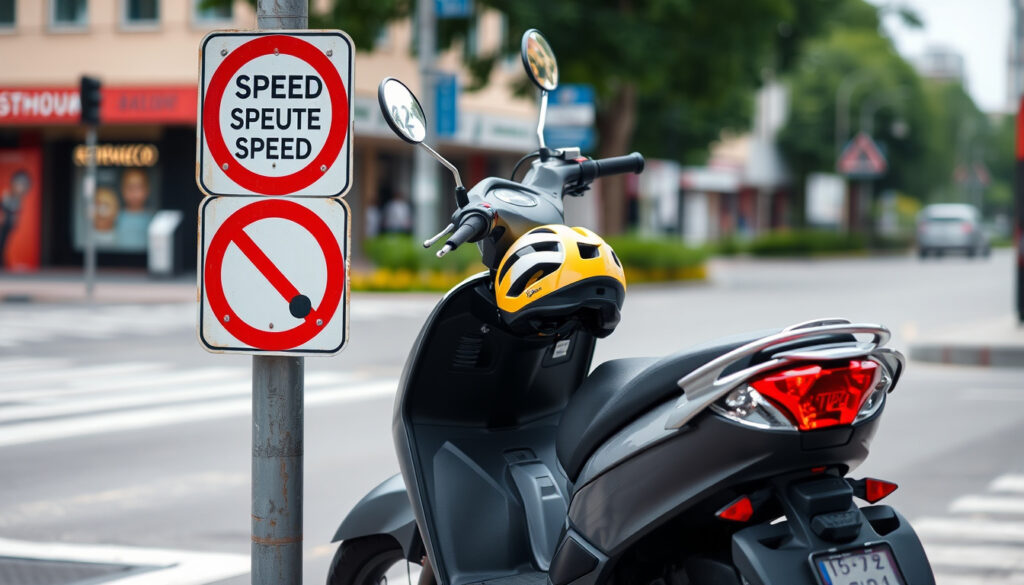
Electric Scooter Laws in Ireland: Age, Speed, and Safety
You might think riding an e-scooter in Ireland is as simple as hopping on, but a parent buying one for a 14-year-old could face a fine and confiscation. This guide walks through the actual legal limits, what Gardaí can do if you break them, and how to choose a scooter that won’t get you into trouble.
Minimum age: 16 years ·
Maximum legal speed: 20 km/h ·
Footpath use: Banned ·
Passengers: Not allowed ·
License required: No
Quick snapshot
- Age 16+ (Irish Statute Book)
- Speed limit 20 km/h (Irish Statute Book)
- No footpaths (Dept. of Transport)
- No passengers (Dept. of Transport)
- Wear a helmet (RSA)
- Use cycle lanes (Dept. of Transport)
- Avoid busy roads (RSA)
- Maintain your scooter (RSA)
- Check motor wattage (max 400 W) (Dept. of Transport)
- Battery range (Dept. of Transport)
- Weight capacity (Dept. of Transport)
- Local dealer support (Dept. of Transport)
- Not for under 16 (Citizens Information)
- Supervise on private land (Citizens Information)
- Use protective gear (Citizens Information)
Five rules, one takeaway: Ireland’s regulations are about keeping e-scooters within the realm of bicycles, not motorbikes. Every legal requirement reflects that boundary.
| Requirement | Legal Limit | Source |
|---|---|---|
| Minimum age | 16 years | Irish Statute Book |
| Maximum speed | 20 km/h | Irish Statute Book |
| Maximum motor power | 400 W | Dept. of Transport |
| Maximum weight | 25 kg | Dept. of Transport |
| Footpath use | Banned | Dept. of Transport |
| Passengers | Not allowed | Citizens Information |
| License required | No | Citizens Information |
| Registration/tax/insurance | Not required | Citizens Information |
What this means: an e-scooter that stays under 20 km/h and 400 W slots into the same legal space as a manual bicycle — less red tape, but also less tolerance for speed.
Is it legal to ride an electric scooter in Ireland?
Yes, but only within the boundaries set by the Road Traffic (Electric Scooters) Regulations 2024, which came into effect on 20 May 2024. The rules define exactly what counts as a legal e-scooter and where it can be used.
What are the current regulations?
- You must be 16 or older to ride a legal e-scooter in a public place (Irish Statute Book).
- The e-scooter’s maximum design speed must be 20 km/h (Dept. of Transport).
- Riding on footpaths or pedestrianised zones is banned (Dept. of Transport).
- No passengers are allowed (Dept. of Transport).
- You do not need a driving licence, tax, insurance, or registration for a legal e-scooter (Citizens Information).
A parent buying a scooter for a 14-year-old thinking it’s just like a bicycle is walking into a legal trap. The law draws a line at 16, and Gardaí have the authority to enforce it.
What are the penalties for breaking the law?
Riding a non-compliant scooter — one that exceeds the speed limit, has too powerful a motor, or is used on a footpath — means the vehicle is technically illegal on public roads. An Garda Síochána can issue fines and seize the scooter. Fines vary, but the more immediate consequence is the loss of the vehicle itself.
The implication: the law treats an illegal e-scooter the same way it treats an unregistered motor vehicle — and the penalties reflect that.
Can Gardaí seize e-scooters?
Yes. The regulations give Gardaí the power to confiscate e-scooters that are used in violation of the law.
When can Gardaí confiscate an e-scooter?
- If the rider is under 16 (Citizens Information).
- If the scooter exceeds 20 km/h or has a motor above 400 W (An Garda Síochána).
- If it is being ridden on a footpath (Dept. of Transport).
- If it has no weight or speed marking to prove compliance (An Garda Síochána).
Many high-performance scooters sold online lack the required compliance markings. A Garda stop can turn a fun purchase into a confiscated asset with no compensation.
What happens after seizure?
Once seized, the scooter is impounded. The owner may face a fine, and the scooter may not be returned if it cannot be made compliant. Citizens Information notes that the law also holds parents responsible if their underage child is caught riding illegally.
For parents and young riders, the risk is concrete: a seized scooter is money lost, not just a warning.
Can a 14 year old have an e-scooter?
Owning one is not the same as riding it legally. The law distinguishes between possession and use.
What is the minimum age to ride on public roads?
Strictly 16. Anyone under that age caught riding a legal e-scooter on a public road, cycle lane, or footpath is breaking the law (Irish Statute Book).
Can a 14 year old use an e-scooter on private property?
Yes — on private land with the landowner’s permission, there is no restriction. The law only applies to public places. So a 14-year-old can use an e-scooter in a garden or on a farm, but not on the road to school.
The distinction: private use is fine, but public use at 14 is illegal, and that gap is where most parents get caught out.
What scooter goes 100 mph?
High-performance electric scooters capable of hitting 100 mph (roughly 161 km/h) do exist — models like the Dualtron Storm or Weped GT are examples. But these are not legal on Irish roads.
What are the fastest electric scooters available?
- Dualtron Storm: top speed around 80-90 mph (depending on rider weight).
- Weped GT: can exceed 100 mph in optimal conditions.
- Rion 2 RE: capable of over 70 mph.
Are high-speed scooters legal in Ireland?
No. The Irish speed limit for e-scooters is 20 km/h (about 12 mph). Any scooter that can go faster than that is classified as a motor vehicle and must meet completely different standards — license, insurance, registration — which they almost never do. Riding one on public roads is illegal, and Gardaí will seize it (Irish Statute Book).
A 100 mph scooter is a high-performance toy for private land or track use. On Irish roads, it is a liability. Riders who want speed need to look at motorbikes with proper licensing, not e-scooter loopholes.
For anyone tempted by a fast scooter online: the law does not care about the spec sheet — only the compliance plate.
Should I get my 12 year old an e-scooter?
Short answer: if the child is under 16 and will use it on public roads, no.
What are the safety concerns for children?
- E-scooters have small wheels and a high centre of gravity, making falls more likely than on a bicycle (RSA).
- Children under 16 are less experienced at judging traffic speed and distance.
- Even at 20 km/h, a crash on an e-scooter can cause serious injury.
What are the legal implications?
As noted, riding on public roads is illegal for under-16s. Parents can be held liable for fines and confiscation (Citizens Information).
The upshot: a non-motorised scooter or a balance bike is a safer, legal alternative for children under 16. The e-scooter can wait until they are old enough to use it properly.
What happens if a child gets caught on an electric scooter?
What are the fines?
Fines for riding an illegal e-scooter or for underage riding are set by the courts and can vary. Fixed-penalty notices may apply, and repeat offences attract higher penalties.
Can the scooter be confiscated?
Yes. Gardaí are empowered to seize the scooter immediately (Irish Statute Book).
Are parents liable?
Yes. The law holds parents or guardians responsible for a child’s breach of the e-scooter regulations (Citizens Information). That means the fine and the loss of the scooter fall on the parent.
For families, the equation is simple: a €400 scooter can turn into a €400 loss plus a fine, with no legal path to ride it for two more years.
Specifications at a glance
Six requirements, one pattern: weight, power, and speed are the three levers that decide if a scooter is legal or not.
| Parameter | Legal Limit (Ireland) | Typical high-performance scooter |
|---|---|---|
| Max speed | 20 km/h | 60-100+ km/h |
| Motor power | 400 W | 1000-5000 W |
| Weight | ≤ 25 kg | 25-50 kg |
| Age requirement | 16+ | No legal restriction on sale |
| Footpath use | Banned | — |
| Insurance needed | No | Yes (if used on road) |
What this means: if a scooter looks fast, it is almost certainly illegal for Irish roads. The legal market is limited to models that mimic bicycle speeds.
Upsides and downsides of e-scooters in Ireland
Upsides
- No licence or insurance needed for legal models
- Can use cycle lanes and bus lanes
- Quiet, zero-emission transport
- Affordable compared to cars or motorbikes
Downsides
- 20 km/h limit is slow for longer commutes
- Footpath ban means you must use roads or cycle lanes
- High-performance models are illegal on public roads
- Confiscation risk if non-compliant
The pattern: legal e-scooters trade speed for accessibility, making them practical for short urban trips but not for longer commutes.
Timeline: how e-scooter regulation evolved in Ireland
- 2021: Legislation proposed to regulate e-scooters, following years of unregulated use (RSA).
- 20 May 2024: Road Traffic (Electric Scooters) Regulations 2024 come into effect, legalising e-scooters under strict conditions (Irish Statute Book).
The catch: three years of legislative work produced a framework that is clear but restrictive — deliberately so, to keep e-scooters in the slow lane.
Confirmed facts vs. what is still unclear
Confirmed facts
- Minimum age: 16 (Irish Statute Book)
- Speed limit: 20 km/h (Irish Statute Book)
- Footpath ban: yes (Dept. of Transport)
- No passengers allowed (Dept. of Transport)
- Gardaí can seize illegal scooters (Citizens Information)
What’s unclear
- Exact fine amounts vary by district court
- Enforcement practices differ between urban and rural Garda divisions
- Insurance requirements for legal e-scooters are not yet tested in claims
The picture: legal requirements are settled, but enforcement detail is still up in the air.
Quotes from authorities
“The regulations are clear: e-scooters are not toys, they are vehicles. Riders must be 16 or over, obey traffic laws, and stay off footpaths.”
— RSA spokesperson, Road Safety Authority guidance
“Gardaí will enforce the law where e-scooters are used illegally. That includes confiscation of vehicles that do not meet the standards.”
— An Garda Síochána representative, Garda e-scooter guidance
Both sources underline the same message: the law is not ambiguous. Compliance is a choice with clear consequences.
rsa.ie, odo.ie, gov.ie, oireachtas.ie, irishtimes.com, citizensinformation.ie, e-inthezone.com, e-inthezone.com, storyflow.us
For a detailed breakdown of the current regulations, including who can ride and where, check out this guide on electric scooter legality in Ireland.
Frequently asked questions
Do I need a helmet for an e-scooter in Ireland?
Helmets are not legally required for e-scooter riders in Ireland, but the RSA strongly recommends wearing one. Given the injury risk from falls, it is a sensible precaution.
Can I ride an e-scooter on a cycle lane?
Yes. Legal e-scooters are permitted in cycle lanes and bus lanes, as long as they stay within the 20 km/h speed limit (Dept. of Transport).
Are e-scooters allowed in pedestrian zones?
No. Pedestrianised zones and footpaths are banned for e-scooter use (Dept. of Transport).
What is the penalty for riding on a footpath?
Penalties include fines and possible seizure of the e-scooter. Specific amounts are set by the courts (Citizens Information).
Can I use an e-scooter in rain?
There is no legal restriction against riding in rain, but wet surfaces increase the risk of skidding. Most e-scooters have some water resistance, but it is wise to avoid heavy rain (RSA).
Are e-scooters covered by insurance?
Legal e-scooters do not require insurance in Ireland (Citizens Information). However, personal liability insurance (e.g., home contents policy) may cover accidents — check with your provider.
These questions cover the most common grey areas; the official sources linked provide the definitive answers.
Related reading
- Activated Charcoal: Benefits, Risks, Irish Guide 2025 — another practical Irish-focused guide
- Sleeping Bags Buying Guide: Best Picks for Ireland — buying advice framed for Irish conditions
Ireland’s e-scooter rules are not complicated, but they are strict. For parents considering a purchase for a child under 16, the advice is straightforward: wait, or buy a non-motorised scooter. For adults, a compliant scooter at 20 km/h is a practical urban option — as long as you keep it off the footpath and out of the Garda’s view if it is not legal. The choice is clear: follow the rules, or risk losing the scooter and paying the fine.
More related posts
 Steve Carell: Personality, Ethnicity, and Surgery Rumors
 Eva Braun: Facts vs. Rumors About Hitler’s Companion
 Shiloh Jolie-Pitt: New Identity, Name Change, and Surgery Rumors
 Questions to Ask a Girl – Best Prompts for Dates and Texts
 New Balance Running Trainers – Top Models for Every Runner
 Will Inbetweeners: Character, Actor, Virginity, Memes & Net Worth
 Henry Thomas Now: Net Worth, Age, and Life After E.T.
 Louis Walsh: Condition, Feuds, and Career Overview
