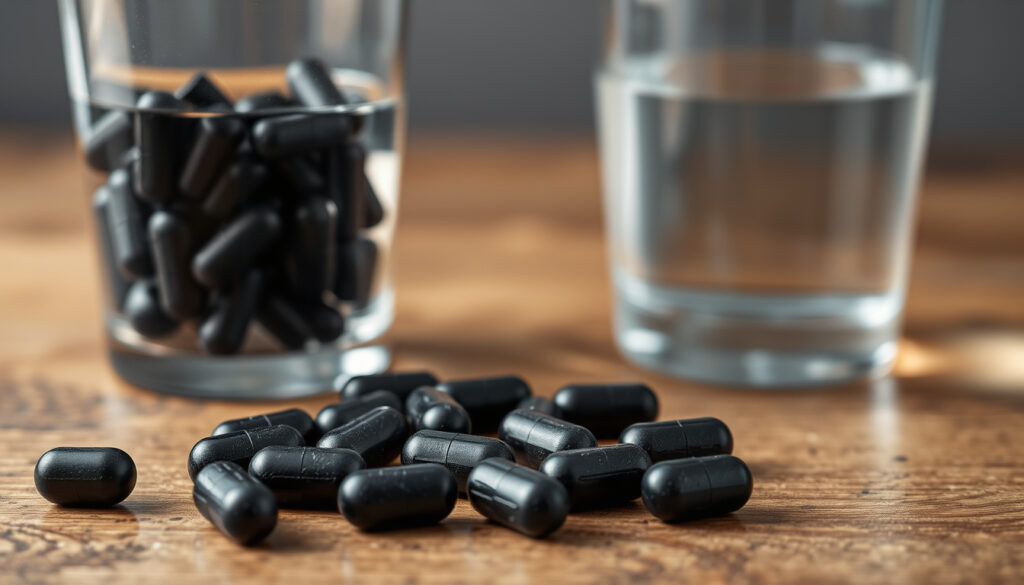
Activated Charcoal: Benefits, Risks, Irish Guide 2025
Activated charcoal works brilliantly in one context—emergency poisoning treatment—yet is widely sold for daily detox purposes backed by surprisingly thin evidence. An acute poisoning dose can reach 100 grams administered by medical staff, while a typical supplement capsule contains just 250–500 mg Mayo Clinic (leading US medical center).
Adult acute poisoning dose: 25–100 grams Mayo Clinic ·
Children (1–12 years) dose: 25–50 grams or 0.5–1 g/kg Mayo Clinic ·
Separation from other oral medications: 2 hours MedlinePlus (US National Library of Medicine)
Quick snapshot
- Effective for acute poisoning by adsorbing toxins in the GI tract Mayo Clinic
- Listed as an essential medicine by the World Health Organization WHO
- Common side effects include constipation, black stools, and vomiting StatPearls (NIH clinical reference)
- Interferes with absorption of many oral medications AccessMedicine (medical textbook)
- Effectiveness as a daily systemic detox or cleanse Medical News Today (health publisher)
- Impact on gut microbiome with chronic use (Medical News Today (health publisher))
- Optimal dose for digestive discomfort (flatulence, bloating) Drugs.com (FDA-registered drug database)
- Long-term safety beyond 2 weeks of daily use GoodRx (health information platform)
- 1813: First recorded medical use of charcoal as an antidote (France) (StatPearls)
- 1960s: Activated charcoal becomes standard emergency-room treatment for oral poisonings (StatPearls)
- 2000s: Rise of consumer supplements marketed for general detox and gut health (StatPearls)
- 2024: NIH still cautions against non-medical daily use due to lack of evidence StatPearls
- More rigorous clinical trials needed for digestive and detox claims (WebMD (consumer health publisher))
- Irish regulators likely to maintain advisory against unsupervised daily use (WebMD (consumer health publisher))
- Growing scrutiny of social-media marketing that overstates benefits WebMD (consumer health publisher)
Five key facts, one pattern: activated charcoal’s evidence base is strong for emergency poisoning but weak for everyday wellness.
| Label | Value |
|---|---|
| Medical classification | Gastrointestinal adsorbent (WHO) |
| Common brands in Ireland | Sona, Lifeplan, Holland & Barrett |
| Adult overdose indication | 1 g of charcoal per kg body weight (typically 25–100 g) Mayo Clinic |
| Major side effect | Constipation (reported in up to 30% of users) StatPearls |
| Global popularity | Listed as an essential medicine by the World Health Organization |
| Contraindications | Unprotected airway, high aspiration risk, GI perforation or hemorrhage StatPearls |
| Medication interactions | Digoxin, phenytoin, theophylline, estrogen/progestin hormones Cleveland Clinic (academic medical center) |
| Evidence for daily detox | Not supported by high-quality human studies Medical News Today |
What are the benefits of taking activated charcoal?
Medical benefits for acute poisoning
The only FDA-approved use of activated charcoal is for gastrointestinal decontamination in acute poisoning or overdose. By binding toxins in the stomach and intestines before they enter the bloodstream, it can reduce systemic absorption Mayo Clinic. A single dose of 25–100 grams given within one hour of ingestion can significantly lower morbidity for substances such as barbiturates, theophylline, and certain antidepressants StatPearls.
For poison control, charcoal is a proven tool—but only under medical supervision. The doses used in hospitals are 100 to 400 times larger than a typical supplement capsule.
Reported benefits for gas and bloating
Some small trials suggest activated charcoal may reduce intestinal gas by adsorbing gas-forming compounds in the colon. A 2020 review noted modest improvement in flatulence when charcoal was taken with food Drugs.com. However, the effect is inconsistent and not large enough to justify routine daily use for most people.
Lack of evidence for detox claims
There is no high-quality evidence that activated charcoal removes “toxins” from the body in a general sense. The concept of a “detox cleanse” is not supported by the mechanism: charcoal acts only in the GI tract and does not pull toxins from the bloodstream GoodRx. Marketing claims that imply systemic detoxification are not backed by clinical data.
Is charcoal good for your stomach?
Mechanism of action in the gut
Charcoal’s porous surface binds gas-forming molecules such as hydrogen sulfide and methane in the colon, which is why some people experience less bloating after taking it Drugs.com. It does not affect stomach acid or motility—it works passively as an adsorbent.
Potential benefit for occasional bloating
A handful of studies, including a 2012 randomized trial, found that activated charcoal reduced abdominal distension and flatulence after a gas-producing meal Medical News Today. The effect was modest and short-lived. For occasional bloating, a small dose may offer relief, but it is not a cure for chronic digestive issues.
Risks of interfering with medication absorption
Because charcoal binds everything in the gut indiscriminately, it can prevent oral medications from being absorbed. The standard advice is to separate charcoal from other drugs by at least 2 hours MedlinePlus. This includes prescription drugs, birth control, and even vitamins.
Is it safe to take activated charcoal daily?
Recommended short-term use only
Medical authorities recommend activated charcoal only for acute poisoning or short-term digestive relief. No high-quality studies have examined long-term daily use in healthy adults WebMD. The consensus among toxicologists is that routine supplementation is unnecessary and potentially risky.
Potential side effects from chronic use
Long-term use can cause constipation, black stools, black tongue, vomiting, and in rare cases intestinal blockage Holland & Barrett (UK supplement retailer). The risk of nutrient malabsorption—especially fat-soluble vitamins—has not been well studied but is a plausible concern.
Guidance from Irish pharmacy sources
Irish supplement brands such as Sona and Lifeplan typically advise 7–14 day cycles on their labels, indicating that continuous daily intake is not recommended Holland & Barrett Ireland. Pharmacists in Ireland commonly caution against taking charcoal within 2 hours of prescription medications.
What toxins does activated charcoal remove from the body?
Substances effectively adsorbed in overdose
Activated charcoal binds a wide range of organic poisons and drugs, including barbiturates, theophylline, digoxin, and many antidepressants. It works by trapping these molecules in its pores and preventing them from entering the bloodstream AccessMedicine.
Substances not adsorbed by charcoal
Charcoal is ineffective for alcohols (ethanol, methanol), strong alkalis, heavy metals (iron, lead, lithium), and corrosive acids. These substances pass through the gut without being bound, so charcoal offers no benefit Drugs.com.
False claims about detoxification
There is no credible evidence that charcoal removes “general toxins” accumulated from the environment, diet, or normal metabolism. The body has its own detox systems—liver and kidneys—and charcoal does not assist them. Marketing that promises a “full body cleanse” is not supported by science Medical News Today.
Does activated charcoal destroy good gut bacteria?
Non-selective adsorption mechanism
Activated charcoal does not distinguish between harmful substances and beneficial compounds. It can bind bacteria, enzymes, and nutrients in the gut, which raises the question of whether it may affect the microbiome StatPearls.
Potential impact on microbiome
Only a few small animal studies have looked at charcoal’s effect on gut bacteria. Some showed reduced bacterial diversity after repeated dosing, but human data are lacking GoodRx. Without robust human trials, the net effect on the microbiome remains unknown.
Advice from gastroenterologists
Gastroenterologists typically advise against routine charcoal use because the long-term consequences for gut health are uncertain. For patients with irritable bowel syndrome or inflammatory bowel disease, charcoal may worsen symptoms by causing constipation or interfering with other medications Cleveland Clinic.
Upsides
- Proven lifesaver in acute poisoning Mayo Clinic
- May reduce flatulence in some individuals Drugs.com
- Recognized by WHO as an essential medicine
- Low cost per dose (typically €0.10–0.50 per capsule in Ireland)
Downsides
- No evidence for general detox or daily cleansing Medical News Today
- Common side effects: constipation, black stools, vomiting StatPearls
- Interferes with prescription medications, including birth control Cleveland Clinic
- Lack of long-term safety data beyond 2 weeks GoodRx
What we know and what remains uncertain
Confirmed facts
- Effective for many oral poisonings when given within one hour StatPearls
- Causes constipation in a significant proportion of users StatPearls
- Requires 2-hour separation from oral medications MedlinePlus
- Listed as WHO Essential Medicine
What remains unclear
- Effectiveness for daily gut cleansing or detox Medical News Today
- Impact on gut microbiome with long-term use
- Optimal dose for digestive discomfort Drugs.com
- Safety in pregnancy and breastfeeding
- Interaction with specific probiotic strains
“Contraindications include unprotected airway, high aspiration risk ingestions, and conditions with high risk of gastrointestinal perforation or hemorrhage.”
—StatPearls (NIH clinical reference)
“Activated charcoal is used in the emergency treatment of certain kinds of poisoning because it helps prevent poison from being absorbed from the stomach into the body.”
—Mayo Clinic (leading US medical center)
“Charcoal may be used for adsorption of intestinal gases in flatulence, distention, and dyspepsia.”
—Drugs.com (FDA-registered drug database)
The pattern is consistent: activated charcoal is a medical tool with a narrow, well-defined role. The supplement industry has stretched those boundaries far beyond what the evidence supports. For Irish consumers considering daily charcoal supplements, the choice is clear: rely on evidence-based medical advice rather than marketing claims, or risk unnecessary side effects and wasted money.
Frequently asked questions
How does activated charcoal work in the body?
It adsorbs (binds) substances in the gastrointestinal tract, preventing their absorption into the bloodstream. The porous structure traps certain molecules, which are then excreted in stool Mayo Clinic.
What is the difference between activated charcoal and regular charcoal?
Activated charcoal is treated with heat and chemicals to create a highly porous surface, increasing its adsorption capacity dramatically. Regular charcoal (like barbecue charcoal) has not been processed this way and is not safe for consumption Drugs.com.
Can activated charcoal whiten teeth?
Some toothpaste formulations contain charcoal for abrasion, but there is no evidence it whitens teeth. The American Dental Association advises caution as charcoal can be overly abrasive and wear down enamel.
Is activated charcoal safe for pregnant women?
Safety during pregnancy has not been established. Medical guidelines advise against non-emergency use. Pregnant women should only take charcoal under direct medical supervision WebMD.
Does activated charcoal interact with birth control pills?
Yes. Because charcoal adsorbs many oral drugs, it can reduce the absorption of estrogen/progestin contraceptives. Cleveland Clinic lists this as a known interaction. Separate intake by at least 2 hours, but the safest approach is to avoid regular charcoal use while on birth control Cleveland Clinic.
How much activated charcoal should I take for gas?
Typical over-the-counter doses are 250–500 mg taken with water after meals. Studies that showed a benefit used multiple doses per day. Do not exceed label directions and do not use for more than 7–14 consecutive days Holland & Barrett Ireland.
You might also find these guides useful: Perineal Massage: When to Start, Step‑by‑Step Guide, and Benefits and Conjoined Twins: Causes, Types, Separation & Life Expectancy.
More related posts
 eBay UK Sign In: Complete Guide to My eBay Login
 Declan Donnelly: Biography, Net Worth & Key Facts
 Are Pears Good for You? 7 Benefits, Nutrition Facts & Comparisons
 We Were Liars Cast: Full 2025 List and Character Guide
 Kristine Froseth: Age, Height, Relationships, Movies & FAQ
 The Last of Us Season 2: Finale, Joel Death, Season 3 News
 Jessica Capshaw: Grey’s Anatomy Facts and Misconceptions
 Lori Petty: Career, Net Worth, and Personal Life in 2024
