Perineal Massage: When to Start, Step-by-Step Guide, and Benefits
If you’re expecting a baby, you’ve probably heard about perineal massage — a gentle daily practice that might reduce your chances of tearing during childbirth. But when should you start? And does the evidence actually back it up? This guide walks through the timing, technique, and trade-offs so you can make an informed decision in the weeks before your due date.
Women who report perineal massage reduces tearing risk: Up to 15% reduction in episiotomy or severe tearing (Cochrane Review 2017) ·
Recommended duration per session: 5 to 10 minutes daily, starting around 34–36 weeks gestation ·
Typical provider recommendation: NHS, HSE, and NCT guidelines uniformly advise perineal massage from 34 weeks ·
Perineal massage adoption rate: Approximately 30–40% of pregnant people in high-income countries report doing it regularly
Quick snapshot
- Daily perineal massage reduces risk of perineal trauma requiring sutures (Cochrane Review)
- Starting at 34 weeks is recommended by national health guidelines (Leeds Teaching Hospitals NHS Trust)
- Partner-assisted massage is safe and allowed (NCT)
- Optimal duration and frequency beyond 5–10 minutes daily are not established
- Whether perineal massage before 34 weeks causes any harm is unproven; caution is conservative
- The exact mechanism by which massage reduces tearing is not fully understood
- During labor: massage may be used by midwives to support perineal stretching
- Postpartum: resume after healing if perineal trauma occurred (consult provider)
Six key facts, one pattern: the evidence consistently points to 34 weeks as the safe starting point, with daily sessions of 5–10 minutes using a lubricant.
| Fact | Value |
|---|---|
| When to start | 34 weeks gestation (NHS, HSE, NCT) |
| Duration per session | 5 to 10 minutes daily |
| Depth of insertion | 1 to 1.5 inches (2.5–4 cm) (NCT) |
| Reduction in tearing risk | ~15% reduction in perineal trauma requiring sutures (Cochrane 2017) |
| Contraindications | Active genital herpes, vaginal infections, bleeding, high-risk pregnancy |
| Best lubricant | Water-based or natural oils (olive, almond, vitamin E) (RCOG) |
When should you begin perineal massages?
Why start at 34 weeks?
National health guidelines from the Royal College of Obstetricians and Gynaecologists (RCOG) recommend starting at around 35 weeks, while the Leeds Teaching Hospitals NHS Trust says any time after 34 weeks. MyHealth Alberta and Pregnancy, Birth and Baby both align on 34 weeks. The reasoning is that giving the tissue time to adapt — at least two weeks of consistent massage — is linked to measurable benefits. The 34-week threshold is a conservative expert consensus, not a strict medical cutoff.
Is 36 weeks too late?
No. Starting later still offers some protection, though the evidence for effectiveness is weaker. East Lancashire Hospitals NHS Trust advises performing perineal massage from 34 until at least 37 weeks, but continuing beyond that is fine. Consistency matters more than the exact start week. Even if you begin at 36 weeks, doing daily massage for at least two weeks is associated with reduced tearing.
Why can’t you do perineal massage before 34 weeks?
There is a theoretical risk that massage too early could stimulate uterine contractions or irritate the cervix. No high-quality evidence shows harm from starting before 34 weeks, but guidelines err on the side of caution. The American Pregnancy Association advises talking to a clinician as you approach the 34th week about when to begin.
The implication: starting early gives tissue the best chance to adapt, but late starts still offer benefits.
How to do perineal massage: a step-by-step guide
Preparation and hygiene
- Wash your hands thoroughly. Trim your fingernails to avoid scratching the sensitive skin (RCOG).
- RCOG recommends sitting in a warm bath before starting to relax the muscles.
- Choose a comfortable position: lying down with knees bent, standing with one foot on a stool, or sitting on the toilet.
- Find a comfortable position: Lie on your back with pillows supporting your head and knees. Or sit on the edge of the bed with your legs apart. The goal is to easily reach your perineum.
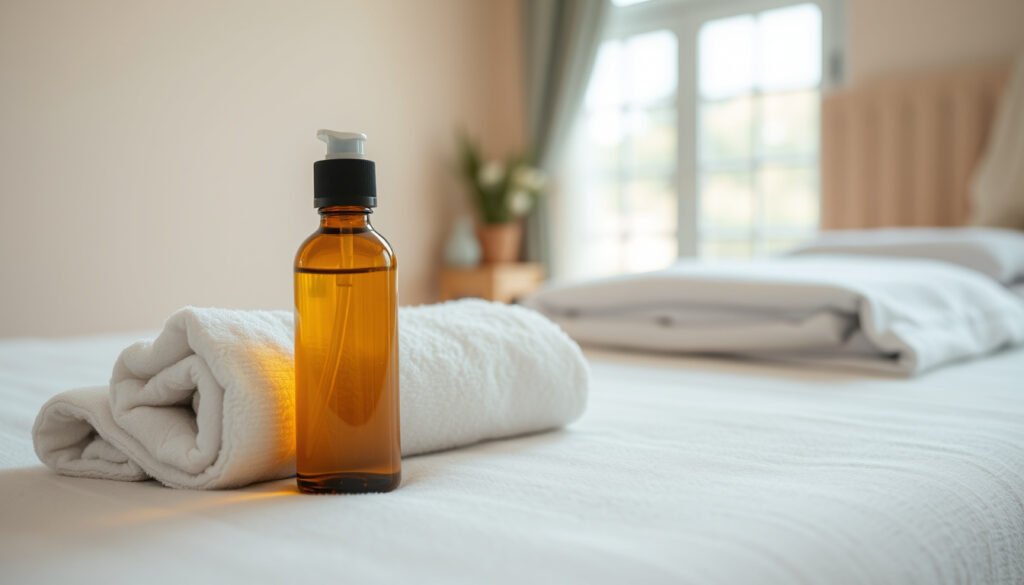
- Apply lubricant: Use a water-based lubricant or a natural oil such as vitamin E oil, almond oil, or olive oil (RCOG). Avoid scented products that might irritate the area.
- Insert thumbs (or partner’s fingers) 1–1.5 inches: Place your thumbs about 2.5 cm to 4 cm just inside the back wall of the vagina, as recommended by NCT. Hold them there for about one minute, breathing deeply, before pressing down and to the sides until you feel a stretching sensation.
- Stretch in a U-shape motion: Gently massage the lower half of the vagina using a U-shaped movement for 2 to 3 minutes (RCOG). Repeat 2 to 3 times. The HSE Ireland describes it as “back and forth over the sides of your vagina in a ‘U’ movement.”
- Massage for 5–10 minutes daily: Repeat daily or as often as possible. ELHT suggests about 5 minutes per session, three times a week, but daily is the standard for optimal benefit.
Can my husband do my perineal massage?
Yes, partners can perform perineal massage. It may reduce anxiety and improve bonding. The partner should wash hands, use lubricant, and follow the same technique. Communication is key: the woman should guide the pressure and movement. The NCT confirms that partner-assisted massage is safe and effective.
For expectant parents, the technique is straightforward but requires consistency. Partner assistance can make it easier for some, but self-massage works just as well — the key is doing it regularly.
Is perineal massage really necessary?
What does the evidence say?
The Cochrane Collaboration (2017 systematic review) found that antenatal perineal massage reduces the likelihood of perineal trauma requiring sutures by about 15%. That’s a modest but meaningful reduction. The review also noted a decrease in the risk of episiotomy. The RCOG advises perineal massage as a way to help reduce the chance of perineal tears.
Who benefits most?
First-time mothers seem to benefit more than those who have given birth vaginally before. Women with previous perineal trauma may also find it helpful. The tissue elasticity gained from massage appears to make the biggest difference for those who have never stretched that area during childbirth.
Will I tear if I don’t do perineal massage?
Not doing perineal massage does not guarantee tearing. Many women deliver without significant perineal injury without massage. Tearing risk depends on baby size, birth position, maternal tissue elasticity, and other factors. Other strategies to reduce tearing risk include warm compresses, controlled pushing, and upright birthing positions. Severe tearing (third or fourth degree) is relatively rare, affecting 2–5% of women.
Upsides
- Reduces risk of perineal trauma requiring sutures by ~15%
- May reduce perineal pain postpartum
- Can help you feel more prepared for birth
- Partner involvement can strengthen bonding
Downsides
- Requires daily commitment for 5–10 minutes
- Can be uncomfortable or awkward at first
- Not recommended for certain medical conditions
- Evidence is modest — not a guarantee against tearing
The trade-off: daily commitment for a modest reduction in tearing risk.
Who shouldn’t do perineal massage?
Avoid perineal massage if you have active genital herpes, vaginal infections, or bleeding. Consult a midwife or doctor if you have a high-risk pregnancy (placenta previa, preterm labor risk, etc.). Stop if you experience pain, bleeding, or unusual discharge. For more on high-risk pregnancy outcomes, see our guide on Conjoined Twin causes and types.
Timeline: When to do what
- 34 weeks gestation: Start daily perineal massage (5–10 min/day) (Leeds Teaching Hospitals)
- 36 weeks: Still beneficial to start, though evidence weaker
- 37–40 weeks: Continue daily; many women report improved tissue stretchiness after 1–2 weeks (Rotunda Hospital Dublin)
- During labor: Massage may be used by midwives or partners to support perineal stretching during crowning
- Postpartum: May resume after healing if perineal trauma occurred (consult healthcare provider)
What this means: there is a window of opportunity, but it’s wider than many expect.
Confirmed facts vs. What’s unclear
Confirmed facts
- Daily perineal massage reduces risk of perineal trauma requiring sutures (Cochrane Review)
- Starting at 34 weeks is recommended by national health guidelines
- Partner-assisted massage is safe and allowed
- Use of lubricant reduces discomfort and improves effective stretching
What’s unclear
- Optimal duration and frequency beyond 5–10 minutes daily are not established
- Whether perineal massage before 34 weeks causes any harm is unproven; caution is conservative
- The exact mechanism by which massage reduces tearing is not fully understood
The pattern: evidence supports the practice, but leaves room for individual variation.
What experts say
“Perineal massage during the weeks before birth reduces the likelihood of perineal trauma (mainly episiotomies).”
— Cochrane Collaboration (2017 systematic review)
“Massage your perineal area slowly for 10 minutes each day. After 1 to 2 weeks, you should notice more stretchiness and less burning in your perineum.”
“Slowly and gently massage back and forth over the sides of your vagina in a ‘U’ movement for 3 minutes. Aim to do this for 5 minutes each day.”
For expectant parents, the choice is clear: perineal massage is a low-cost, low-risk intervention with a modest but real benefit. It doesn’t replace other tearing-prevention strategies, but it’s one of the few practices you can control in the weeks before birth. The implication: if you’re willing to invest 5 minutes a day and have no contraindications, it’s a reasonable step to include in your birth preparation. For those who skip it, the risk of tearing is still manageable — but you’re leaving a small advantage on the table.
mkuh.nhs.uk, scienceinsights.org, health.clevelandclinic.org, thebump.com, strengthdignitywellness.com, nyhedspunkt.dk
For a more detailed walkthrough, you can refer to this complete how-to guide for perineal massage that covers timing and technique in depth.
Frequently asked questions
What is perineal massage?
Perineal massage is a gentle stretching technique performed on the perineum (the area between the vagina and anus) during late pregnancy to increase tissue elasticity and reduce the risk of tearing during childbirth.
Does perineal massage hurt?
It may feel uncomfortable or cause a stretching sensation, but it should not be painful. If you feel sharp pain, stop and consult your midwife or doctor. Using a lubricant and starting slowly helps.
What is the best oil to use for perineal massage?
RCOG recommends vitamin E oil, almond oil, or olive oil. Water-based lubricants also work well. Avoid scented products that may irritate the area.
How often should I do perineal massage?
Daily for 5–10 minutes is the standard recommendation. Some guidelines suggest three times a week, but consistency is key.
Can perineal massage cause labor?
There is a theoretical risk of stimulating uterine contractions if done too early, but no strong evidence shows it induces labor. Starting at 34 weeks is considered safe.
Does perineal massage work for everyone?
No. The Cochrane review shows a modest reduction in tearing risk, but individual outcomes vary. Factors like baby size, birth position, and tissue elasticity play a larger role.
Should I continue perineal massage if I have hemorrhoids?
You can continue if it doesn’t cause pain. Avoid applying pressure directly on hemorrhoids. If you’re unsure, ask your healthcare provider.
These answers cover the most common concerns, but individual questions should be discussed with a healthcare provider.
More related posts
 Rick Edwards: Health Rumors, Wife & Cambridge Degree
 Daniel Craig Bond Movies: In Order, Ranked & Full List
 Sharon Watts: EastEnders Character Profile and Facts
 Chrissie Hynde: Biography, Sobriety, and Net Worth
 Integrated Fridge Freezer: Pros, Cons, Lifespan, Brands to Avoid
 We Were Liars Cast: Full 2025 List and Character Guide
 Charlie Brooks: Life, Career, and Weight Loss After EastEnders
 Is Olive Oil in Ear Safe? How to Use for Ear Wax Removal
