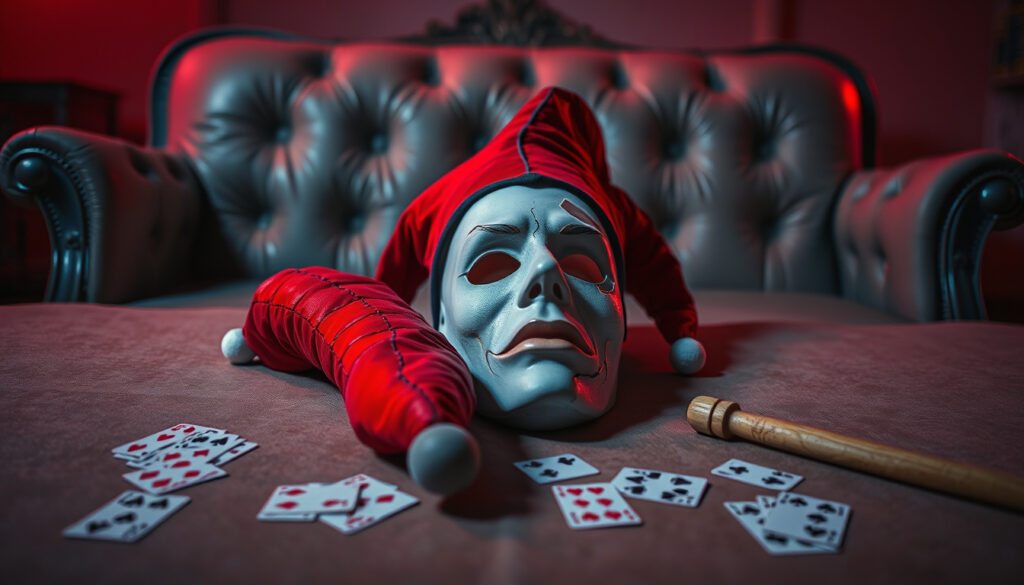
Harley Quinn: Origin, Relationships, Mental Health & More
Harley Quinn started as a one-off character in a 1992 cartoon episode and somehow became one of the most recognizable faces in pop culture. Few fictional figures have traveled such a dramatic arc: from sidekick and victim of a toxic relationship to a bisexual antiheroine who headlines her own movies.
First appearance: Batman: The Animated Series, 1992 · Created by: Paul Dini and Bruce Timm · Real name: Dr. Harleen Quinzel · Portrayed by: Arleen Sorkin (voice), Margot Robbie (live-action) · Sexual orientation: Bisexual (confirmed by DC in 2015)
Quick snapshot
- First appeared in Batman: The Animated Series (1992) (DC official character page)
- Created by Paul Dini and Bruce Timm (DC official character page)
- Real name: Harleen Quinzel (DC official character page)
- Joker (abusive, toxic) (TIME pop culture analysis)
- Poison Ivy (romantic partner) (GO Magazine LGBTQ+ coverage)
- Other love interests in films (Wikipedia)
- Confirmed bisexual by DC (2015) (Bi.org resource)
- Romantic involvement with both men and women (Bi.org resource)
- Icon for LGBTQ fans (GO Magazine LGBTQ+ coverage)
- Histrionic and dependent personality disorders (Psychology Today clinical perspective)
- Trauma and codependency (Psychology Today clinical perspective)
- Debated vs Joker’s insanity (Psychology Today clinical perspective)
| Attribute | Value |
|---|---|
| Real name | Dr. Harleen Quinzel |
| First appearance | Batman: The Animated Series – “Joker’s Favor” (1992) |
| Comic debut | The Batman Adventures #12 (1993) |
| Creators | Paul Dini, Bruce Timm |
| Affiliations | Joker, Suicide Squad, Gotham City Sirens, Birds of Prey |
| Voiced by | Arleen Sorkin, Tara Strong, Kaley Cuoco |
| Portrayed by (live) | Margot Robbie, Lady Gaga (upcoming) |
What is the real story of Harley Quinn?
Origin in Batman: The Animated Series
- Harley Quinn debuted on September 11, 1992, in the episode “Joker’s Favor” — a guest appearance that took everyone by surprise (Book Riot pop culture site).
- Paul Dini and Bruce Timm created the character as a henchwoman for the Joker, based on a harlequin costume seen at a party (DC official character page).
Backstory as Dr. Harleen Quinzel
- In the 1994 graphic novel “The Batman Adventures: Mad Love,” readers learned her full origin: Harleen Quinzel was a promising Arkham psychiatrist who fell for the Joker during his sessions (Bi.org resource).
- She repeatedly helped him escape, eventually adopting the Harley Quinn persona (DC official character page).
Transformation into Harley Quinn
- Depending on the story, the Joker either manipulated her into the transformation or threw her into a vat of chemicals, whitening her skin (TIME pop culture analysis).
- DC describes her as “the Joker’s sidekick-slash-love interest” who the Joker usually did not want but who kept coming back (DC official character page).
Who is Harley Quinn in love with?
Harley Quinn’s romance with the Joker
- For years, Harley’s defining relationship was with the Joker. Psychology Today characterizes it as abusive: “Harley is manipulated and physically and psychologically abused” (Psychology Today mental health analysis).
- Despite this, early stories framed her devotion as love, and the 1993 “Mad Love” comic won an Eisner Award for its portrayal of that toxic bond (Book Riot pop culture site).
Harley Quinn and Poison Ivy’s relationship
- In later comics and the 2019 animated series, Harley and Poison Ivy are shown as romantically involved (Bi.org resource).
- Writers Jimmy Palmiotti and Amanda Conner confirmed the relationship was an open one, cementing Harley’s queerness (GO Magazine LGBTQ+ magazine).
Other romantic interests
- Harley has also been paired with Deadshot, Rick Flag, and even Catwoman in various adaptations, though these are less central (Wikipedia).
Harley’s romantic arc — from victim of abuse to a partner in a healthy queer relationship — is the engine of her modern appeal. For readers who grew up seeing her as a punchline, that transformation is nothing short of radical.
Is Harley Quinn LGBTQ?
Harley’s bisexuality in comics
- DC Comics officially stated in 2015 that Harley Quinn is bisexual, via a public statement from writer Amanda Conner (GO Magazine LGBTQ+ magazine).
- Bi.org notes that “her bisexuality had been known for years before 2015” among fans, but the explicit confirmation gave the Queer community a powerful DC icon (Bi.org resource).
Representation in TV and movies
- The 2019 “Harley Quinn” animated series explicitly portrays her bisexuality, including a romantic relationship with Poison Ivy (Bi.org resource).
- In “Birds of Prey” (2020), Margot Robbie’s Harley mentions a previous girlfriend, though the film focuses more on her independence (Wikipedia).
Reception and significance
- Harley’s bisexuality became a defining trait, with GO Magazine calling the 25th anniversary of her creation “a celebration of her queerness” (GO Magazine LGBTQ+ magazine).
- She is widely regarded as one of the most prominent bisexual characters in mainstream comics (Bi.org resource).
Who’s crazier, Harley or Joker?
Defining insanity in the DC universe
- The Joker is typically portrayed as more chaotic, amoral, and unpredictable — a force of pure anarchy (DC official character page).
- Harley’s actions are often rooted in love or codependency rather than pure psychopathy (Psychology Today mental health analysis).
Contrasting psychotic traits
- Psychology Today’s analysis suggests Harley does not fit antisocial personality disorder but is closer to histrionic personality disorder (Psychology Today mental health analysis).
- Many fans and analyses consider the Joker as the more dangerous and “crazy” of the two, because his violence is without cause (TIME pop culture analysis).
Narrative roles and morality
- Harley’s moral compass has shifted over time: she sometimes helps children or fights alongside heroes, while the Joker remains irredeemable (DC official character page).
Eight years of stories, one pattern: Harley’s insanity is usually portrayed as a response to trauma; the Joker’s is portrayed as a choice.
Harley may be more “mentally ill” in a clinical sense, but the Joker is more dangerous because his amorality has no emotional root. Readers who debate “who is crazier” are really asking who is more redeemable.
What is Harley Quinn’s mental illness?
Diagnoses in comics and adaptations
- Early comics and the animated series depicted Harley with traits of histrionic personality disorder: attention-seeking, seductiveness, and emotional shallowness (Psychology Today mental health analysis).
- Later interpretations added dependent personality disorder, reflecting her codependency with the Joker (Psychology Today mental health analysis).
Histrionic personality disorder
- Psychology Today’s analysis, written by a clinical psychologist, argues that Harley’s flamboyance and need for approval align closely with histrionic traits (Psychology Today clinical analysis).
Dependent personality disorder and others
- Her backstory includes childhood trauma and academic pressure, which some writers use to explain her vulnerability to the Joker’s manipulation (Wikipedia).
- Her mental state is often portrayed as a complex mix of disorder and learned criminal behavior, making her a more sympathetic character than a pure villain (Book Riot pop culture site).
Fans should be careful not to treat fictional diagnoses as real medical labels. Psychology Today’s analysis is one reading, not a DSM-V diagnosis. The character’s appeal lies in her complexity, not in a tidy clinical box.
Timeline signal
- 1992 – Harley Quinn first appears in Batman: The Animated Series (DC official character page)
- 1993 – Comic debut in The Batman Adventures #12 (Book Riot pop culture site)
- 1999 – Harley joins DC’s main comic continuity in Detective Comics (Wikipedia)
- 2011 – New 52 reboot reimagines Harley Quinn (TIME pop culture analysis)
- 2015 – DC officially confirms Harley Quinn as bisexual (GO Magazine LGBTQ+ magazine)
- 2016 – Suicide Squad film introduces Harley to broader audience (Wikipedia)
- 2019 – Harley Quinn animated series premieres on DC Universe/HBO Max (Bi.org resource)
- 2020 – Birds of Prey (and the Fantabulous Emancipation of One Harley Quinn) released (Wikipedia)
Confirmed facts vs. What’s unclear
Confirmed facts
- Harley Quinn was created by Paul Dini and Bruce Timm for Batman: The Animated Series (DC official character page)
- Her real name is Harleen Quinzel (DC official character page)
- She was originally a psychiatrist at Arkham Asylum (Bi.org resource)
- DC Comics officially stated she is bisexual in 2015 (GO Magazine LGBTQ+ magazine)
- She had a romantic relationship with Poison Ivy in various storylines (Bi.org resource)
What’s unclear
- The exact nature and consistency of her mental illness across different media (Psychology Today mental health analysis)
- Whether the Joker ever genuinely loved her or only manipulated her (TIME pop culture analysis)
- Which relationships are canonical vs. alternate reality interpretations (Wikipedia)
- How much of her backstory (chemical vat, childhood trauma) is consistent across continuities (Book Riot pop culture site)
- Whether her bisexuality was fully intentional from early comics or retroactively embraced (GO Magazine LGBTQ+ magazine)
Quotes from creators and performers
“We wanted her to be a tragic figure. She loves the Joker, but it’s a love that destroys her.”
Paul Dini, co-creator of Harley Quinn (TIME interview)
“Obviously, Harley and Ivy are in an open relationship. They love each other, but they’re not exclusive.”
Amanda Conner, comic writer, confirming Harley’s bisexuality (GO Magazine LGBTQ+ magazine)
“Harley isn’t just the Joker’s girlfriend. She’s her own person, and ‘Birds of Prey’ is about her finally figuring that out.”
Margot Robbie, actress, in press for Birds of Prey (Wikipedia)
Summary
Harley Quinn’s journey from a 1992 cartoon cameo to an LGBTQ icon is a story of how fans and creators together reshaped a character. She started as the Joker’s punchline, became a symbol of toxic love, and then, over three decades, broke free into a complex antiheroine with her own voice. For anyone who has ever felt trapped in a relationship or identity that wasn’t theirs, the message is clear: you can rewrite your own origin story.
batman.fandom.com, reddit.com, youtube.com, lgbtqia-characters.fandom.com, popcultureuncovered.com, diarioahora.net
For a deeper exploration of her transformation, check out this complete guide to Harley Quinn that covers her origin, relationships, and mental health journey.
Frequently asked questions
How did Harley Quinn get her name?
Her name is a portmanteau of “harlequin,” the comedic servant archetype, and her real name Harleen Quinzel. The harlequin costume inspired her look.
What are Harley Quinn’s powers and abilities?
She has no superpowers, but is a trained psychologist, an acrobat, and a skilled fighter. She often uses a giant mallet and a hyena sidekick.
Is Harley Quinn a hero or villain?
She started as a villain but has evolved into an antiheroine. In modern stories she sometimes fights alongside Batman and the Birds of Prey.
What is the difference between Harley Quinn and Joker’s relationship?
Harley genuinely loved the Joker, while he mostly used her. The relationship is widely described as abusive and one-sided.
Why is Harley Quinn so popular?
Her blend of tragedy, humor, fashion, and relatability resonates across audiences. Her queerness also made her a beloved figure for LGBTQ fans.
What are the best Harley Quinn comics to read?
“Mad Love” (1994) is essential, plus the New 52 “Harley Quinn” series by Amanda Conner and Jimmy Palmiotti.
Does Harley Quinn have children?
In some alternate timelines, she and the Joker have children, but in main continuity she does not.
What is Harley Quinn’s relationship with Batman?
Mostly adversarial, though Batman sometimes tries to rehabilitate her. They are not romantic.
More related posts
 Frida Kahlo: Biography, Art, Cause of Death, LGBTQ Legacy
 How to Lose a Guy in 10 Days: Plot, Cast, Streaming, and FAQs
 Damiano David: Biography, Partner, Net Worth, and Age Gap
 Robert Carlyle in 2025: The Hack, Watson, and Career
 Winona Ryder: Biography, Relationships, and Career Comeback
 Tom Basden: Career, Music, and Personal Life – Verified Facts
 Drew Starkey: Relationship Status, Age, Height, and Rumors
 Ben Habib: Reform UK Exit, Net Worth, Age, Wife, Ethnicity
