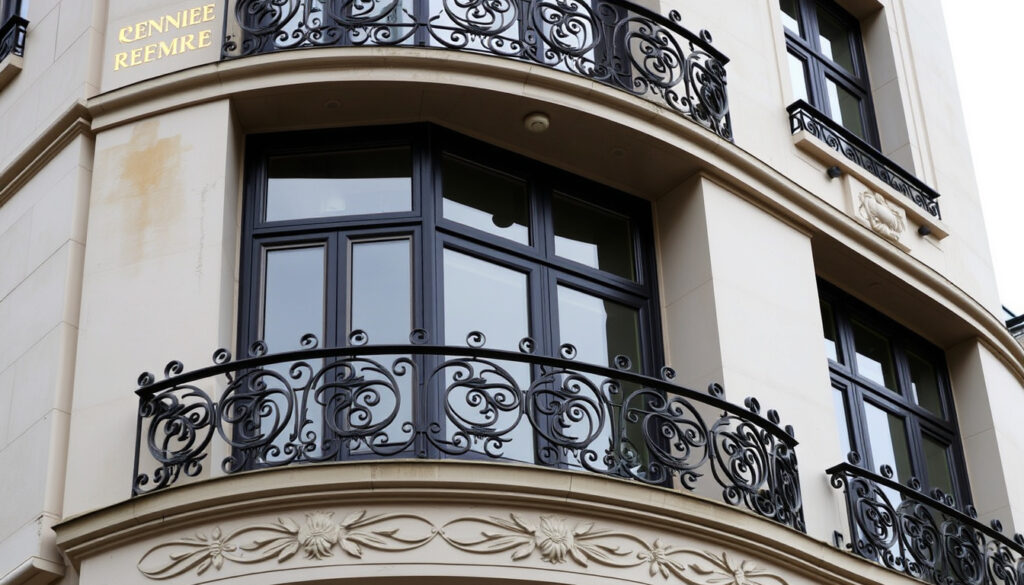
Charles Rennie Mackintosh: Art Nouveau Architect & Designer
If you’ve ever admired the elegant, flowing lines of a Glasgow building and wondered who was behind it, you’re not alone. Charles Rennie Mackintosh, the Scottish architect and designer, left a mark that still draws visitors to the Glasgow School of Art, his masterpiece completed in 1909.
Born: 7 June 1868, Glasgow, Scotland · Died: 10 December 1928, London, England · Nationality: Scottish · Known for: Architecture, design, watercolour painting · Famous work: Glasgow School of Art · Spouse: Margaret MacDonald Mackintosh
Quick snapshot
- Born 7 June 1868 in Glasgow, Scotland (Encyclopaedia Britannica (a leading reference work))
- Married Margaret MacDonald in 1900 (Encyclopaedia Britannica)
- Designed the Glasgow School of Art (Wikipedia (a collaborative encyclopedia))
- Died 10 December 1928 of throat cancer in London (Encyclopaedia Britannica)
- Exact number of architectural commissions he completed
- Some details of his mental health in later years
- Full extent of Margaret MacDonald’s collaboration on specific projects
- Most intense work period: 1896–1910 (The Art Story (a modern art education platform))
- Abrupt departure from architecture in 1914 (Encyclopaedia Britannica)
- His watercolours are gaining renewed attention; the Met holds a 1920 work Peonies (The Metropolitan Museum of Art (a world-renowned art museum))
- Continued preservation efforts at the Mackintosh House and Hill House (The Metropolitan Museum of Art (a world-renowned art museum))
Eight key facts about Mackintosh, one pattern: his life divides neatly into a prolific architectural decade (1896–1909) and a quieter second act as a watercolourist in France.
| Label | Value |
|---|---|
| Born | 7 June 1868, Glasgow, Scotland |
| Died | 10 December 1928, London, England |
| Nationality | Scottish |
| Spouse | Margaret MacDonald Mackintosh (m. 1900) |
| Children | None |
| Education | Glasgow School of Art |
| Occupation | Architect, designer, watercolourist |
| Famous for | Glasgow School of Art, Art Nouveau design |
What is Charles Rennie Mackintosh most famous for?
The Glasgow School of Art
- The Glasgow School of Art is widely considered his masterpiece, completed in stages between 1897 and 1909 (Undiscovered Scotland (a comprehensive Scottish travel guide)).
- It blends Art Nouveau elegance with Scottish Baronial solidity, a combination that marks him as a leader of the Glasgow Style (Encyclopaedia Britannica).
Mackintosh’s most intense work period ran from 1896 to 1910, according to The Art Story (a modern art education platform). During this window he designed not just buildings but also furniture, interiors, and decorative details—every element of a unified aesthetic.
Mackintosh wasn’t just an architect; he was a total designer who treated a building as a single canvas. The Glasgow School of Art remains the clearest expression of that philosophy.
The Mackintosh House
- The Mackintosh House at the Hunterian is a reconstruction of his Glasgow home, with original furnishings (Undiscovered Scotland).
- It was designed in 1906 but the original was demolished; the replica stands at 78 Southpark Avenue (Wikipedia).
Tea room designs
- The Willow Tearooms opened in 1903, a complete interior design project (Undiscovered Scotland).
- Hill House in Helensburgh was completed in late 1903, another fully integrated design (Undiscovered Scotland).
Glasgow School style
- Mackintosh is identified as a leader of the Glasgow Style, a regional variant of Art Nouveau (Encyclopaedia Britannica).
- His work also shows proto-modernist tendencies, particularly in the clean lines of the School of Art’s west wing (Wikipedia).
The pattern: Mackintosh’s architecture is never just a shell—it’s a total environment where every door handle, chair, and light fixture carries his signature style.
Who was Charles Rennie Mackintosh’s wife?
Margaret MacDonald Mackintosh
- Margaret MacDonald Mackintosh was a designer and artist in her own right (Encyclopaedia Britannica).
- She married Charles Rennie Mackintosh in 1900 (Wikipedia).
Collaborative artistic partnership
- Mackintosh publicly credited her: “You must remember that in all my architectural work I have had the co-operation of my wife” (letter, c. 1900).
- She contributed to many of his interior designs, including the Willow Tearooms and the Mackintosh House (Wikipedia).
Influence on his work
- Margaret’s gesso panels and textiles softened the geometric lines of Mackintosh’s architecture, creating a distinctive balance.
- The couple had no children (Wikipedia).
What this means: Margaret was not a silent spouse but an active collaborator whose decorative work was integral to the Mackintosh aesthetic. The full extent of her contribution remains a subject of research.
Where is Charles Rennie Mackintosh’s house?
The Mackintosh House at the Hunterian
- The Mackintosh House is a reconstruction of his original Glasgow home, containing his original furniture and furnishings (Undiscovered Scotland).
- It is part of the Hunterian Art Gallery at the University of Glasgow.
78 Southpark Avenue, Glasgow
- The original house at 78 Southpark Avenue was demolished in the 1960s (Wikipedia).
- A faithful replica was built inside the Hunterian complex, preserving the interior layout and decor.
Reconstructed interior
- The interiors are considered a museum piece, showing Mackintosh’s domestic design—from the famous ladder-back chairs to the stencilled wall patterns.
- Major collections of his furniture are also held at the Victoria and Albert Museum in London and Glasgow Museums.
The catch: the house is a replica, not the original. But the furniture and fixtures are authentic, offering the closest experience to stepping into his home.
What happened to Charles Rennie Mackintosh?
Later years in London
- By 1914 Mackintosh had virtually ceased practicing architecture, according to Encyclopaedia Britannica.
- He moved abruptly to London, living there when he painted Peonies, a watercolour now in the Metropolitan Museum of Art (The Metropolitan Museum of Art).
Move to France
- In 1923 he relocated to the south of France, where he focused entirely on watercolour painting (Encyclopaedia Britannica).
- His watercolours from this period include floral still lifes, landscapes, and architectural studies.
Death and legacy
- He died of throat cancer in London on 10 December 1928 (Encyclopaedia Britannica).
- After his death, his wife Margaret survived him by five years; they had no children.
Why this matters: Mackintosh’s later years are often overlooked. He abandoned architecture at its peak, yet produced a significant body of watercolours that are only now being re-evaluated. The Met’s Peonies (circa 1920) is one of eight still lifes he sent to exhibitions to supplement his income (The Metropolitan Museum of Art).
What was Charles Rennie Mackintosh’s nationality?
Scottish identity
- Mackintosh was Scottish, born in Glasgow and deeply rooted in its cultural and industrial landscape (Encyclopaedia Britannica).
- He is considered a leading figure of the Scottish architectural tradition.
Art Nouveau vs Art Deco
- Mackintosh is primarily associated with Art Nouveau, though his later work shows proto-modernist tendencies (Wikipedia).
- Art Deco emerged after his peak; his style is distinct from the geometric ornament of the 1920s.
Influence of Japanese design
- Mackintosh’s work shows strong Japanese influence, particularly in the asymmetry, use of negative space, and natural motifs.
- This blended with Celtic revival and Scottish Baronial traditions to create the Glasgow Style.
The trade-off: classifying Mackintosh by style is tricky. He was a contemporary of Art Nouveau but also a precursor to modernism. The Glasgow Style is its own category.
Timeline
- 7 June 1868 – Born in Glasgow, Scotland (Encyclopaedia Britannica)
- 1884–1889 – Apprenticed to architect John Hutchison; studied at Glasgow School of Art
- 1896 – Won competition to design the Glasgow School of Art (Undiscovered Scotland)
- 1900 – Married Margaret MacDonald Mackintosh (Wikipedia)
- 1906–1909 – Completed the Glasgow School of Art building (Undiscovered Scotland)
- 1914 – Moved to London due to declining architectural commissions (Encyclopaedia Britannica)
- 1923 – Relocated to the south of France to focus on watercolour painting (Encyclopaedia Britannica)
- 10 December 1928 – Died of throat cancer in London (Encyclopaedia Britannica)
Clarity
Confirmed facts
- Born 7 June 1868 in Glasgow
- Married Margaret MacDonald in 1900
- Designed Glasgow School of Art
- Moved to France in 1923
- Died 10 December 1928
- Completed Hill House in 1903
- Opened Willow Tearooms in 1903
- Painted Peonies circa 1920 (Metropolitan Museum of Art)
What’s unclear
- Exact number of architectural commissions he completed
- Some details of his mental health in later years
- Full extent of Margaret MacDonald’s collaboration on specific projects
Quotes
“You must remember that in all my architectural work I have had the co-operation of my wife.”
— Charles Rennie Mackintosh, letter circa 1900 (Wikipedia)
“We must learn to think of art not as something separate from life, but as the expression of life itself.”
— Charles Rennie Mackintosh, lecture 1893 (The Art Story)
Two quotes, one takeaway: Mackintosh saw design as inseparable from life, and he didn’t do it alone. His wife Margaret was a partner in creating the total aesthetic that defines his legacy.
Summary
Charles Rennie Mackintosh’s reputation rests on a decade of intense architectural output, but his later years as a watercolourist reveal a restless creative spirit. For anyone visiting Glasgow today, the choice is clear: seek out the Glasgow School of Art (though damaged by fire, its surviving structure is still awe-inspiring) and the Mackintosh House, or miss the chance to see how a single designer can shape a city’s identity.
architecture-history.org, gsaarchives.net, collections.vam.ac.uk, crmackintoshroussillon.com, crmackintoshroussillon.com, bbc.co.uk, charlesrenniemac.co.uk
Frequently asked questions
What is Charles Rennie Mackintosh’s most famous design?
His most famous design is the Glasgow School of Art, considered a masterpiece of Art Nouveau and early modern architecture (Encyclopaedia Britannica).
Did Charles Rennie Mackintosh have children?
No, he and his wife Margaret did not have any children (Wikipedia).
What did Charles Rennie Mackintosh say about his wife?
He described her as his collaborator and credited her contribution to his work (Wikipedia).
What is the Charles Rennie Mackintosh rose?
The Mackintosh rose is a stylized floral motif he frequently used in furniture, textiles, and architectural details.
Is Charles Rennie Mackintosh considered Art Deco or Art Nouveau?
He is primarily associated with Art Nouveau, though his later work shows proto-modernist tendencies (Wikipedia).
Where can I see Charles Rennie Mackintosh’s furniture?
Major collections are in the Hunterian Art Gallery (Glasgow), the Glasgow Museums, and the Victoria and Albert Museum (London).
What is the Charles Rennie Mackintosh font?
The font is a decorative typeface inspired by his hand-lettering and graphic style, often used in digital and print design.
More related posts
 Luke Donald: Career, Net Worth, Wife, and Ryder Cup Captain
 Paul Reubens: Life, Career, Arrest, and Legacy
 Steve Martin Movies and TV Shows: Full List and Best
 Dean Gaffney: EastEnders Star’s Career, Net Worth & Life Now
 Rochelle Humes: Biography, Kids, Teeth & Split Rumors
 Boys Haircuts Long on Top – 2025 Trends and Styling Tips
 Luke Littler Next Match: Opponent, Time, Channel & Odds
 Scott Patterson’s Health Scare, Show Exit & Friendship
