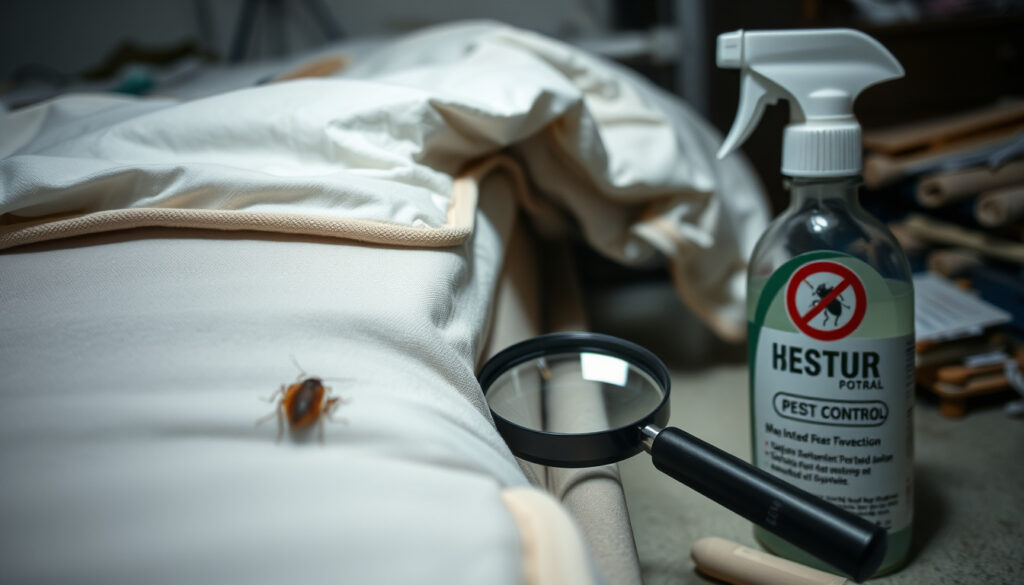
How to Identify, Treat, and Prevent Bed Bugs: An Evidence-Based Guide
If you wake up with itchy red bites and a nagging suspicion that something’s living in your mattress, you’re not alone. Bed bugs are one of the most unwelcome houseguests, but the good news is that with the right approach—based on U.S. Environmental Protection Agency (EPA) Integrated Pest Management (IPM) principles—you can spot them early, treat effectively, and keep them from coming back. This guide walks you through the telltale signs, the real causes, and the evidence-backed steps to reclaim your home.
Adult size: 5 mm (apple seed) · Color: Reddish-brown · Feeding habit: Blood (usually at night) · Wings: None · Lifecycle: 4–6 months
- 5 mm, reddish-brown (CDC – About Bed Bugs)
- Bites in lines (CDC – About Bed Bugs)
- Travel (luggage, clothing) (US EPA – Bed Bug Prevention, Detection and Control)
- Used furniture (US EPA – Prevention)
- High-turnover buildings (CDC – About Bed Bugs)
- Heat (120°F+) (US EPA – DIY Bed Bug Control)
- Steam (US EPA – DIY Bed Bug Control)
- EPA-approved pesticides (US EPA – DIY Bed Bug Control)
- Inspect second-hand items (US EPA – Bed Bug Prevention, Detection and Control)
- Encose mattress (US EPA – DIY Bed Bug Control)
Key facts
| Size | 5 mm (apple seed) |
| Feeding | Blood meal every 5–10 days (CDC – About Bed Bugs) |
| Lifespan | 4–6 months (Mayo Clinic – Bedbugs) |
| Wings | None (CDC – About Bed Bugs) |
| Eggs | 1–5 per day (US EPA – DIY Bed Bug Control) |
How Can You Tell If You Have Bed Bugs?
- Shed exoskeletons and live bugs in mattress folds (CDC – About Bed Bugs)
The CDC’s clinical-care page emphasizes that bite marks alone are not a reliable indicator of an infestation. The CDC (CDC – Clinical Care) advises avoiding scratching and maintaining good hygiene to prevent secondary infections.
What this means: If you see bites but no other signs, don’t assume bed bugs.
- Travel is the leading cause – they hitchhike on luggage and clothing (US EPA – Bed Bug Prevention, Detection and Control)
The EPA (US EPA – DIY Bed Bug Control) includes heat treatment as a key step in its IPM approach.
But always follow label directions and consider hiring a licensed pest control operator (US EPA – DIY Bed Bug Control).
The EPA (US EPA – DIY Bed Bug Control) lays out six steps: identify, plan, keep from expanding, prepare, kill, then evaluate. Home remedies like essential oils may offer some repellent effect, but the CDC (CDC – Clinical Care) does not endorse them as treatments.
Where Do Bed Bugs Hide?
Their favorite spots are mattress seams, bed frames, and headboards (NHS – Bedbugs).
The CDC (CDC – About Bed Bugs) notes that they are not adapted to cling to hair or skin.
The EPA (US EPA – DIY Bed Bug Control) stresses that you must treat the entire room, not just the bed.
Do Bed Bugs Go Away if You Shower?
Scents like lavender, tea tree, and peppermint may have mild repellent properties, but the CDC (CDC – About Bed Bugs) and NHS (NHS – Bedbugs) do not list them as proven treatments. A WebMD (WebMD – Bedbugs) guide also suggests placing a cookie sheet or piece of cardboard beside the bed at night; they can help with detection, but real control requires the full IPM toolkit from the EPA and health agencies.
| Adult body length | 4–5 mm (about the size of an apple seed) (CDC – About Bed Bugs) |
| Color | Reddish-brown after feeding |
| Wings | Absent – they cannot fly (CDC – About Bed Bugs) |
| Antennae | Four-segmented (US EPA – DIY Bed Bug Control) |
What the evidence says
- Bed bugs feed on blood – you can look for shed skins, blood spots, and a musty odor (CDC – About Bed Bugs)
- Heat (120°F+) and steam kill them (US EPA – DIY Bed Bug Control)
- Effectiveness of natural repellents (peppermint, lavender) – not clinically proven according to CDC – About Bed Bugs
“The best way to prevent, identify, and treat bed bug infestations is to use Integrated Pest Management (IPM) principles – a combination of prevention, monitoring, and treatment methods that are safe and effective.”
– U.S. Environmental Protection Agency (US EPA – DIY Bed Bug Control)
“Bed bugs are a public health pest, but unlike many other pests, they do not transmit diseases.”
– World Health Organization (cited by CDC – About Bed Bugs)
Bed bugs are a manageable pest when you approach them with evidence-based methods rather than myths. The key is early detection using the reliable signs – not bites alone – and a systematic IPM plan that includes heat, washing, freezing, vacuuming, and, if needed, professional pesticides.
Are bed bugs dangerous?
Bed bugs are not known to transmit diseases, as noted by the CDC (CDC – About Bed Bugs). The Mayo Clinic (Mayo Clinic – Bedbugs) notes they can live for 4–6 months under favorable conditions. They crawl and can move quickly across floors, walls, and ceilings (CDC – About Bed Bugs).
The EPA (US EPA – DIY Bed Bug Control) advises reading labels carefully and using them as part of a broader treatment plan.
Do bed bugs spread disease?
According to the CDC (CDC – Clinical Care), bed bugs do not transmit diseases. The NHS (NHS – Bedbugs) recommends these simple steps to avoid bringing them back.
The EPA (US EPA – DIY Bed Bug Control) stresses that treatment must be active.
Related reading: Loft Bed Guide: Safety, Ages, Costs & Where to Buy in Ireland · Kitchen Cabinets: Cost, Trends & Colors for 2026
More related posts
 Jesse Tyler Ferguson: Biography, Family, Net Worth, and More
 Dermot Desmond: Net Worth, Celtic Ownership, and Business Empire
 Rob Reiner: Meathead to Director, Dead at 78
 Antony Gormley: The Angel of the North and His Art
 George Foreman Death | Cause of Death, Net Worth, Boxing Legacy
 Kelley Mack: The Walking Dead Actress Dies at 33 from Malignant Glioma
 How to Remove Gel Nail Polish at Home: Dermatologist Guide
 We Were Liars Cast: Full 2025 List and Character Guide
