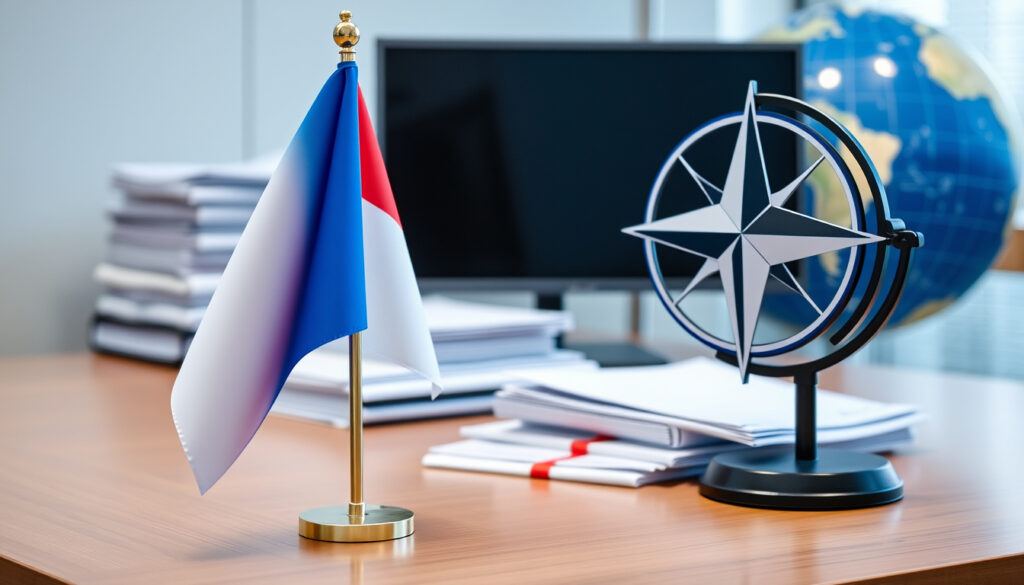
Mark Rutte Biography: From Dutch PM to NATO Chief
There’s a reason the same photograph of Mark Rutte riding his bicycle to work in the rain kept circling the internet for over a decade — the man who led the Netherlands for nearly fourteen years never seemed to trade his ordinary routines for the trappings of power. Now, as NATO’s 14th Secretary General since October 2024, Rutte has swapped the Dutch parliament for the Alliance’s headquarters in Brussels, bringing with him a reputation for pragmatic deal-making that kept four coalition governments standing.
Full name: Mark Rutte ·
Nationality: Dutch ·
Date of birth: 14 February 1967 ·
Height: ca. 1.80 m (5 ft 11 in) ·
Current role: NATO Secretary General (since Oct 2024) ·
Political affiliation: People’s Party for Freedom and Democracy (VVD)
Quick snapshot
- Born 14 February 1967 in The Hague (Britannica)
- Prime Minister of the Netherlands, October 2010 – July 2024 (NATO)
- NATO Secretary General since 1 October 2024 (NATO)
- Exact height never officially confirmed by Rutte himself
- Precise personal net worth not publicly detailed
- Leading NATO’s defense and deterrence agenda into 2025
- Managing Alliance relations amid shifting US political dynamics
Key facts at a glance
Eight data points that anchor Rutte’s public record, drawn from official NATO material, reference publishers, and wire service reporting.
| Label | Value |
|---|---|
| Full name | Mark Rutte |
| Nationality | Dutch |
| Political party | People’s Party for Freedom and Democracy (VVD) |
| Height | 1.80 m (5 ft 11 in) |
| Nickname | Teflon Mark |
| Prime Minister term | 14 October 2010 – 2 July 2024 |
| NATO Secretary General | Since 1 October 2024 |
| Religion | Raised Protestant; identifies as agnostic |
The pattern worth noting: Rutte’s longevity in Dutch politics rested less on ideology than on his ability to hold coalitions together across a fragmented multiparty landscape — a skill NATO members will be watching closely.
Is Mark Rutte a liberal?
Rutte is a member of the People’s Party for Freedom and Democracy (VVD), a party that sits on the center-right of the Dutch political spectrum. The VVD is commonly described as a conservative-liberal party, blending free-market economics with social liberalism — a combination that allowed Rutte to govern as a pragmatic centrist rather than an ideological crusader.
Political affiliation of Mark Rutte
Rutte was elected leader of the VVD in June 2006, according to Reuters (wire service). Under his leadership, the party won enough seats to form or join coalition governments for four consecutive terms.
Mark Rutte VVD ideology
The VVD’s platform emphasizes individual responsibility, lower taxes, and free enterprise. Rutte’s governance style, however, was defined by compromise — Britannica (established reference publisher) notes he was praised for brokering unlikely alliances and finding common ground in coalition governments.
Is Mark Rutte liberal or conservative?
The honest answer is that Rutte was both, depending on the issue. His economic policy leaned right, his social policy leaned center, and his foreign policy was firmly transatlantic.
Rutte’s political identity was never about purity — it was about durability. The VVD’s conservative-liberal framework gave him room to pivot as coalitions demanded, a trait that translated directly to his NATO role.
What nationality is Mark Rutte?
Mark Rutte is Dutch. He was born in The Hague, the Netherlands’ seat of government, and holds Dutch citizenship.
Mark Rutte place of birth
Rutte was born on 14 February 1967 in The Hague, according to Britannica (established reference publisher).
Mark Rutte Dutch citizenship
As a Dutch citizen, Rutte spent his entire political career in the Dutch system — from municipal politics to national office — before transitioning to an international role at NATO. His nationality was never a point of controversy, and he is identified by NATO as a Dutch national serving as Secretary General.
Mark Rutte ethnic background
Rutte’s family is of Dutch ethnicity, with roots in the province of South Holland. He was raised in The Hague, where he attended a Christian grammar school before moving to Leiden for university.
The implication: Rutte’s Dutch identity is not incidental — it shaped his political style. The Dutch consensus culture, built on trade, pragmatism, and coalition-building, is the environment that produced his leadership approach.
What is Mark Rutte’s nickname?
Rutte is widely called “Teflon Mark” — a nickname that emerged during his premiership. It refers to his remarkable ability to emerge from political scandals and controversies without lasting damage to his reputation.
Mark Rutte nicknames
The “Teflon” label is the most common, but he has also been referred to informally as “the bicycle PM” — a nod to his habit of cycling to work, which became a visual shorthand for his down-to-earth image.
Why is Mark Rutte called the Teflon Prime Minister?
The nickname stuck because Rutte repeatedly survived political crises that would have ended lesser careers. From parliamentary inquiries to coalition collapses, he found ways to remain standing. His response to these moments was typically understated — he acknowledged mistakes, accepted responsibility, and moved on without dramatic gestures.
Mark Rutte informal names
In Dutch media, he is sometimes referred to simply as “Mark” — a deliberate informality that extends to the public. He has encouraged this approachability, appearing at press conferences with a cup of coffee and answering questions directly.
The pattern: The “Teflon” nickname is not just about survival — it signals a leadership style that avoids personalizing political conflict. For NATO, that trait could prove valuable in managing divergent member-state interests.
How tall is Mark Rutte?
Mark Rutte is approximately 1.80 m (5 feet 11 inches) tall. This figure is commonly cited across media and biography sources, though Rutte himself has never made an official public statement about his height.
Mark Rutte height in cm
At roughly 180 centimeters, Rutte is around the average height for Dutch men. The Netherlands consistently ranks among the tallest nations in the world, with an average male height of about 183 cm, so Rutte is slightly below the national average but still tall by global standards.
Mark Rutte height compared to other leaders
Rutte’s height is comparable to that of several world leaders. He is noticeably shorter than former US President Donald Trump (about 1.90 m) but taller than French President Emmanuel Macron (1.72 m). His successor in The Hague, Dick Schoof, is roughly the same height.
Mark Rutte physical appearance
Rutte’s lanky frame, combined with his habit of wearing tailored suits and carrying a bike helmet, has made him instantly recognizable in diplomatic circles. His appearance is part of his public persona — approachable, modest, and unpretentious.
The catch: Height trivia may seem superficial, but it reflects a broader media interest in the human details that make politicians relatable. For Rutte, those details — the bicycle, the coffee cup, the modest office — were deliberate signals of ordinariness in a role that is anything but ordinary.
Is Mark Rutte a fan of Trump?
The direct answer is that Rutte never publicly expressed personal admiration for Donald Trump — nor did he openly criticize him as a person. Instead, Rutte maintained a professional relationship with Trump during his presidency, meeting him at NATO summits and White House visits as part of his role as Dutch Prime Minister.
Mark Rutte relationship with Donald Trump
Rutte met with Trump at least three times in an official capacity, including a 2018 White House visit. The Dutch PM was widely reported in European media as one of the leaders who tried to use friendly persuasion rather than confrontation when dealing with Trump.
Mark Rutte comments on Trump
Rutte never issued a public statement either endorsing or condemning Trump’s politics during his premiership. His public remarks were confined to diplomatic formalities about the transatlantic relationship — a consistent approach that kept the Netherlands on good terms with successive US administrations.
Rutte and Trump diplomatic history
The two leaders interacted chiefly through NATO channels, where Trump’s demands for increased European defense spending were a recurring theme. Rutte’s response was pragmatic — he pushed European allies to meet spending targets while avoiding direct confrontation with Washington.
Rutte’s relationship with Trump was a masterclass in diplomatic ambiguity. For NATO’s current Secretary General, maintaining that balance remains critical — especially as the Alliance faces a potentially unpredictable US political cycle.
What previous offices did Mark Rutte hold?
Before becoming NATO Secretary General, Rutte held a series of political offices that built his reputation as a competent administrator and negotiator.
| Office | Period |
|---|---|
| State Secretary for Social Affairs and Employment | 2002–2004 |
| State Secretary for Education, Culture and Science | 2004–2006 |
| Leader of the VVD | 2006–2024 |
| Prime Minister of the Netherlands | October 2010 – July 2024 |
| NATO Secretary General | Since 1 October 2024 |
The professional arc here is consistent: Rutte moved from personnel and education policy to the top political post, then to the Western Alliance’s highest civilian office — each step adding a layer of responsibility without changing his fundamental operating style.
Mark Rutte prime minister term
Rutte became Prime Minister on 14 October 2010, following Jan Peter Balkenende’s resignation. He served for almost 14 years — the longest continuous premiership in Dutch history, per TIME (internationally recognized magazine).
Mark Rutte education and early career
Rutte studied history at Leiden University, a respected research institution. Before politics, he worked in human resources at Unilever, where he learned the corporate management style that would later influence his political approach.
Mark Rutte state secretary roles
Rutte entered government in 2002 as a junior minister for social affairs and employment. Two years later, in June 2004, he moved to education, culture and science — a field he had studied academically and managed professionally at Unilever.
The implication: Rutte’s path to power was gradual and administrative, not charismatic. He earned his position through competence and reliability — qualities that NATO members explicitly cited when he was appointed over other candidates.
Timeline: Mark Rutte’s rise from The Hague to Brussels
- 1967: Born in The Hague (Britannica)
- 2002–2004: State Secretary for Social Affairs and Employment (Reuters)
- 2004–2006: State Secretary for Education, Culture and Science (Reuters)
- 2006: Elected leader of the VVD (Reuters)
- 2010–2024: Prime Minister of the Netherlands (NATO official biography)
- 2024: Appointed NATO Secretary General, succeeding Jens Stoltenberg (NATO)
The pattern: Rutte’s career trajectory shows steady upward movement through the Dutch political system, with no dramatic breaks or reversals. His NATO appointment was the logical extension of a career built on institutional trust.
What we can confirm — and what remains uncertain
Confirmed facts
- Born 14 February 1967 in The Hague (Britannica)
- Member of the VVD party since 2006 (Reuters)
- Prime Minister from October 2010 to July 2024 (NATO)
- NATO Secretary General since 1 October 2024 (NATO)
- Studied history at Leiden University (Reuters)
What’s unclear
- Exact height never officially confirmed by Rutte himself
- Precise personal net worth not publicly detailed
- Religious identity is self-described as agnostic, though raised Protestant — no official statement exists
Even in a biography heavy on public record, some details remain opaque by choice. Rutte’s guarded approach to personal matters mirrors his political style: share enough to appear open, keep the rest in reserve.
Quotes and perspectives
“Compromise is part of politics.”
— Mark Rutte, on his leadership style during his premiership
“A strong supporter of global and transatlantic cooperation.”
— NATO (official institutional assessment), on Rutte’s approach to the Alliance
Rutte’s appointment to NATO signaled that member states value a coalition-builder over a policy innovator — a judgment call that will shape how the Alliance navigates the coming years.
Summary: The pragmatist’s bet
Mark Rutte built his reputation as the Netherlands’ ultimate coalition manager, a leader who treated politics as the art of keeping everyone at the table. That reputation is now on a larger stage at NATO, where the Alliance must balance deterrence, diplomacy, and internal disagreements among 32 member states. For European allies, Rutte’s arrival represents a bet on continuity and consensus-building — a style that worked in The Hague’s fragmented politics. The question ahead is whether the same approach can hold NATO together amid what could be the most unpredictable US election cycle in memory. For the Alliance’s members, the choice is clear: they have opted for a steady hand, or they will discover the limits of pragmatism when crisis demands decisiveness.
nato.int, en.wikipedia.org, biography.wiki, nato.int, simple.wikipedia.org, rbc.ru, rubryka.com, english.nv.ua
Frequently asked questions
What is Mark Rutte’s educational background?
Rutte studied history at Leiden University, a leading Dutch research institution. His academic background in history, combined with a corporate career at Unilever, gave him a blend of analytical and managerial skills.
Has Mark Rutte ever been married?
No. Mark Rutte has never been married and has no children. He has kept his personal life private, and his status as a bachelor has been noted in media profiles without significant political commentary.
Why is he called Teflon Mark?
The nickname refers to his ability to avoid lasting political damage from scandals or controversies during his premiership. No political crisis managed to stick to him, much like Teflon prevents substances from adhering to a surface.
What is Mark Rutte’s salary as NATO Secretary General?
NATO does not publicly disclose the Secretary General’s exact salary. Reports from 2024 suggest the role carries a compensation package in the range of €300,000–€400,000 annually, but this figure has not been officially confirmed by NATO.
What are Mark Rutte’s hobbies?
Rutte is known as an amateur concert pianist and reportedly a part-time high school social-studies teacher during his younger years, according to TIME (international news magazine). He also enjoys cycling to work whenever possible.
Is Mark Rutte still active in Dutch politics?
No. Rutte stepped down as Prime Minister in July 2024 and resigned as leader of the VVD. He is now focused entirely on his NATO role, which requires political neutrality in his dealings with member states.
Related reading
More related posts
 Kevin Hart: Net Worth, Wife, Children, Height, and FAQ
 Shemar Moore: Age, Height, Kids, Relationships & More
 Judy Garland Death: Cause, Funeral, and Children’s Ages
 Keeley Hawes: Biography, Marriage, Career & TV Roles
 Edvin Ryding: Age, Height, Relationship, Career Facts
 Curtis Pritchard: Biography, Relationships, and Career
 De Vere Latimer Estate – Location Facilities Reviews Guide
 Dita Von Teese: Ethnicity, Sobriety & Personal Life Facts
