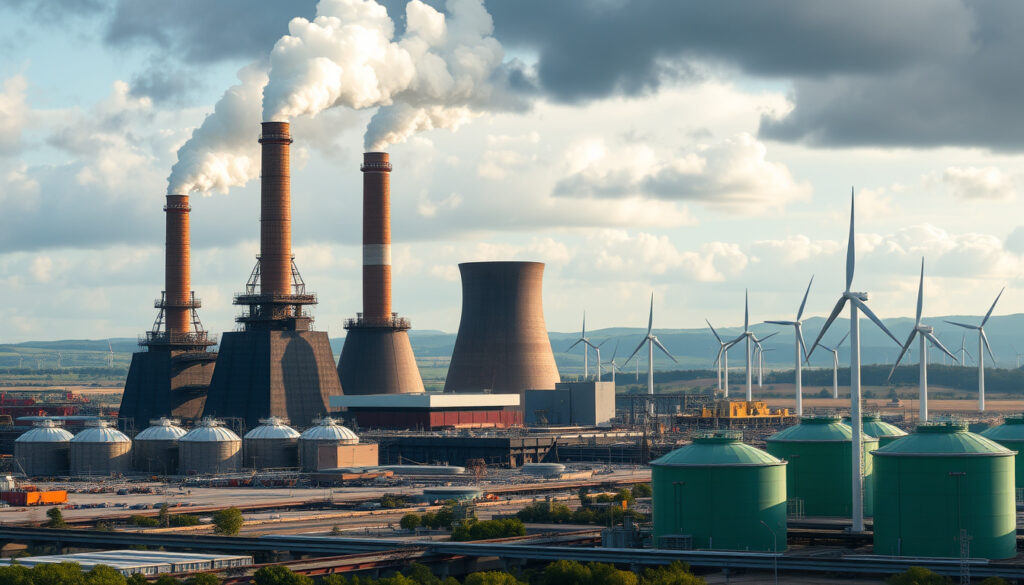
Tata Steel Port Talbot: closures, jobs, and green future
Few industrial towns are as defined by steel as Port Talbot, but with blast furnaces falling silent in 2024, the town is asking what comes after steel. This article covers why closures happened, job impacts, ownership, the green steel transition, and what it means for workers.
Steel production capacity before closure (per year): around 3 million tonnes ·
Blast furnaces closed in 2024-2025: blast furnace 4 and 5 ·
Expected completion year for new electric arc furnace: 2027 ·
Workers affected by transition (approximate): 2,800
Quick snapshot
- Blast furnace 4 closed in July 2024; blast furnace 5 closed in early 2025 (GMK Center (industry analysis))
- New electric arc furnace construction started in 2025 with completion target 2027 (Tata Steel UK official)
- Around 2,800 job losses announced by Tata Steel (Sky News report)
- Port Talbot Steelworks owned by Tata Group (Wikipedia (community-reviewed))
- Exact number of workers rehired after EAF is operational – estimates vary (Tata Steel UK expects about 1,200 roles) (GMK Center)
- Total cost of the green steel project and exact level of UK government subsidy (government agreed £500 million but total cost close to £1.25 billion, per GMK Center)
- Long-term viability of Tata Steel UK post-transition without further government support (GMK Center)
- Exact salary ranges for specific job roles – best data from Glassdoor (employee reviews), not official source
- September 30, 2024 – last blast furnace shut down, ending primary steelmaking after 100+ years (Tata Steel UK)
- 2025 – site preparation for electric arc furnace begins (Tata Steel UK)
- 2027 (target) – new electric arc furnace expected to begin operations (GMK Center)
- Electric arc furnace will melt scrap steel using electricity, cutting CO₂ emissions by ~80% (Tata Steel UK)
- About 1,200 jobs expected to remain after transition (Tata Steel UK)
- UK government contributed £500 million grant for the project (GMK Center)
- Processing of imported slabs continues at the cold rolling mill and coating lines (Tata Steel UK)
The table below shows seven key attributes of the Port Talbot site before the closures – a snapshot of a plant that once produced 3 million tonnes of steel each year.
| Attribute | Details |
|---|---|
| Full name | Tata Steel Port Talbot (also known as Port Talbot Steelworks) |
| Location | Port Talbot, Neath Port Talbot, Wales, UK |
| Owner | Tata Group (via Tata Steel UK) |
| Established | 1901 (as Port Talbot Steelworks) |
| Current capacity (before closure) | 3 million tonnes of crude steel per year |
| Employees (before restructuring) | Approx. 4,000 |
| Blast furnaces closed | Furnace 4 (July 2024) and Furnace 5 (early 2025) |
What is happening to Tata Steel Port Talbot?
The shift from blast furnaces to electric arc furnace
- Tata Steel closed Blast Furnace 4 in July 2024 and Blast Furnace 5 in early 2025, ending the site’s primary steelmaking (GMK Center).
- A new electric arc furnace (EAF) is under construction, expected to be operational by 2027 (Tata Steel UK official).
- The green steel project aims to reduce carbon emissions by 80% compared to the blast furnace route.
- Around 2,800 jobs will be cut across the UK, with the heaviest impact on Port Talbot (Sky News report).
Timeline of closure and construction
- September 30, 2024 – Blast Furnace 4 shut down at around 5pm; the last steel was cast that evening (Sky News).
- Closures included the deep-water harbour, Morfa Coke Ovens, Sinter Plant, and some secondary steelmaking (Tata Steel UK).
- Equipment orders for the EAF, ladle furnaces, and cranes were placed shortly after September 2024.
- Site works for the EAF are planned from July 2025, with completion targeted within three years from October 2024 (Tata Steel UK).
The implication: this transition marks the end of an industrial era that defined the town for over a century.
Why is Tata Steel closing the Port Talbot steelworks?
Economic reasons for closure
- The blast furnaces were running at a loss; Tata Steel’s UK division reported significant financial losses in recent years (Tata Steel UK).
- High operating costs of the integrated blast furnace route, including raw materials (coke, iron ore) and energy.
- Cheaper imported steel from Asia and other regions undercut the Port Talbot plant’s margins.
Environmental and regulatory pressure
- The UK government’s net-zero targets require steelmaking to slash CO₂ emissions by 80% by 2035 and reach net zero by 2050.
- The EAF route reduces emissions dramatically, making the plant compliant with future carbon regulations.
- The UK government agreed a £500 million grant in September 2023 to support the transition (GMK Center).
The UK government’s green steel subsidy of £500 million buys a dramatic cut in emissions but at the cost of over 2,000 direct jobs in a region already vulnerable to economic shocks.
Global steel market competition
International steel producers, many with lower labour and environmental costs, have made it hard for older European plants to compete. Port Talbot’s blast furnaces were designed for a different century, and the cost to modernise them was prohibitively high.
The implication: without the EAF investment, the entire site would likely have faced full closure – a far worse outcome for the local economy.
The pattern: global competition forced a choice between downsizing or disappearing entirely.
Is there still a steelworks in Port Talbot after the closures?
Current operational status
- Some operations continue: pickle line, cold rolling mill, coating lines (YouTube News Clip).
- The heavy end (blast furnaces, steelmaking, slab caster) ceased in 2024-2025.
What remains after blast furnace closures
- The site now processes imported steel slabs, which are rolled into finished products.
- Electric arc furnace will restart steelmaking but from scrap, not from iron ore – a different process that requires less labour.
- Before the closures, over 4,000 people worked at Port Talbot; roughly 2,000 remain for downstream operations (Wikipedia).
Port Talbot is no longer a primary steelmaking site. It has become a finishing and processing hub, with the promise of a future EAF. The town’s identity as a place where raw iron is turned into steel is over.
The catch: the remaining jobs are tied to imported slabs, a temporary arrangement until the EAF starts.
Who owns Tata Steel in Port Talbot?
Ownership structure of Tata Steel UK
- Tata Steel UK is wholly owned by Tata Group, an Indian multinational conglomerate (Wikipedia).
- Tata Group also owns Jaguar Land Rover, Tetley Tea, and other global brands.
- The parent company of Tata Steel UK is Tata Steel Limited, headquartered in Mumbai, India.
The pattern: Port Talbot steelworks – once a proud British nationalised asset – is now a subsidiary of a global conglomerate making decisions from thousands of miles away.
How much do Tata Steel workers get paid?
Average salary for different roles at Tata Steel Port Talbot
- Average hourly wage for steelworkers at Port Talbot is around £12-18 per hour).
- Typical salary for a process operator is around £30,000-35,000 per year.
- Some senior engineering roles pay up to £50,000-60,000 annually.
Apprentice wages and benefits
- Apprentices at Tata Steel start around £12,000-15,000 per year depending on level.
- Benefits include free parking, safety training, and a pension scheme.
The catch: even with decent pay, the risk of redundancy overshadows compensation.
Is Tata Steel a good place to work?
Employee reviews and ratings on Glassdoor
- Overall rating on Glassdoor around 3.5 out of 5 stars (Glassdoor).
- Common pros: strong safety culture, good training, free parking.
- Common cons: job insecurity due to restructuring, pay lower than comparable roles in other sectors.
Work culture and job security concerns
- Union relationships have been strained due to proposed job cuts.
- Many current employees are awaiting redundancy decisions, which colours the work environment.
The catch: for anyone considering a career at Tata Steel Port Talbot today, the main concern is not pay or culture but whether the job will still exist in two years.
Tata Steel Port Talbot has become a place where workers earn good money for the region but face the highest risk of redundancy. Job insecurity is now part of the job.
Comparison: Old blast furnace vs new electric arc furnace
Three key differences define the contrast between the old and new steelmaking methods at Port Talbot – cost, carbon, and workforce.
| Aspect | Blast furnace route (old) | Electric arc furnace (new) |
|---|---|---|
| Raw material | Iron ore, coke | Scrap steel |
| Energy source | Coal (coke) | Electricity |
| CO₂ emissions | ~1.8 tonnes per tonne of steel | ~0.3 tonnes per tonne (80% less) |
| Labour intensity | ~4,000 workers for 3m tonnes | ~1,200 workers projected |
| Capital cost | Very high (existing sunk) | £1.25bn (£500m gov grant) |
The pattern: lower emissions come at the expense of jobs. The new plant will be leaner, cleaner, and significantly smaller.
Pros and cons of the green steel transition
Upside
- 80% reduction in CO₂ emissions – essential for UK climate targets.
- Electric arc furnace technology ensures long-term viability of the site.
- UK retains steelmaking capability (even if reduced) and avoids complete reliance on imports.
Downside
- Loss of ~2,800 direct jobs and many more in the supply chain.
- Temporary dependence on imported semi-finished steel until EAF starts.
- Risk that the EAF project could face delays or cost overruns.
The trade-off: Wales trades jobs for climate targets. The government’s £500m subsidy keeps steel in Port Talbot, but at a vastly reduced scale.
Timeline of Port Talbot steelworks
The table below traces the key moments in the site’s 124-year history – from its founding as a tinplate works to the current transition.
| Year | Event |
|---|---|
| 1901 | Port Talbot Steelworks founded as a tinplate works |
| 1947 | Nationalised under British Steel Corporation |
| 1988 | Privatised as part of British Steel plc |
| 1999 | British Steel merged with Dutch Hoogovens to form Corus |
| 2007 | Tata Steel acquires Corus (including Port Talbot) for £6.2 billion |
| 2023 | Tata Steel announces plans to close blast furnaces and invest in electric arc furnace |
| July 2024 | Blast furnace 4 shut down |
| Early 2025 | Blast furnace 5 closed; heavy end steelmaking stops |
| 2027 (target) | New electric arc furnace expected to begin operations |
The pattern: each phase reflects a shift from local ownership to global control, and now to a leaner, greener model.
What’s confirmed and what’s still uncertain
Confirmed
- Blast furnace 4 closed in July 2024 (GMK Center).
- Blast furnace 5 closed in early 2025 (Tata Steel UK).
- New electric arc furnace construction started in 2025 with completion target 2027.
- Around 2,800 job losses announced by Tata Steel (Sky News).
- Tata Group ownership confirmed (Wikipedia).
Uncertain
- Exact number of workers rehired after EAF is operational – estimates vary.
- Total cost of the green steel project and exact level of UK government subsidy (government agreed £500 million but total cost close to £1.25 billion).
- Long-term viability of Tata Steel UK post-transition without further government support.
- Exact salary ranges for specific job roles – best data from Glassdoor, not official source.
The catch: even the confirmed facts leave big unknowns about the future workforce and finances.
What people are saying about the changes
“This marks the end of an era, but we are committed to building a sustainable steel business for the UK.” – Tata Steel UK CEO (official statement)
Tata Steel UK
“We will do everything we can to support affected workers and the local economy.” – Welsh Government minister
Sky News report
“The scale of job losses is devastating for families and the community.” – Union representative (Community union)
“Port Talbot without a steelworks? It’s a different town.” – Local resident
Why these voices matter: the closure is not just a corporate decision – it reshapes a community that grew around the steelworks for over a century.
Summary: What the Port Talbot transition means for the UK steel industry
For the UK steel sector, the Port Talbot story is a test case. The government has decided that supporting green steel through subsidies is preferable to losing primary production entirely. But the price – thousands of jobs in a region already struggling – is steep. The next three years will show whether the electric arc furnace can sustain a skilled workforce, or whether Port Talbot becomes a processing hub with a diminished identity. For the workers of Port Talbot, the choice is clear: adapt to the new technology, or look for work outside the industry. For the UK government, the risk is that the £500 million grant delays rather than avoids the deeper decline of domestic steelmaking.
For a deeper look at the timeline and implications, see the green steel transition at Port Talbot.
Frequently asked questions
Will Tata Steel Port Talbot reopen the blast furnaces?
No, the blast furnaces are permanently closed. The company is building an electric arc furnace instead.
How does the new electric arc furnace differ from the old process?
The EAF melts scrap steel using electricity instead of burning coal, reducing CO2 emissions by around 80%.
How many jobs will remain at Tata Steel Port Talbot after the transition?
The company expects to retain about 1,200 roles after the EAF becomes operational, down from around 4,000 previously.
What is the government’s role in the Port Talbot project?
The UK government has pledged up to £500 million toward the green steel project, with Tata Steel investing the remainder.
Is Tata Steel Port Talbot the largest steelworks in the UK?
Yes, it was the largest by capacity before the closures. After the transition, it will remain one of the most significant UK steel sites.
What type of steel was made at Port Talbot?
The plant produced flat steel products used in automotive, construction, and packaging industries.
How does the Port Talbot closure affect UK steel supply?
The closure reduces UK primary steelmaking capacity, making the country more reliant on imported semi-finished steel until the EAF starts.
Can the public visit Tata Steel Port Talbot?
The site is not open for general public tours, but some community events and visits may be arranged through the company.
Related reading: Keir Starmer Announcement Today: Antisemitism Crackdown and Air Source Heat Pump – UK Guide to Costs Efficiency Installation.
More related posts
 AI Action Figure Generator: Free Online Tools & How to Use
 Miniature Poodle: Downsides, Training & Care Guide
 Paul Arthurs (Bonehead): Biography, Net Worth, Oasis Exit & More
 Vince Vaughn: The Art of Charisma and Performance on Screen
 God of War 4: Official Name, Release Date, and Ragnarök
 Kevin Hart: Net Worth, Wife, Children, Height, and FAQ
 Sonam Bajwa: Biography, Age, Marriage, Religion, Career
 Evie Templeton: Age, Eyes, Dancing & Wednesday Role
