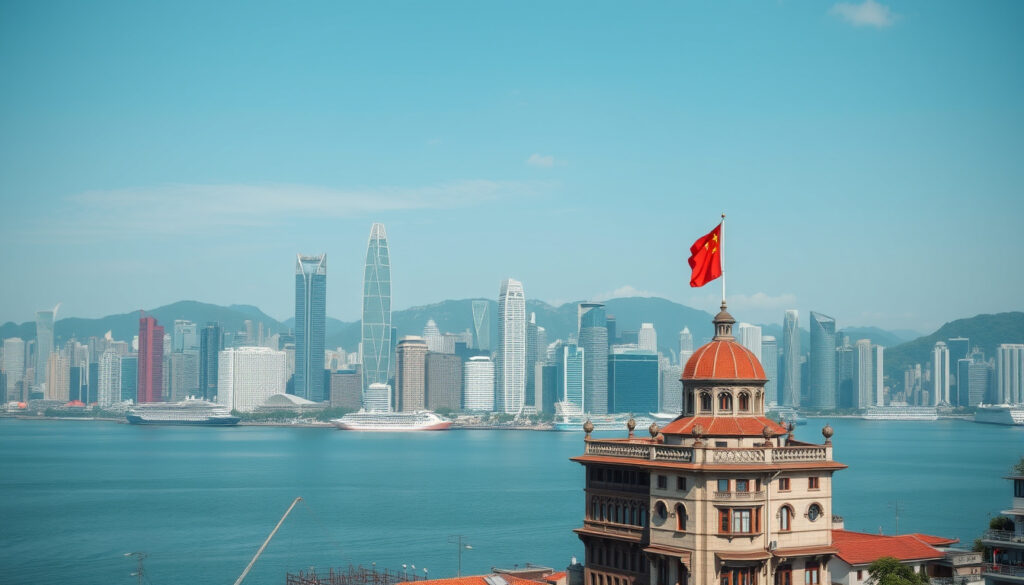
Is Hong Kong a Country? Status, History, and Key Differences
If you’ve ever wondered why Hong Kong appears on maps as part of China yet operates with its own currency and legal system, you’re not alone. The territory’s unique status as a Special Administrative Region has been a source of curiosity since its 1997 handover, and this article clarifies what Hong Kong is by examining its constitutional framework and historical background.
Status: Special Administrative Region of China ·
Population: Approx. 7.5 million (2024) ·
Official Languages: Chinese and English ·
GDP per capita: About USD 49,000 (2023) ·
Time zone: UTC+8 (HKT) ·
Currency: Hong Kong dollar (HKD)
Quick snapshot
- Hong Kong is an inalienable part of China (Hong Kong Department of Justice)
- It became a Special Administrative Region on 1 July 1997 (CIA World Factbook)
- The Basic Law guarantees a high degree of autonomy until 2047 (Basic Law website)
- Hong Kong has its own currency (HKD) and customs territory (Hong Kong DOJ)
- Future of the ‘one country, two systems’ principle after 2047 (Basic Law website)
- Degree of political autonomy remaining in practice (HK Constitutional and Mainland Affairs Bureau)
- Long-term economic impact of the 2020 National Security Law (BBC News)
- 1842: Treaty of Nanking cedes Hong Kong Island to Britain (HK Constitutional and Mainland Affairs Bureau)
- 1997: Handover and establishment of HKSAR (CIA World Factbook)
- 2019: Large-scale protests against extradition bill (BBC News)
- 2020: National Security Law imposed by Beijing (BBC News)
- 2047: End of the 50-year period of unchanged capitalist system (Hong Kong DOJ)
- Ongoing review of the Basic Law and national security provisions (BBC News)
- Potential changes to the electoral system and legislative composition (BBC News)
Below is a quick reference of Hong Kong’s key attributes.
| Attribute | Value |
|---|---|
| Full name | Hong Kong Special Administrative Region of the People’s Republic of China |
| Area | 1,108 km² (426 sq mi) |
| Population | 7.5 million (2024 est.) |
| GDP (nominal) | USD 382 billion (2023) |
| GDP per capita | USD 49,000 |
| Official languages | Chinese, English |
| Currency | Hong Kong dollar (HKD) |
| Time zone | UTC+8 (HKT) |
Is Hong Kong in China or is it a country?
Hong Kong’s status as a Special Administrative Region
- Hong Kong is not a country. It is a Special Administrative Region of the People’s Republic of China, as stated in the Basic Law (Hong Kong Department of Justice).
- The region enjoys a high degree of autonomy, but defense and foreign affairs are handled by the central government in Beijing (Hong Kong Constitutional and Mainland Affairs Bureau).
- Unlike mainland provinces, Hong Kong retains its own legal system, currency, and customs territory (Hong Kong DOJ).
One country, two systems principle
- The principle of “one country, two systems” was enshrined in the Sino-British Joint Declaration of 1984 and implemented in the Basic Law (HK Constitutional and Mainland Affairs Bureau).
- Under this framework, the socialist system of the mainland does not apply to Hong Kong, and its capitalist system and way of life remain unchanged for 50 years (Hong Kong DOJ).
- The arrangement is unique: no other region of China has a similar constitutional document that grants it separate executive, legislative, and independent judicial power, including final adjudication (Hong Kong DOJ).
Hong Kong is constitutionally part of China, yet its legal and economic systems are more similar to those of Singapore or London than to Beijing. That duality is its greatest strength—and its greatest vulnerability.
The implication: While Hong Kong is unmistakably part of China, its constitutional architecture sets it apart from every other Chinese province in ways that matter for business, law, and daily life.
What is the difference between Hong Kong and China?
Seven key differences, one pattern: Hong Kong operates under substantially different rules from the mainland, even as both remain under the same sovereignty.
| Feature | Hong Kong | Mainland China |
|---|---|---|
| Legal system | Common law (based on English law) | Civil law (socialist legal system) |
| Economic system | Capitalist, free port | Socialist market economy |
| Political system | Limited democracy with elected district council, appointed Chief Executive | Single-party state under the Communist Party |
| Currency | Hong Kong dollar (HKD), freely convertible | Renminbi (CNY), managed float |
| Border control | Separate immigration and customs | Unified border control |
| Visa policy | Visa-free access to many countries; separate HKSAR passport | Chinese passport with different visa arrangements |
| Taxation | Low tax, territorial basis | Higher tax, worldwide income for residents |
Legal system
- Hong Kong’s common law system is based on English law and is independent from mainland China’s civil law system (Hong Kong DOJ).
- The Basic Law guarantees the judicial independence of Hong Kong, including the power of final adjudication (Hong Kong DOJ).
Economic system
- Hong Kong is a free port with no tariffs and low taxes, attracting global businesses (BBC News).
- Mainland China operates a socialist market economy with state-owned enterprises and government control over strategic sectors (CIA World Factbook).
Political system
- Hong Kong has a partially elected legislature and a Chief Executive appointed by Beijing (BBC News).
- Mainland China is a single-party state under the Communist Party of China, with no direct elections for national leaders.
- Harvard Ash Center (academic research center) has analyzed Hong Kong’s Article 27 guarantees of freedoms of speech, press, assembly, and association (Harvard Ash Center).
Currency and border control
- Hong Kong has its own currency (HKD) pegged to the US dollar, and it maintains independent monetary policy through the Hong Kong Monetary Authority (CIA World Factbook).
- The border between Hong Kong and mainland China is controlled, with separate customs and immigration checks.
The pattern: Hong Kong’s differences are not cosmetic—they are constitutional, legal, and economic. But these differences exist within a framework that ultimately vests sovereignty in Beijing.
Is Hong Kong under China or British?
British colonial period (1842-1997)
- Hong Kong Island was ceded to Britain under the Treaty of Nanking in 1842 (HK Constitutional and Mainland Affairs Bureau).
- Kowloon Peninsula was added in 1860, and the New Territories were leased for 99 years in 1898 (HK Constitutional and Mainland Affairs Bureau).
- During Japanese occupation (1941-1945), Hong Kong fell under Japanese control until the end of World War II (BBC News).
1997 handover
- The Sino-British Joint Declaration signed in 1984 agreed on the transfer of sovereignty on July 1, 1997 (HK Constitutional and Mainland Affairs Bureau).
- On that date, Hong Kong became the Hong Kong Special Administrative Region of the People’s Republic of China (CIA World Factbook).
Current status under Chinese sovereignty
- Since 1997, Hong Kong has been a SAR of China, directly under the Central People’s Government (Hong Kong DOJ).
- It is not a British colony nor an independent state. The British have no sovereignty over Hong Kong.
The trade-off: Handover gave Hong Kong back to China, but it also ended more than 150 years of British colonial rule. The result is a hybrid that is neither fully independent nor fully integrated.
Are Hong Kong citizens citizens of China?
Chinese nationality law
- Under the Nationality Law of the People’s Republic of China, all Hong Kong residents who are of Chinese descent are Chinese citizens (Hong Kong DOJ).
- They are not dual nationals; Chinese nationality law does not recognize dual citizenship.
Hong Kong permanent residents
- Hong Kong permanent residents hold a Hong Kong permanent identity card, which allows them to live and work in Hong Kong without restriction.
- They are also Chinese citizens and can obtain a HKSAR passport, which offers visa-free travel to many countries (CIA World Factbook).
Travel documents and rights
- HKSAR passports are separate from mainland Chinese passports, but both are issued by China.
- Hong Kong citizens have the right to vote in Hong Kong elections and to participate in the civil service, but they do not vote in national elections for the National People’s Congress (except for a small number of delegates).
Why this matters: The question of citizenship is tied to rights. Hong Kong residents are Chinese nationals, but their travel, voting, and residency rights differ from those of mainland citizens.
What are the official languages in Hong Kong?
Chinese and English as official languages
- Both Chinese and English are official languages of Hong Kong, as stated in the Basic Law (Hong Kong DOJ).
- All government documents, signs, and legal proceedings are conducted in both languages.
Cantonese as the dominant Chinese variety
- The most widely spoken Chinese variety in Hong Kong is Cantonese, used by the majority of the population in daily life and media.
- Mandarin (Putonghua) is also taught in schools and used in official settings, but Cantonese remains the lingua franca.
English proficiency in business and government
- English is widely used in the legal system, international business, and higher education (BBC News).
- Many top international companies operate in English, and the majority of university programs are offered in English.
The takeaway: For a global professional, Hong Kong’s bilingualism is a major asset. It bridges the English-speaking world and the Chinese-speaking world without forcing a choice.
Here is a timeline of key events in Hong Kong’s history.
Hong Kong timeline: Key events
| Date | Event |
|---|---|
| 1842 | Treaty of Nanking cedes Hong Kong Island to Britain (HK Constitutional and Mainland Affairs Bureau) |
| 1898 | Second Convention of Peking leases New Territories for 99 years (HK Constitutional and Mainland Affairs Bureau) |
| 1941-1945 | Japanese occupation during World War II (BBC News) |
| 1984 | Sino-British Joint Declaration agrees on handover (HK Constitutional and Mainland Affairs Bureau) |
| 1997 | Handover on July 1; Hong Kong becomes SAR of China (CIA World Factbook) |
| 2019 | Large-scale protests against extradition bill (BBC News) |
| 2020 | National Security Law imposed by Beijing (BBC News) |
This timeline shows the evolution of Hong Kong from colonial territory to SAR.
What’s clear and what’s not
Confirmed facts
- Hong Kong is part of China (Hong Kong DOJ)
- Hong Kong has a separate legal system until 2047 (Hong Kong DOJ)
- Hong Kong uses its own currency and has independent customs (CIA World Factbook)
- Hong Kong residents are Chinese citizens (Hong Kong DOJ)
What’s unclear
- Future of the ‘one country, two systems’ principle after 2047 (Basic Law website)
- Degree of political autonomy remaining (BBC News)
- Long-term economic impact of national security laws (BBC News)
- Potential changes to the electoral system and legislative composition (BBC News)
This summary highlights the certainties and uncertainties surrounding Hong Kong’s status.
The 2020 National Security Law has already reshaped the legal environment. Businesses should monitor the 2027 periodic review of the Basic Law for potential changes to the autonomy framework.
“The Hong Kong Special Administrative Region is an inalienable part of the People’s Republic of China.”
— Hong Kong Department of Justice (official bulletin, source)
“The HKSAR enjoys a high degree of autonomy, except in foreign and defence affairs, which are handled by the Central People’s Government.”
— Hong Kong Constitutional and Mainland Affairs Bureau (Joint Declaration summary, source)
“Hong Kong’s economy is a free port with low taxes and no tariffs, making it one of the most business-friendly environments in the world.”
— BBC News (Hong Kong overview, source)
Hong Kong’s wealth and its inequality tell a story of a city that is both a global financial hub and a region with deep social disparities. With a GDP per capita of $49,000 but a Gini coefficient among the highest in developed economies, the territory’s economic success has not been evenly shared. For global investors, the choice remains: Hong Kong offers unparalleled access to Chinese markets with a familiar legal and business environment, but the terms of its autonomy are narrowing. Investors must decide whether Hong Kong’s distinctiveness will endure through the next decade.
en.wikipedia.org, en.wikipedia.org, cambridge.org, en.wikipedia.org, digitalcommons.law.uw.edu, dziennikportal.pl
For a deeper look at how Hong Kong’s unique status evolved, see Hong Kongs unique status.
Frequently asked questions
Do I need a visa to visit Hong Kong?
Many nationalities do not require a visa for short stays. Check the Hong Kong Immigration Department for the latest visa policy.
What is the Hong Kong flag?
The flag of Hong Kong features a white bauhinia flower with five petals on a red background. It was adopted on July 1, 1997.
Is Hong Kong a wealthy city?
Yes, Hong Kong has a high GDP per capita of about USD 49,000, but it also has significant income inequality (BBC News).
What is the time zone of Hong Kong?
Hong Kong is in the Hong Kong Time zone (HKT), which is UTC+8. It does not observe daylight saving time.
What is the population of Hong Kong?
Approximately 7.5 million as of 2024 (CIA World Factbook).
Is Hong Kong safe for tourists?
Hong Kong is generally considered safe for tourists, with low crime rates and a well-developed public transport system.
What is the capital of Hong Kong?
Hong Kong does not have a separate capital city; the entire territory is a city-state. The historical capital was Victoria City, but today the government is located in Central and Wan Chai.
These answers address common questions about Hong Kong.
More related posts
 Houses for Sale South Shields – Prices, Trends and Best Areas
 Real Madrid vs FC Barcelona Lineups: Confirmed & Predicted
 Permanent Resident: Definition, Rights, and How to Get Status
 Michael Palin in 2024: Coping with Grief, Health, and Life After Helen
 Great Pyramid of Giza: Facts, History, and Biblical Connections
 Epic Books Review: What You Need to Know About This Kids’ Reading App
 John Heard: Cause of Death, Career, and Family
 Mumford and Sons Tour – 2026 Dates Tickets Setlists
