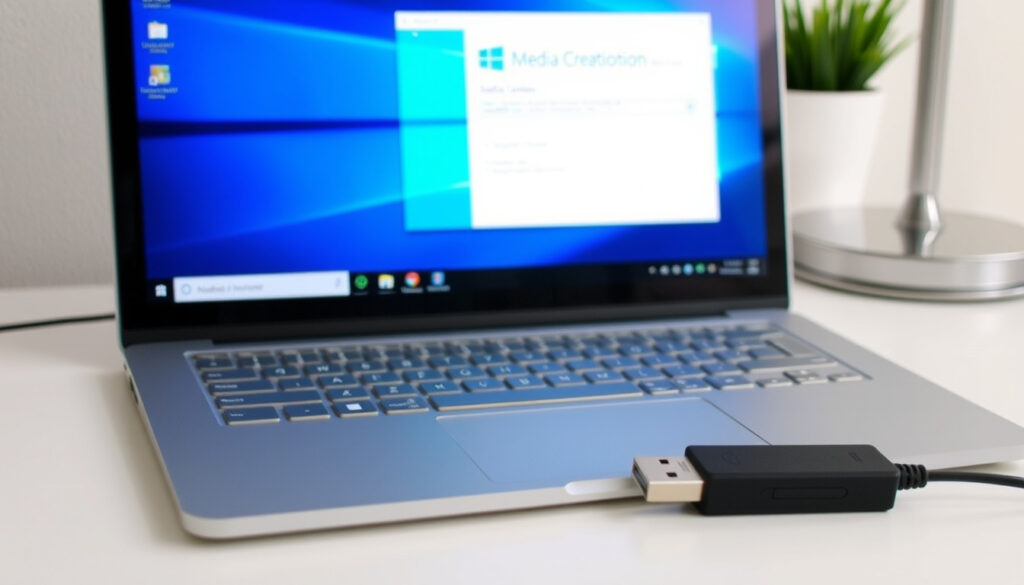
Windows 11 Media Creation Tool: Download & Create Bootable USB
If you’ve ever stared at a blank screen wondering how to get Windows 11 onto a USB drive, you’re not alone. The Media Creation Tool from Microsoft automates most of this process, but it has quirks — and sometimes a third-party option like Rufus is exactly what you need. This guide walks through official steps, common failure points, and the alternatives that actually work.
Official Source: Microsoft.com · Supported Processors: x64 only · Latest Update: KB5083769 for 25H2/24H2 · Download Tool: MediaCreationTool.exe · Arm PCs: Notification-based
Quick snapshot
- Whether free upgrades continue in 2026 (Microsoft)
- Exact compatibility for PCs older than 10 years (Microsoft)
- KB5067036 (optional) restored USB reliability (Windows Forum)
- 24H2 support in MCT since 2024 (Windows Forum)
- Rufus emerging as primary alternative for bypass scenarios (Windows Forum)
- 25H2 ISOs now compatible with Rufus 4.x (AOMEI Tech)
The table below consolidates the key technical specifications for creating Windows 11 installation media.
| Field | Value |
|---|---|
| Tool Name | MediaCreationTool.exe |
| Download URL | microsoft.com/software-download/windows11 |
| USB Min Size | 8GB |
| Processors | x64 |
| Windows 11 versions | 24H2/25H2 |
| install.wim threshold | 4GB |
Is there a media creation tool for Windows 11?
Yes. Microsoft provides the Media Creation Tool (MCT), a free executable that downloads the Windows 11 ISO and writes it to a USB drive or generates an ISO file. It is the officially recommended method for creating bootable installation media (Microsoft).
Download from Microsoft
The tool runs directly from microsoft.com/software-download/windows11. You do not need to manually download an ISO first — MCT handles the download and writes to your selected USB drive automatically. The tool targets x64 processors only, meaning ARM-based PCs require a different approach (they receive Windows 11 via notification-based delivery).
What it does
MCT creates bootable USB media or downloadable ISO files. It verifies download integrity and resumes interrupted transfers, making it more reliable on unstable connections than manual ISO downloads (Microsoft Learn). The tool embeds timestamps during creation, which produces different checksums compared to manually downloaded ISOs — this is normal and expected behavior (Microsoft Learn).
MCT consistently delivers a later version of Windows 11 24H2 than what you get from the direct ISO download page — sometimes by weeks or months (Eleven Forum). This means users who download via MCT get a more current installation image without any extra effort.
How do I create a bootable USB for Windows 11?
The process involves running MediaCreationTool.exe, selecting your USB drive, and letting the tool handle the rest. A few requirements apply that are easy to overlook until they cause failures.
Using Media Creation Tool
Download MediaCreationTool.exe from the official Microsoft page and run it as administrator. Select “USB flash drive” when prompted, then choose a connected drive of 8GB or larger. The tool will download the ISO and write it directly — no intermediate steps required. If you encounter a web-based ISO download instead of the tool interface, clear browser cache or try a different browser, as some systems redirect to the manual download page.
USB requirements
- Minimum 8GB capacity (16GB recommended for newer feature updates)
- USB 2.0 or USB 3.0 port
- Backup any existing data — the drive gets reformatted
MCT verifies the USB after writing and handles network interruptions gracefully. If your connection drops mid-download, the tool resumes from where it left off — a feature manual ISO downloads do not offer.
Why won’t the Windows 11 media creation tool work?
Several issues can block MCT from functioning, ranging from outdated Windows versions to compatibility checks built into the tool itself.
Common errors
- MCT opens but shows a web download instead of the USB creation interface
- Tool crashes or freezes during the download phase
- USB drive not detected or fails verification
- Error messages related to “compatibility mode” or outdated Windows
Fixes
Install the optional update KB5067036 before running MCT — this update specifically restored USB creation reliability for systems experiencing intermittent failures (Windows Forum). Ensure your Windows version is current via Windows Update, and run MCT as administrator.
If the tool redirects to a web ISO download, the workaround involves downloading the ISO manually, then using MCT’s “create ISO” option with that file already present — this bypasses the web interface issue while still leveraging MCT’s USB writing capabilities.
Most MCT failures trace back to outdated Windows or KB5067036 not being installed. Microsoft Learn community answers confirm the tool works reliably on fully updated Windows 10 (1903+) and Windows 11 systems.
How do I check if my PC is compatible?
Windows 11 enforces stricter hardware requirements than Windows 10 — TPM 2.0, Secure Boot, and specific CPU generations. Before creating installation media, verify your hardware will pass these checks.
PC Health Check
Download Microsoft’s PC Health Check app from the official support page. The tool scans your system and reports whether it meets Windows 11 requirements. Note that it sometimes reports false negatives — a system that fails may still install successfully using certain bypass methods.
System requirements
- TPM 2.0 (Trusted Platform Module)
- Secure Boot enabled in UEFI firmware
- 8th generation Intel Core or newer (or equivalent AMD Ryzen)
- 4GB RAM minimum, 64GB storage minimum
- Display output minimum 720p
PCs older than approximately 10 years are unlikely to meet these requirements without bypass tools. Laptops from 2016 or earlier — such as the HP Spectre x360 model 13-4001dx, which had documented boot issues from Rufus-created USB drives — often lack TPM 2.0 chips entirely (Eleven Forum).
Bypassing TPM and Secure Boot requirements lets older hardware run Windows 11, but this introduces documented security risks — systems may be more vulnerable to bootkits and rootkits that Secure Boot and TPM 2.0 are specifically designed to block (Windows Forum). Users who bypass these safeguards accept reduced protection against firmware-level threats.
Can Rufus create a Windows 11 bootable USB?
Yes, and for many users Rufus is the better choice. The tool bypasses Microsoft’s hardware checks, includes a built-in ISO download from Microsoft’s servers, and handles large install.wim files that would otherwise require manual splitting.
Rufus steps
Download Rufus 3.x or newer from the official Rufus website (rufus.ie) or the Microsoft Store (Microsoft Learn). Run as administrator, select your USB drive, and choose the Windows 11 ISO. Rufus can download the ISO directly within the app — you do not need to download it separately (Windows Forum). Under “Partition scheme,” select GPT for modern UEFI systems or MBR for legacy BIOS systems (Windows Forum).
If the Windows 11 ISO contains an install.wim file larger than 4GB, Rufus automatically prompts you to use NTFS (instead of FAT32) or to split the file into .swm segments for FAT32 compatibility (Windows Forum).
When to use
- PC lacks TPM 2.0 but you want Windows 11 anyway
- You prefer a local Microsoft account bypass during setup
- MCT repeatedly fails or redirects to web downloads
- You need custom install media with specific drivers or configurations
Rufus supports GPT and MBR partitioning schemes, handles both legacy BIOS and modern UEFI hardware, and offers a Windows User Experience Settings editor for customizing the initial setup process (Windows Forum).
Older Rufus versions (below 3.x) do not support Windows 11. Always use Rufus 4.x or newer for 24H2 and 25H2 compatibility — an outdated version will either fail silently or produce non-bootable media (iFixit). Upgrading costs nothing and prevents frustrating failures down the line.
Rufus vs Media Creation Tool: A direct comparison
Five factors differentiate these tools in ways that matter depending on your hardware and goals.
| Factor | Media Creation Tool | Rufus |
|---|---|---|
| Hardware bypass | No | TPM, Secure Boot, CPU checks all bypassable |
| Account bypass | No | Removes Microsoft account requirement at setup |
| Integrity verification | Full checksums, resume support | No built-in integrity check |
| File system handling | Automatic | Manual choice (NTFS vs FAT32) |
| Latest Windows version | Typically newer builds | May lag slightly behind MCT |
MCT produces a later version of Windows 11 24H2 than direct ISO downloads from Microsoft’s public page, while Rufus pulls from the same Microsoft servers but may not immediately reflect every build. The two tools produce different checksums for bootable media because MCT embeds timestamps during creation — this is documented behavior and does not affect installation quality (Microsoft Learn).
MCT remains the official choice for users with compatible hardware who prioritize verified integrity. Rufus wins for anyone running incompatible hardware or wanting setup customization — but accepting the trade-off of no formal integrity verification.
Troubleshooting Rufus on Windows 11
When Rufus fails to detect the USB or produces a non-bootable drive, the fixes are straightforward but specific.
- Run Rufus as administrator — permission issues are the most common cause of failure on Windows 11 (AOMEI Tech)
- Temporarily disable antivirus or Windows Security real-time protection during USB creation (AOMEI Tech)
- Repair the USB using Windows Disk Management — delete existing partitions, create a new NTFS or FAT32 volume, then retry (AOMEI Tech)
- Update Rufus to the latest version for 24H2/25H2 ISO compatibility (AOMEI Tech)
- If Rufus still does not detect the USB, use Windows Disk Management to reformat the drive before retrying (Microsoft Tech Community)
Creating a bootable USB with Rufus erases all data on the drive — back up any files before proceeding. After USB creation, verify Windows activation and run Windows Update to install the latest patches and drivers.
Alternatives beyond Rufus
Two additional tools merit consideration depending on your use case.
- Ventoy: Unlike Rufus, Ventoy allows multiple ISO files on a single USB drive — select which to boot at startup. It does not include built-in ISO download and requires manual ISO management. Best for users who frequently switch between operating systems.
- AOMEI Backupper: Primarily a backup tool, but it includes Windows USB creation functionality as a fallback when both MCT and Rufus fail. Less common but documented in community troubleshooting guides.
The choice between these tools comes down to your priorities: MCT for official reliability, Rufus for hardware bypass and customization, Ventoy for multi-ISO flexibility, and AOMEI Backupper as a last-resort option when others fail.
“The recommended way is using the Windows Media Creation tool but using Rufus is also recommended.”
— Microsoft Learn (Microsoft Support)
“Rufus bigtime, especially for creating custom Win11 install media with CPU/TPM bypass and removing the MS account requirement on setup.”
Summary
The Media Creation Tool remains the official path for Windows 11 bootable USB creation, delivering verified integrity and the latest builds. For users with incompatible hardware or wanting setup customization, Rufus fills the gap — provided you use version 3.x or newer and understand the security trade-offs of bypassing TPM and Secure Boot.
For IT administrators and home users alike, the decision is clear: compatible hardware means start with MCT for peace of mind; incompatible hardware or a need for bypass means use Rufus for flexibility. Either way, verify your USB is at least 8GB and fully backed up before you begin.
Related reading: Windows 11 Media Creation Tool fix restores USB install reliability · Top free tools to create Windows 11 bootable USBs Rufus Ventoy explored
Those troubleshooting compatibility can follow this step-by-step guidefor precise steps on creating bootable USB media without errors.
Frequently asked questions
Can I still download Windows 11 for free?
Yes. Microsoft continues to offer the Windows 11 ISO and Media Creation Tool free of charge. You do not need a product key to download or create installation media — Windows 11 can be activated after installation using a digital license from a previously activated Windows 10 or Windows 11 installation.
Can a 10-year-old PC run Windows 11?
Most likely not without bypass tools. PCs from 2016 or earlier typically lack TPM 2.0 chips required by Windows 11. Models like the HP Spectre x360 13-4001dx have documented compatibility issues. You can attempt installation using Rufus with hardware bypass enabled, but this disables security features built into the firmware.
How to create a bootable USB manually?
Manual creation requires downloading the Windows 11 ISO from Microsoft’s software-download page, then using a tool like Rufus to write it to USB. MCT automates the download step — manual creation is essentially what MCT does under the hood. For users who already have an ISO file, Rufus or Ventoy handles the USB writing step without needing MCT.
Will I be able to upgrade to Windows 11 for free in 2026?
As of early 2026, Microsoft continues to offer free Windows 11 upgrades for eligible systems with a genuine Windows 10 license. No end date for the free upgrade program has been officially announced, though this could change. Check Microsoft’s support page for the latest policy.
What if Media Creation Tool won’t open?
First, ensure Windows is fully updated and KB5067036 is installed. Run MCT as administrator, and try a different browser if the tool redirects to a web download. As a fallback, manually download the ISO from Microsoft’s website, then use MCT’s “create ISO file” option with the downloaded file, bypassing the web download issue entirely.
Differences from Windows 10 Media Creation Tool?
The Windows 10 version of MCT downloaded a separate tool (MediaCreationTool1903.exe or similar). Windows 11 MCT is a unified tool that detects which version to download based on your system. The interface and workflow are nearly identical, but Windows 11 MCT enforces hardware checks and targets x64 architecture only.
More related posts
 Jessica Capshaw: Grey’s Anatomy Facts and Misconceptions
 Best Euro Rate Today: Compare Tesco, Post Office & More
 Izzie Balmer: Biography, Age, Net Worth, Career on Bargain Hunt
 BBC iPlayer Julia Donaldson: Shows, Gruffalo & Full Collection
 Nelly Furtado: Separating Facts from Rumors
 Furniture Stores Near Me – Top Picks for Plainfield and Naperville
 Beau Garrett: Marriage, Career, and Biography
 Clare Grogan: Singer, Actress, and EastEnders Star – Biography
