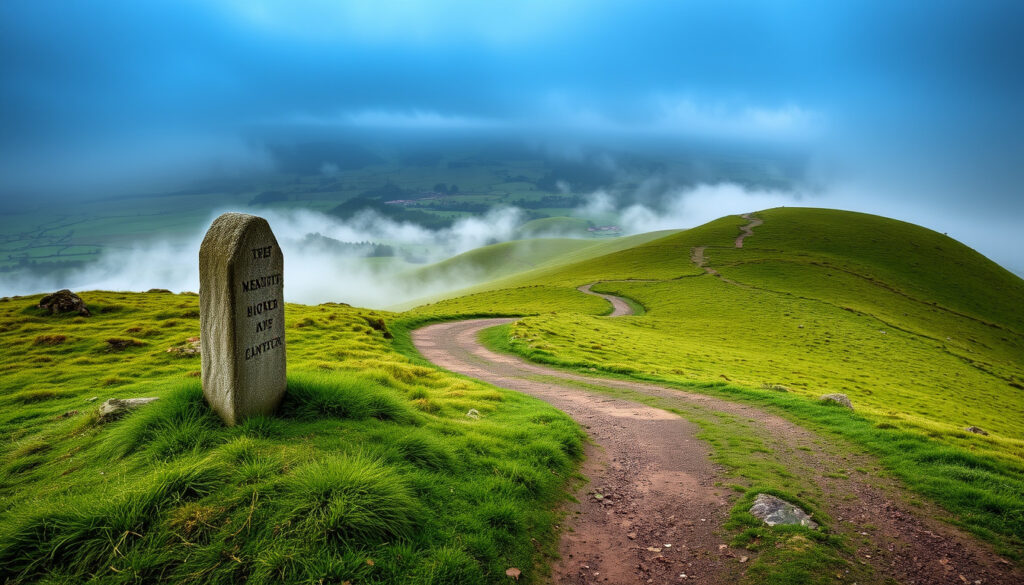
Pendle Hill: Walking Routes and Witch Trials Guide
There’s something magnetic about a hill that’s both a great day out and the backdrop to one of England’s most chilling chapters. Pendle Hill in Lancashire pulls walkers with its sweeping views, but it’s the shadow of the 1612 witch trials that lingers in the imagination.
Elevation: 557 m (1,827 ft) ·
Location: Lancashire, England ·
Famous For: 1612 Pendle Witch Trials ·
Walk Time: 3–4 hours from Barley ·
Difficulty: Moderate, steep final climb
Quick snapshot
- Ten people were executed after the 1612 trials (BBC Lancashire)
- Summit elevation is 557 m (1,827 ft) (Wikipedia)
- Main walking route starts at Barley village (The Wandering Quinn)
- No verified genealogical line links modern families to the accused witches (BBC Lancashire)
- 1612: Trials held, ten hanged on 20 August (BBC Lancashire)
- 1992: The Pendle Way route established (Sykes Inspiration)
- Plan a visit: Barley Picnic Site is the main access point (postcode BB12 9JX) (Hike Rider Run)
- Check conditions before setting out — mud and rain change the difficulty (Hike Rider Run)
Key facts at a glance
Six numbers give you the essentials of Pendle Hill before you even tie your boots.
| Attribute | Value |
|---|---|
| Elevation | 557 m (1,827 ft) |
| Prominence | 395 m (1,296 ft) |
| Location | Lancashire, England |
| Famous Event | 1612 Pendle Witch Trials |
| Number Executed | Ten people |
| Typical Walk Time | 3–4 hours (Pendle Way Short Route) |
The pattern: Pendle Hill’s identity is split between a measurable landscape and a haunting historical event, and both draw visitors in equal measure.
Why is Pendle Hill famous?
The natural landmark of Pendle Hill
- Standing at 557 m (1,827 ft), Pendle Hill dominates the skyline of eastern Lancashire and sits within the Forest of Bowland Area of Outstanding Natural Beauty.
- Its isolated position and steep profile make it a distinctive landmark visible from miles around.
The hill is a designated walking destination maintained by the Pendle Hill Project, which supports route information and access for visitors. For walkers, the appeal is the panoramic view from the summit on clear days, stretching across the Ribble Valley and beyond.
The geography alone would make Pendle Hill a popular walk. But the history amplifies every step you take.
The 1612 Pendle Witch Trials
- Pendle Hill is inextricably linked to the Pendle witches, a group of twelve people accused of witchcraft in 1612.
- Eleven were tried at Lancaster Assizes over two days in August; ten were found guilty and hanged on 20 August 1612 (BBC Lancashire).
What makes these trials stand out in English history is the documentation. The prosecution relied heavily on the testimony of a nine-year-old girl, and the accused were held in Lancaster Castle’s dungeon for about five months before trial (BBC Lancashire).
The implication: Pendle Hill isn’t just a pretty walk — it’s a place where real people’s lives were destroyed by fear and accusation.
Who were the 12 Pendle Witches?
Members of the two accused families
- The accused included Elizabeth Southerns (known as Demdike), Anne Whittle (Chattox), and Alice Nutter, among others.
- They came from two rival families living in the forest of Pendle area, around villages like Newchurch and Roughlee.
These were not outsiders — they were local women and men caught in a web of poverty, superstition, and personal grudges. The trial records, preserved in detail, offer a rare window into 17th-century Lancashire life.
The trial and execution
- The trial was led by magistrate Roger Nowell and judge Sir James Altham.
- Ten of the twelve accused were executed by hanging at Lancaster Castle on 20 August 1612.
The Wikipedia account notes these trials are among the best-recorded witch trials of the 17th century in English history, giving historians a rare level of detail.
The pattern: what began as local feuds escalated into a state-sanctioned massacre, and the hill became its lasting symbol.
How long is the walk up Pendle Hill?
The Pendle Way (Short Route) from Barley
- Most walkers start from Barley village or Barley Picnic Site in the Ribble Valley (The Wandering Quinn).
- A popular Barley route covers about 8 km (5 miles) and takes roughly 2.5 to 3.5 hours round trip (Hike Rider Run).
- The route passes Lower Ogden Reservoir, Upper Ogden Reservoir, Ogden Clough, and the summit cairn/triangulation point (Sykes Inspiration).
The traditional route follows signed footpaths rather than a single fixed summit path (Sykes Inspiration), which means you have options for shorter or longer variations.
- Start at Barley village or the Barley Picnic Site car park.
- Follow the signed footpath past Lower Ogden Reservoir.
- Continue to Upper Ogden Reservoir.
- Ascend through Ogden Clough, a steep but well‑defined path.
- Reach the summit cairn and triangulation point (trig point).
- Return via the same route or loop back using the Pendle Way.
The walk time depends heavily on conditions — muddy descents and wind at the summit add time to even the shortest route.
Preparation and what to expect
- Walkers should wear sturdy footwear and bring water; the route is not technical but can be strenuous.
- The ascent involves a noticeable climb, especially the final push to the trig point.
Several guides rate the difficulty as medium or easy-to-medium, but the gradient and steps make it tougher than the distance suggests (Great British Bucket List).
The takeaway: Pendle Hill is a manageable half-day outing, not an expedition — but it rewards preparation.
Is the walk up Pendle Hill difficult?
Terrain and gradient
- The walk is rated moderate due to steep, uneven terrain near the summit.
- The total ascent is about 400 m (1,312 ft), concentrated in the final section.
For a walker used to flat terrain, the climb is the real challenge. The path is not technical — no scrambling required — but the sustained uphill effort will raise your heart rate.
A fit hiker will manage fine; a casual walker with less experience may find the final ascent humbling.
Can you climb Pendle Hill in trainers?
- Walking boots or sturdy hiking shoes are recommended.
- Trainers may be suitable in dry, good conditions but are not ideal, especially in mud or rain.
The advice from multiple guides is consistent: supportive footwear and suitable weather make the difference between an enjoyable walk and a slippery struggle (Great British Bucket List).
The trade-off: save weight with trainers on a dry summer day, but pay for the mistake if the weather turns.
Where are the Pendle Hill witches located?
Geographic location of Pendle Hill
- Pendle Hill is in eastern Lancashire, near the towns of Burnley and Clitheroe.
- The hill is within the Ribble Valley walking area and is a common day-walk objective from the village of Barley.
If you’re driving, Barley Picnic Site with postcode BB12 9JX is the practical start point (Hike Rider Run).
Historical sites associated with the trials
- The accused witches lived in the forest of Pendle, around villages like Newchurch and Roughlee.
- The trial was held at Lancaster Castle, not on the hill itself.
So while Pendle Hill is the symbol, the actual historical drama unfolded in the valleys and at the castle — a distinction many visitors don’t expect.
The implication: the hill is the memorial; the real story lies in the landscape around it.
Are there any descendants of the Pendle Witches?
Genealogical research
- Claims of descendants exist, but documentation is limited (BBC Lancashire).
- Historical records from 1612 are incomplete, making reliable family trees nearly impossible to verify.
Some local families in the Pendle area claim descent, but no verified genealogical line is widely accepted.
The pattern: the lack of proof hasn’t stopped the stories — it’s what makes them so persistent.
Is The Haunting of Pendle Hill based on a true story?
The 2022 film vs. historical events
- The 2022 film is a fictional horror movie loosely inspired by the Pendle witch trials.
- It’s entertainment, not a documentary — the events depicted are dramatized.
For those hoping to find supernatural activity on the hill, the evidence is thin. Pendle Hill is a popular location for ghost stories, but no proof supports paranormal claims.
What this means: the hill’s real history is darker and more interesting than any film could invent.
Timeline: Pendle Hill through the centuries
The hill’s story is marked by a few key dates, from tragedy to tourism.
| Date or Period | Event |
|---|---|
| 1612 | Pendle witch trials: twelve accused, ten hanged at Lancaster Castle on 20 August (BBC Lancashire) |
| 1700s | Pendle Hill becomes a noted local landmark for walking |
| 1992 | The Pendle Way walking route established |
| 2022 | Film “The Haunting of Pendle Hill” released |
The arc: a hill that saw tragedy now hosts thousands of walkers each year — the landscape outlasts the fear.
What’s confirmed and what remains unclear
Confirmed facts
- Pendle Hill elevation is 557 m (1,827 ft) (Wikipedia)
- Ten people were executed after the 1612 witch trials (BBC Lancashire)
- The Pendle Way (Short Route) from Barley is a published walking route (Sykes Inspiration)
What’s unclear
- Whether any direct descendants of the accused witches exist today
- If any paranormal activity occurs on Pendle Hill
Why this matters: separating verified history from local legend helps you appreciate what’s real — and enjoy the stories for what they are.
Voices on Pendle Hill
“Pendle Hill is one of the most famous hills in Lancashire, known for its panoramic views and, of course, its witch history.”
— Wikipedia (geographical and historical overview)
“The walk is challenging in parts but immensely rewarding, with the summit offering a 360-degree view across the Ribble Valley.”
— Visit Lancashire (tourism guide)
“From Barley, the route climbs steadily past reservoirs and moorland before the final steep ascent to the trig point.”
— BaldHiker blog (hiking experience)
The consistent thread: every account agrees the hill rewards effort, but the history adds a layer no other Lancashire walk can match.
Summary
Pendle Hill offers two experiences in one — a solid countryside walk with genuine elevation gain, and a historical site that connects you to a chilling chapter of English justice. For the casual walker, the practical question is preparation: sturdy footwear, weather awareness, and patience for the final climb. For Pendle Hill Project visitors, the choice is clear: come for the views, stay for the story — or miss the reason this hill still draws people centuries later.
historiesandcastles.com, spiritshack.co.uk, hauntedhosts.com, historytools.org, historyhit.com
Frequently asked questions
Why is Pendle Hill famous for witches?
Pendle Hill is famous because it’s associated with the 1612 Pendle witch trials, where twelve people were accused and ten were executed. The trials are among the best-documented witch trials in English history.
What is the best time of year to walk Pendle Hill?
Late spring to early autumn offers the most reliable weather, with drier paths and clearer views. Winter walks are possible but require serious footwear and a tolerance for mud and wind.
Is there parking at Barley for Pendle Hill walks?
Yes, Barley Picnic Site (postcode BB12 9JX) is the main parking point for Pendle Hill walks. It can fill up early on weekends, so arrive early.
Can you drive to the top of Pendle Hill?
No, there’s no road to the summit. Walking is the only way to reach the top, which is part of the hill’s appeal.
How many people were executed in the Pendle witch trials?
Ten people were hanged at Lancaster Castle on 20 August 1612, after being found guilty in the trials.
Does Pendle Hill have a trig point?
Yes, the summit has a triangulation point (trig point), a familiar sight for walkers and a marker of the highest spot.
Are dogs allowed on Pendle Hill walks?
Yes, dogs are welcome on Pendle Hill walks. Keep them under control, especially near livestock on the lower slopes.
More related posts
 Frank Spencer: Catchphrase, Actor & Show Facts
 Lindsay Lohan: Downfall, Comeback, Net Worth, and Family Life
 Emily Fairn: Biography, Age, House of Guinness Role & More
 Billy Billingham SAS Career, Rank, and Bodyguard Work
 Nara Smith: Age, Kids, Husband, and Net Worth
 Kris Jenner: Health, Children, and Relationships – Biography
 Lee Sharpe: Career, Net Worth, Wife, and Life After Football
 McDonald’ Near Me in Ireland: Hour , Menu & Tipping Guide
