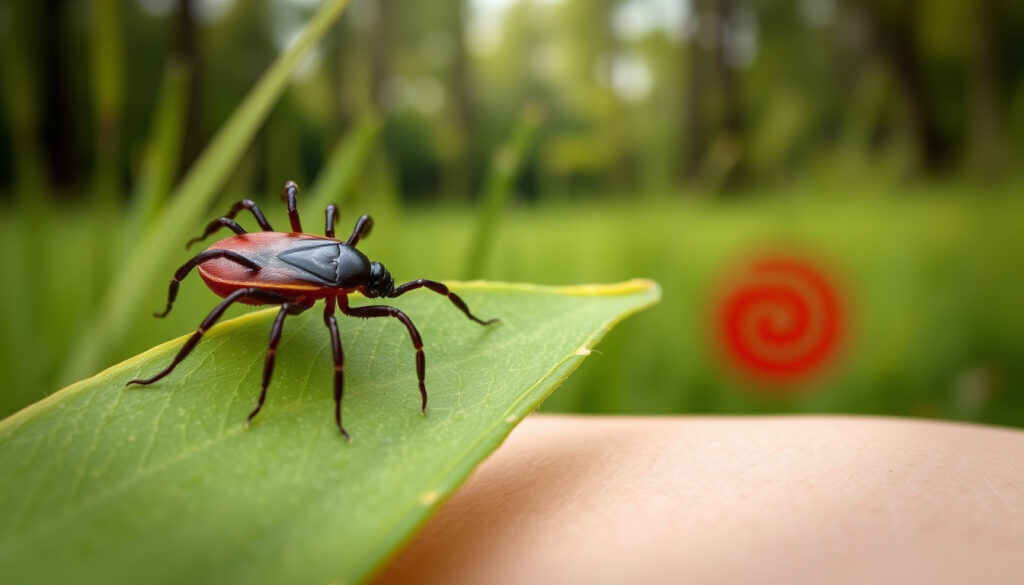
What Is Lyme Disease? Symptoms, Treatment, Prevention
You’ve probably heard someone mention Lyme disease after a walk in the woods, but the real story is more complicated than a tick bite and a rash. This bacterial infection, caused by Borrelia burgdorferi, affects tens of thousands of people every year in the U.S. alone — and with early treatment, more than 95% of cases resolve completely.
Annual Lyme disease cases in the U.S.: ~476,000 (CDC estimate) ·
Percentage of ticks infected: Varies by region; up to 50% in some areas ·
Incubation period: 3–30 days after tick bite ·
Classic rash (erythema migrans) occurrence: 70–80% of infected individuals ·
Early treatment cure rate: >95%
Quick snapshot
- Lyme disease is caused by Borrelia burgdorferi bacteria (CDC (U.S. public health agency))
- Transmitted through infected black-legged tick bites (HPSC (Ireland’s health protection authority))
- Exact prevalence of chronic Lyme disease (post-treatment syndrome) (NIAID (U.S. National Institute of Allergy and Infectious Diseases))
- Mechanisms behind persistent symptoms after treatment (Mayo Clinic (academic medical center))
- Early localized stage appears 3–30 days after tick bite (CDC (U.S. public health agency))
- Disseminated stage can occur weeks to months later (NHS (UK national health service))
- Emerging diagnostic tests may improve early detection (NIAID (U.S. National Institute of Allergy and Infectious Diseases))
- Clinical trials ongoing for new treatment approaches (ClinicalTrials.gov (U.S. National Library of Medicine))
With more than 95% of early-stage cases cured by a standard course of antibiotics, the real challenge for patients isn’t treatment — it’s catching the infection before it spreads. A tick can transmit Borrelia within 36 hours of attachment, which makes daily tick checks the single most effective prevention tool.
What is Lyme disease?
Lyme disease is a bacterial infection caused by the spirochete Borrelia burgdorferi — and in rare cases, Borrelia mayonii — transmitted to humans through the bite of infected black-legged ticks (Ixodes scapularis and Ixodes pacificus) (CDC (U.S. public health agency)). It is the most common vector-borne disease in the United States and is also prevalent across temperate regions of Europe, including Ireland and the UK.
What bacteria causes Lyme disease?
- Borrelia burgdorferi sensu stricto — the primary cause in North America (CDC (U.S. public health agency))
- Borrelia afzelii and Borrelia garinii — more common in Europe and Asia (ECDC (European Centre for Disease Prevention and Control))
- Borrelia mayonii — a rare cause identified in the Upper Midwest U.S. (CDC (U.S. public health agency))
How is Lyme disease transmitted?
The bacteria live in the gut of infected ticks. When a tick bites a human and remains attached for 36 to 48 hours, Borrelia can migrate from the tick’s midgut into its salivary glands and into the person’s bloodstream (CDC (U.S. public health agency)). The disease is not contagious between humans — you cannot catch it from someone who has it unless you share a tick bite.
In Ireland, about 5% of ticks are estimated to carry Lyme disease, according to the HSE (Ireland’s public health executive). This percentage can rise to 20% or higher in certain hot spots across the United States (CDC (U.S. public health agency)).
How long does Lyme disease last?
The duration of Lyme disease depends entirely on how quickly it is diagnosed and treated. Without treatment, the infection progresses through three distinct stages that can span months or even years.
Acute Lyme disease duration
The stage-by-stage timeline reveals how quickly the infection can progress.
| Stage | Onset after tick bite | Duration | Key features |
|---|---|---|---|
| Early localized | 3–30 days | Days to weeks | Erythema migrans rash, flu-like symptoms (CDC (U.S. public health agency)) |
| Early disseminated | Weeks to months | Weeks | Multiple rashes, facial palsy, meningitis, heart block (Mayo Clinic (academic medical center)) |
| Late disseminated | Months to years | Chronic | Arthritis, neuropathy, encephalopathy (NHS (UK national health service)) |
Three stages, one pattern: the earlier the treatment, the shorter the illness. Patients treated during the early localized stage typically recover within a few weeks.
Chronic Lyme disease symptoms
Post-treatment Lyme disease syndrome (PTLDS) occurs in an estimated 10–20% of patients who have completed standard antibiotic therapy but continue to experience symptoms like fatigue, joint pain, and cognitive difficulties (NIAID (U.S. National Institute of Allergy and Infectious Diseases)). The cause remains debated — some researchers suspect an autoimmune response triggered by bacterial remnants, while others point to persistent infection in protected body sites. The CDC (U.S. public health agency) notes that prolonged antibiotic courses have not shown benefit in controlled trials.
What does Lyme disease do to a person?
The effects range from a mild, flu-like episode to severe neurological and cardiac complications — but the outcome depends almost entirely on when treatment begins.
Early symptoms
- Erythema migrans rash — a circular, expanding “bull’s-eye” rash at the bite site, appearing in 70–80% of cases (CDC (U.S. public health agency))
- Flu-like symptoms — fever, chills, headache, fatigue, muscle and joint aches (HSE (Ireland’s public health executive))
- Swollen lymph nodes — often near the tick bite (Mayo Clinic (academic medical center))
The HSA (Ireland’s Health and Safety Authority) adds that a stiff neck and joint pains are also common in the early phase (HSA (Ireland’s workplace health authority)).
Late-stage complications
If left untreated, the infection spreads through the bloodstream to other body systems (Mayo Clinic (academic medical center)):
- Neurological — meningitis, Bell’s palsy (facial paralysis), numbness or tingling in the limbs, and cognitive impairment
- Cardiac — Lyme carditis causing heart block and palpitations (CDC (U.S. public health agency))
- Musculoskeletal — severe arthritis with swollen, painful joints, most commonly the knees (NHS (UK national health service))
A patient who develops Lyme carditis may require a temporary pacemaker. The progression from a tick bite to heart block can happen within weeks — which is why the window for early diagnosis is so narrow.
The implication: recognising early symptoms is the strongest defence against irreversible complications.
How do you treat Lyme disease?
Lyme disease is treated with antibiotics, and the choice of drug, dose, and duration depends on the stage of illness.
Antibiotic treatment
Treatment protocols differ based on how far the infection has spread.
| Stage | Recommended antibiotics | Duration | Source |
|---|---|---|---|
| Early localized | Doxycycline, amoxicillin, or cefuroxime | 14–21 days | HPSC (Ireland’s health protection authority) |
| Early disseminated (neurological) | Intravenous ceftriaxone or oral doxycycline | 14–28 days | CDC (U.S. public health agency) |
| Late disseminated (arthritis) | Oral doxycycline or amoxicillin; IV ceftriaxone if refractory | 28 days (oral) or 14 days (IV) | Mayo Clinic (academic medical center) |
| Lyme carditis | IV ceftriaxone or oral doxycycline | 14–21 days | CDC (U.S. public health agency) |
Four stages, one pattern: oral antibiotics work for most cases, but intravenous treatment becomes necessary once the infection reaches the nervous system or heart.
Treatment for chronic Lyme
For patients with post-treatment Lyme disease syndrome, no standard treatment exists. The NIAID (U.S. National Institute of Allergy and Infectious Diseases) states that prolonged antibiotic therapy has not shown durable benefit in clinical trials and carries risks including adverse drug reactions and antibiotic resistance. Treatment focuses on managing symptoms such as pain, fatigue, and cognitive issues.
What causes a Lyme disease flare up?
The term “flare up” is used differently by different patients and clinicians. For people with treated Lyme disease, a new episode of symptoms usually stems from one of three causes.
Triggers for flare-ups
- Reinfection — a new tick bite with a different Borrelia strain. This is the most common cause of a second symptomatic episode (CDC (U.S. public health agency)).
- Herxheimer reaction — a temporary worsening of symptoms within 24 hours of starting antibiotics, caused by bacterial die-off releasing toxins (NHS (UK national health service)).
- Immune response fluctuations — in post-treatment Lyme disease syndrome, symptom severity can wax and wane with stress, illness, or hormonal changes (NIAID (U.S. National Institute of Allergy and Infectious Diseases)).
Reinfection vs. relapse
True relapse — the return of infection with the same bacterial strain after adequate treatment — is rare. Most second episodes are reinfections from new tick bites. The CDC notes that people who have had Lyme disease can be reinfected multiple times, which underscores the importance of continued tick prevention even after recovery.
Not every return of symptoms after Lyme disease is a “flare-up” — many are separate medical conditions. Patients should seek evaluation for new symptoms rather than assuming a Lyme flare.
The pattern: distinguishing reinfection from other causes requires a doctor’s assessment and, often, diagnostic testing.
What are 5 symptoms of Lyme disease?
The five most commonly reported symptoms form a recognizable cluster that clinicians use for initial screening.
Erythema migrans rash
The hallmark sign, appearing in 70–80% of cases. It starts as a red spot at the tick bite site and expands over days to a “bull’s-eye” pattern with a central clearing (HPSC (Ireland’s health protection authority)). The rash is not itchy or painful in most patients.
Fatigue
Severe, persistent tiredness that does not improve with rest. The Mayo Clinic describes it as one of the most disabling early symptoms.
Fever and chills
Low-grade fever, chills, and night sweats accompany the early infection stage — often mistaken for a viral illness (HSE (Ireland’s public health executive)).
Muscle and joint aches
Migrating pains in muscles, tendons, and joints — unlike arthritis, the pain often moves between body parts (CDC (U.S. public health agency)).
Swollen lymph nodes
Lymph nodes near the tick bite often swell as the immune system mounts a response (NHS (UK national health service)).
Is Lyme disease 100% curable?
The answer depends on when treatment starts — and whom you ask.
Cure rate with early treatment
For patients diagnosed in the early localized stage and treated with a standard 2–3 week course of antibiotics, the cure rate exceeds 95% (CDC (U.S. public health agency)). The HPSC (Ireland’s health protection authority) states that “common antibiotics such as doxycycline or amoxicillin are effective at clearing the infection and early symptoms.”
Chronic Lyme controversy
Between 10–20% of patients treated for Lyme disease develop persistent symptoms — a condition referred to as post-treatment Lyme disease syndrome (PTLDS). The existence of “chronic Lyme disease” as a distinct, ongoing infection remains controversial. Major public health agencies including the CDC and NIAID state that there is no evidence that Borrelia bacteria survive standard antibiotic treatment in humans, and that prolonged antibiotic courses do not improve outcomes.
For patients with persistent symptoms after treatment, the debate between “chronic infection” and “post-infectious syndrome” leads to very different treatment approaches. The evidence currently favors the post-infectious model — but patients with ongoing suffering deserve better diagnostic tools.
The catch: the high early cure rate means that delayed diagnosis is the main driver of long-term problems.
“If left untreated, infection can spread to joints, the heart, and the nervous system.”
“Only a small number of ticks are infected with the bacteria that cause Lyme disease.”
“Lyme disease is caused by the bacterium Borrelia burgdorferi and rarely, Borrelia mayonii.”
CDC (U.S. public health agency)
How do you get Lyme disease? — Prevention and tick removal
You get Lyme disease through the bite of an infected tick — specifically, the black-legged tick (Ixodes scapularis) in the eastern U.S. and the western black-legged tick (Ixodes pacificus) on the West Coast (CDC (U.S. public health agency)). Prevention is straightforward: avoid tick habitat, use repellent, check your body daily, and remove ticks promptly.
The HSE (Ireland’s public health executive) recommends:
- Cover skin and tuck trousers into socks
- Use insect repellent containing DEET on clothes and skin
- Stick to paths in grassy or wooded areas
- Wear light-coloured clothing to spot ticks
- Remove ticks within 36 hours to prevent infection
To remove a tick, use fine-tipped tweezers to grasp the tick as close to the skin as possible and pull upward with steady, even pressure. Do not twist, crush, or apply heat — any of these can force the tick’s stomach contents into the bite wound (CDC (U.S. public health agency)).
Timeline: The progression of Lyme disease
The disease moves through predictable stages if left untreated — but the timeline varies from person to person.
- 3–30 days after tick bite — Early localized stage: erythema migrans rash appears; flu-like symptoms begin (CDC (U.S. public health agency))
- Weeks to months — Early disseminated stage: multiple rashes, facial palsy, meningitis, cardiac involvement (Mayo Clinic (academic medical center))
- Months to years — Late disseminated stage: arthritis, chronic neurological issues (NHS (UK national health service))
- Variable — Post-treatment Lyme disease syndrome: symptoms persist for months or years after antibiotic treatment (NIAID (U.S. National Institute of Allergy and Infectious Diseases))
Time from tick bite to rash: 3–30 days ·
Time to disseminated disease: Weeks to months ·
Time to late-stage: Months to years
The progression from early to late stage is not inevitable — it only happens when the initial infection goes undiagnosed. The timeline is a reminder of why early detection matters: each month of untreated infection broadens the list of possible complications.
The implication: catching Lyme disease in the first month gives patients the best chance of a full recovery.
Confirmed facts and what remains unclear
After reviewing the evidence, here is what the science is confident about — and what it is not.
Confirmed facts
- Lyme disease is caused by Borrelia burgdorferi bacteria (CDC (U.S. public health agency))
- Transmitted via tick bites — not person to person (CDC (U.S. public health agency))
- Early antibiotic treatment is highly effective (>95% cure rate) (HPSC (Ireland’s health protection authority))
- Erythema migrans rash is a hallmark symptom (Mayo Clinic (academic medical center))
What’s unclear
- Exact prevalence of chronic Lyme disease (post-treatment syndrome) (NIAID (U.S. National Institute of Allergy and Infectious Diseases))
- Mechanisms behind persistent symptoms after treatment (CDC (U.S. public health agency))
- Reliability of certain diagnostic tests in early infection — the two-tier serology can miss early-stage disease (CDC (U.S. public health agency))
The confirmed list outweighs the unclear list — but the gaps matter. For a patient with a recent tick bite, a negative blood test does not rule out Lyme disease in the first few weeks.
For a detailed overview of the symptoms and causes of Lyme disease, see this comprehensive guide on symptoms and causes of Lyme disease.
Frequently asked questions
Can Lyme disease be prevented?
Yes. Avoiding tick habitats, using DEET-based repellent, wearing protective clothing, and checking for ticks after being outdoors — then removing any attached tick within 36 hours — are highly effective prevention strategies (HSE (Ireland’s public health executive)).
Is there a vaccine for Lyme disease?
No human vaccine is currently available. A previous vaccine (LYMErix) was withdrawn in 2002. Several candidates are in development, including mRNA-based vaccines (ClinicalTrials.gov (U.S. National Library of Medicine)).
What should I do if I find a tick?
Remove it immediately with fine-tipped tweezers. Grasp the tick close to the skin and pull upward with steady pressure. Clean the bite area with rubbing alcohol or soap and water. Monitor the site for rash and watch for symptoms for 30 days (CDC (U.S. public health agency)).
How is Lyme disease diagnosed?
Diagnosis is based on the presence of symptoms (especially erythema migrans rash) and a history of possible tick exposure. Laboratory confirmation uses a two-tier serology test (ELISA followed by Western blot), though early-stage infections may test negative (CDC (U.S. public health agency)).
Can Lyme disease recur?
Yes. People who have had Lyme disease can be reinfected by a new tick bite carrying a different Borrelia strain. True relapse with the same strain is rare after adequate treatment (CDC (U.S. public health agency)).
Do pets get Lyme disease?
Yes. Dogs are susceptible and can develop fever, joint pain, and kidney damage. Tick prevention for pets (collars, topical treatments, vaccines) helps protect both the pet and the household (AVMA (American Veterinary Medical Association)).
What is the difference between Lyme disease and other tick-borne illnesses?
Lyme disease is caused by Borrelia bacteria, while other tick-borne diseases (e.g., anaplasmosis, babesiosis, ehrlichiosis) are caused by different pathogens. Co-infections can occur when a single tick carries multiple pathogens, complicating diagnosis and treatment (CDC (U.S. public health agency)).
The distinction matters because treatment for one disease does not cover the others. A patient diagnosed with Lyme but co-infected with Babesia may not recover fully on doxycycline alone.
For anyone living in or visiting regions where ticks are common — from the forests of New England to the woodlands of Ireland — the path through Lyme disease is determined by a single window of opportunity: the 36 hours between tick attachment and removal. Catch it early, and the outcome is almost uniformly good. Miss that window, and the picture becomes far more complex. For patients in Ireland, following HSE (Ireland’s public health executive) guidance on tick checks and symptom recognition remains the most effective strategy — because prevention is not about luck; it is about routine.
More related posts
 Freya Allan: Biography, Age, Ethnicity, and Ciri Role
 Colin Firth: Relationships, Tragedy, and Current Status
 Registry Office Wedding Ireland: Cost Process Timeline
 Perineal Massage: When to Start, Step-by-Step Guide, and Benefits
 Beau Garrett: Marriage, Career, and Biography
 Farrah Fawcett: Her Life, Love, and Lasting Legacy
 Bella Poarch: Navy Service to TikTok Stardom
 Mark Hughes: Son’s Death, Career, Nickname ‘Sparky’ & More
