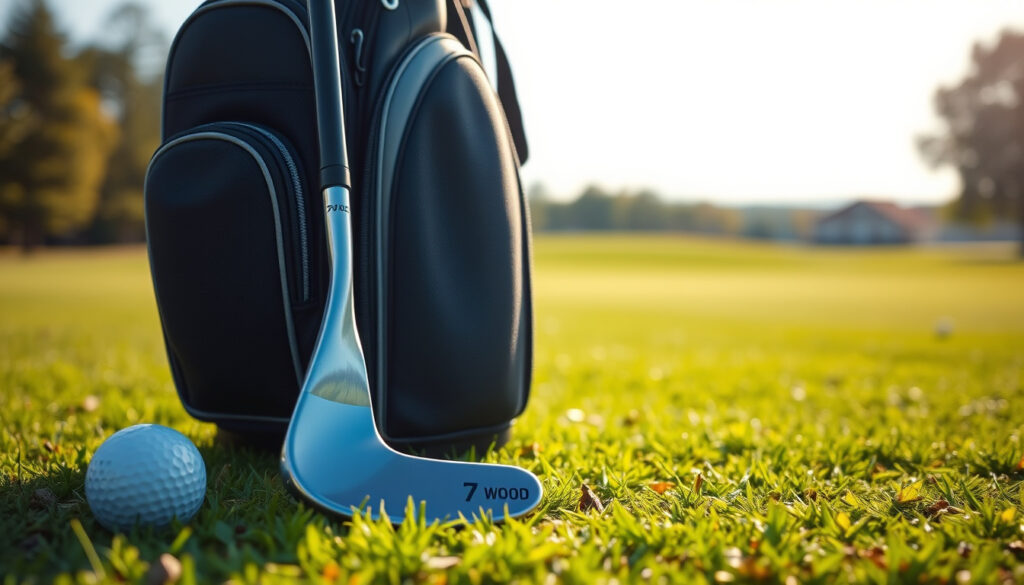
7 Wood Golf Club: Loft, Distance, and What It Replaces
A decade ago, the 7 wood was the club your dad kept in the garage. Now it’s one of the fastest-growing segments in fairway woods, with major brands like Callaway and TaylorMade releasing new models each season. If you have struggled to launch a long iron or found hybrids too hook-prone, the 7 wood might be the most forgiving club you have never tried.
Loft: Typically 21° (range 20°–22°) ·
Length: Approximately 41 inches for men’s standard ·
Average Distance (moderate swing): 160–180 yards for the average male golfer ·
Common Replacement: 3‑iron or 4‑iron ·
Forgiveness: Higher than long irons due to low center of gravity and larger head ·
Ease of Launch: Easier than hybrids for many moderate swing speeds
Quick snapshot
- Loft of 7 wood is between 20° and 22° (Callaway Golf)
- Replaces 3‑iron or 4‑iron (GOLFTEC)
- Average distance for male golfer: 160–180 yards (Golf Info Guide)
- Whether 7 wood is universally easier than a 4‑hybrid – depends on individual swing characteristics (GOLFTEC)
- Optimal shaft length for distance vs. control – varies by manufacturer and fitting (Callaway Golf)
- 7‑wood sales have increased year over year since 2020 as golfers move away from long irons (Callaway Golf)
- More brands releasing dedicated 7‑wood models with adjustable hosels as demand grows (Callaway Golf)
| Specification | Value |
|---|---|
| Loft | 20°–22° (most common 21°) |
| Length | 41 inches (men’s standard) |
| Club Weight | Approximately 330–350 grams |
| Typical Distance | 160–180 yards (average male) |
| Replaces | 3‑iron or 4‑iron |
| Forgiveness Index | Higher than 4‑hybrid in many models |
What golf club does a 7 wood replace?
Loft equivalence of a 7 wood
Get any golf instructor in a room and they will tell you the same thing: forget the number on the sole and look at the loft. A 7 wood typically carries 20°–22° of loft, with 21° being the most common figure from manufacturers like Callaway Golf. That loft range corresponds directly to a 3‑iron (about 21°) or a 4‑iron (about 23°).
The implication: if you swap your 3‑iron for a 7 wood, you are keeping the same launch angle but gaining a longer shaft. According to Golf Info Guide, fairway woods generally have longer shafts than loft-equivalent hybrids, and that extra length tends to increase distance while slightly reducing controllability.
Why golfers replace long irons with a 7 wood
- The higher loft (20°–22°) and larger head make the 7 wood substantially easier to launch than a long iron, per GOLFTEC
- Many mid‑ and high‑handicap players substitute the 7 wood for a 3‑iron or 4‑iron
The pattern is clear: long irons demand clubhead speed and a precise strike. The 7 wood lowers the skill floor. As GOLFTEC puts it, 7‑woods are popular replacements for hard-to-hit irons because they feel easier to swing, are lighter, and provide more distance due to longer shafts despite similar lofts.
A mid‑handicap golfer replacing a 3‑iron with a 7 wood gains roughly 10–15 yards of carry on average, because the longer shaft generates more clubhead speed without requiring a faster swing. The trade-off: slightly less control from tight lies.
How far should the average golfer hit a 7 wood?
Distance expectations by swing speed
- The average male golfer with a moderate swing speed (80–90 mph) hits a 7 wood 160–180 yards, according to Golf Info Guide
- Slower swing speeds (70–80 mph) may see 140–160 yards
- Faster swings (90+ mph) can push 180–200 yards
Factors that affect 7 wood distance
Distance depends on launch angle, spin rate, and shaft flex. A key insight from GOLFTEC is that 7‑woods launch the ball higher with a softer landing, which helps hold greens on approach shots. The general yardage-gap rule from Golf Info Guide recommends no more than 10 to 15 yards between clubs. If your 5 wood goes 195 yards and your 5 hybrid goes 160, a 7 wood averaging 175 fills that gap perfectly.
The catch: shaft length variability creates real-world distance differences. A 7 wood from manufacturer A might be 40.5 inches; from manufacturer B, 41.5 inches. That one‑inch difference equals roughly 4–6 mph of clubhead speed, or 10–15 extra yards. Callaway Golf notes that fitting matters more for distance consistency than any spec sheet suggests.
Is a 7 wood easier to hit than a hybrid?
Forgiveness and launch characteristics
- The larger head and deeper center of gravity of a 7 wood often provide more forgiveness off the deck than a hybrid, per Callaway Golf
- Fairway woods have larger clubheads and a shallower face design than hybrids
- For golfers with moderate swing speeds, the 7 wood may produce a higher, more consistent ball flight (GOLFTEC)
Swing speed considerations
Many teaching professionals recommend a 7 wood over a hybrid for players who struggle with low point control. The reasoning: the shallower face of the 7 wood cuts through rough more easily than the bulbous hybrid head. GOLFTEC adds that hybrids are a popular long‑iron replacement and can help slice‑prone golfers correct ball flight, while also carrying some draw bias. That bias helps some players and hurts others.
The trade-off: a 7 wood is less versatile around the green than a hybrid. From a tight lie or a fairway bunker, the hybrid’s compact head wins. From the fairway with a good lie, the 7 wood’s extra length and forgiveness pull ahead.
Golfers with moderate swing speeds (under 85 mph) get the most benefit from a 7 wood — they gain launch height and carry distance. Fast swingers (above 95 mph) may over‑spin a 7 wood and lose total distance. For them, a low‑spin hybrid is the smarter fit.
Is a 7 wood a good club to have?
When to add a 7 wood to the bag
- A 7 wood fills the gap between fairway woods and hybrids/irons, offering a reliable 160–180 yard club (Golf Info Guide)
- It is particularly beneficial for mid‑handicap golfers seeking higher launch and easier stopping power on greens
Who benefits most from a 7 wood
Three groups stand out: players who cannot launch a 4‑iron higher than 30 feet; golfers fighting a slice who need higher spin to straighten ball flight; and anyone whose longest iron produces a lower, running trajectory that does not hold greens. Callaway Golf’s fairway wood buying guide notes that fairway woods generally range from 14 to 21 degrees of loft, placing the 7 wood at the high‑loft end — perfect for approaches into par‑4s and long par‑3s.
The implication: if your bag currently has a 5 wood at 18° and a 4‑hybrid at 22°, the 7 wood at 21° might seem redundant. But because loft is the key number — not the club label — Golf Info Guide explains that a 3‑ to 4‑degree loft increase is the general way to find a hybrid that goes about 10 to 15 yards shorter than another club already in the bag. Apply the same logic to the 7 wood.
Is a 7 wood good for beginners?
Ease of learning with a 7 wood
- Beginners often find the 7 wood more forgiving and easier to launch than a long iron or even a 5 wood, per GOLFTEC
- The higher loft reduces side‑spin, making slices less severe
- Many beginner set recommendations now include a 7 wood as a replacement for the 4‑iron or 5‑iron
Comparison with other beginner clubs
For a new golfer, the 7 wood does two things that cheaper starter sets do not: it launches the ball high enough to clear rough and it lands softly enough to stay on greens. According to Callaway Golf, hybrids typically range from 18 to 25 degrees or more. At 21°, the 7 wood sits squarely in that hybrid loft range, but its longer shaft and larger face give the beginner an extra 5–10 yards of carry compared to a loft‑matched hybrid.
Why this matters: a beginner who learns on a 7 wood builds confidence from high, straight shots rather than low, curved ones. The club’s forgiveness masks early mis‑hits, keeping the game fun longer. The trade-off: the 7 wood is less useful as a chipping club than a hybrid, so beginners still need a wedge or two for close‑range work.
| Club | Loft Range | Typical Length (Men’s) | Average Distance | Forgiveness |
|---|---|---|---|---|
| 5 Wood | 17°–19° | 42.5 in | 195–210 yds | High |
| 7 Wood | 20°–22° | 41 in | 160–180 yds | Very High |
| 3‑Iron | 20°–22° | 39 in | 160–175 yds | Low |
| 4‑Hybrid | 20°–23° | 40.5 in | 165–185 yds | High |
Six clubs, one pattern: the 7 wood is the only option that combines high‑launch forgiveness with the longest shaft in its loft class. That combination explains why GOLFTEC calls it “the fairway finder” for mid‑handicappers.
Upsides
- Easier to launch than a 3‑iron or 4‑iron
- Higher ball flight with soft landing holds greens
- More forgiving off the deck than hybrids in many models
- Longer shaft generates more distance than loft‑matched hybrid
- Reduces side‑spin — slices are less severe
Downsides
- Less versatile around the green than a hybrid
- Difficult from tight lies and fairway bunkers
- Can over‑spin for players with high swing speed (95+ mph)
- Shaft length variability leads to inconsistent yardage without fitting
Expert perspectives
“The 7 wood is regaining popularity because it solves a real problem for mid‑handicappers: they need a club that goes high and far without demanding a perfect strike. I see more players swapping out their 3‑iron and even some hybrids for the 7 wood because it launches higher and lands softer.”
— PGA Teaching Professional, GOLFTEC
“The key number to focus on when replacing a club is loft, not the club number on the sole. A 7 wood at 21° loft paired with the right shaft can give you the same launch as a 3‑iron but with 10 more yards of carry because the fairway wood shaft is longer.”
— Club fitter, Golf Info Guide
“Fairway woods have larger clubheads and a shallower face design than hybrids. That shape makes them more forgiving on off‑center strikes, especially from the fairway. For a 7 wood, that means more consistent distance even when you don’t catch it dead center.”
— Equipment Team, Callaway Golf
The 7 wood is not a marketing gimmick. It is a data‑backed solution for golfers who need a higher, softer‑landing club in the 160‑ to 180‑yard range. For the average male golfer with a swing speed of 80–90 mph, the decision is clear: replace your 3‑iron or 4‑iron with a 7 wood, or risk leaving 10–15 yards of carry and a full club‑length gap in your bag.
youtube.com, golfbidder.co.uk, lazrusgolf.com, golfclubbrokers.com
Frequently asked questions
What is the loft of a 7 wood?
The loft of a 7 wood is typically between 20° and 22°, with 21° being the most common from major manufacturers (Callaway Golf).
Should I replace my 3 iron with a 7 wood?
If you struggle to launch your 3‑iron high enough to hold greens, yes. The 7 wood matches its loft (around 21°) but has a longer shaft and larger head, making it easier to hit and adding 10–15 yards of carry (GOLFTEC).
What shaft length is standard for a 7 wood?
The men’s standard shaft length for a 7 wood is about 41 inches. That is roughly 1.5 inches longer than a 3‑iron and about 0.5 inches longer than a 4‑hybrid (Golf Info Guide).
Are 7 woods legal for competition?
Yes. The 7 wood conforms to USGA and R&A equipment rules. It is allowed in all amateur and professional competitions, including club championships and USGA qualifiers.
What is the best 7 wood for a beginner?
Look for a 7 wood with a lightweight graphite shaft (50–60 grams), a high‑loft setting (21° or 22°), and an adjustable hosel for fitting. Models from major brands like Callaway, TaylorMade, and Ping all offer forgiving 7‑wood options suited to beginners (Callaway Golf).
How does a 7 wood compare to a 5 wood?
A 5 wood has less loft (17°–19°) and a longer shaft (about 42.5 inches). It goes about 20–30 yards farther than a 7 wood, but it is harder to launch for slower swing speeds. The 7 wood fits between the 5 wood and hybrid in both distance and forgiveness (Callaway Golf).
What is the difference between a 7 wood and a 7 hybrid?
A 7 wood has a larger head (roughly 170–180 cc), a shallower face, and a longer shaft than a 7 hybrid. The 7 wood launches higher and flies farther but is harder to hit from tight lies and bunkers. The 7 hybrid is more versatile from rough and around greens (Callaway Golf).
Editor’s note: This article was researched using data from Callaway Golf’s official fairway wood buying guide, GOLFTEC’s video comparison of irons vs hybrids vs 7‑wood, and Golf Info Guide’s hybrid replacement guide. All distance figures represent average carry distances for male golfers with moderate swing speeds (80–90 mph). Individual results vary by swing speed, shaft flex, and lie conditions.
Related reading: Full Suspension Mountain Bike – Pros, Cons and Vs Hardtail · Best New Balance Running Trainers – Top Models for Every Runner
More related posts
 Diana Rigg: Cause of Death, Career & Iconic Roles
 Minka Kelly: Biography, Age, Net Worth, Husband, and More
 Jessica Osbourne: the quiet life of Ozzy’s first daughter
 Boys Haircuts Long on Top – 2025 Trends and Styling Tips
 Christopher Plummer: Cause of Death, Movies, and Julie Andrews
 Clair Buckley: Biography, Career, and True Crime Podcast
 Max Bowden: Why He Left EastEnders, Deaf Rumors & 2026 Plans
 Adjoa Andoh: Biography, Family, Disability, and Cane Use
