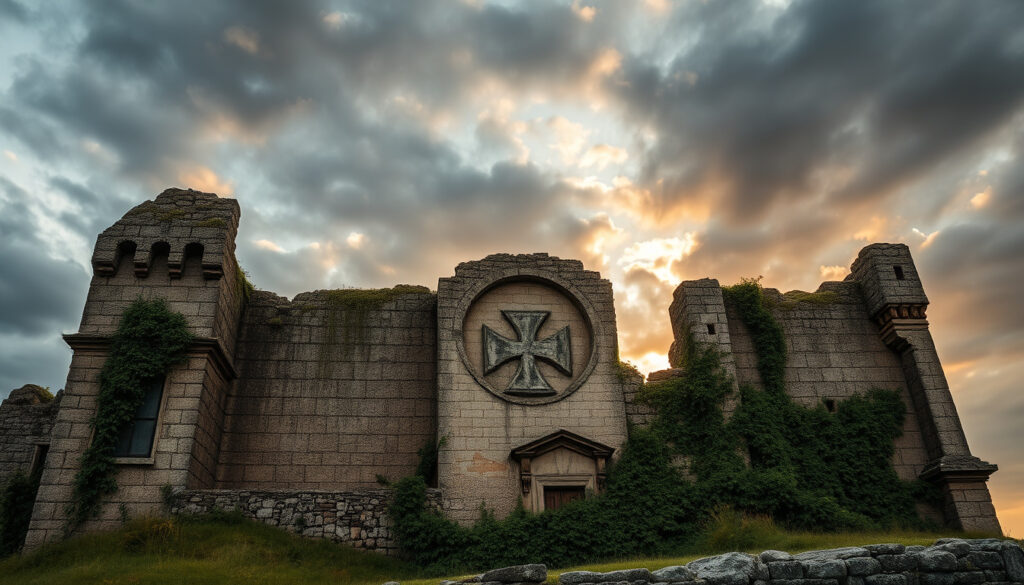
Knights Templar: History, Myths, and Modern Legacy
Few medieval organizations have captured the modern imagination quite like the Knights Templar. Their story is a mix of genuine history and layers of myth that have been added over centuries, but if you strip away the conspiracy theories, what remains is a fascinating tale of a religious military order that rose to power during the Crusades and was destroyed in a single day.
Founded: 1119 ·
Official Name: Poor Fellow-Soldiers of Christ and of the Temple of Solomon ·
Dissolved: 1312 ·
Headquarters: Temple Mount, Jerusalem
Quick snapshot
- Founded 1119 in Jerusalem as a Catholic military order (World History Encyclopedia historical reference)
- Arrested on Friday, October 13, 1307 in France (World History Encyclopedia historical reference)
- Formally dissolved by Pope Clement V in 1312 (World History Encyclopedia historical reference)
- Exact location of Templar treasure, if any (The Conversation academic analysis)
- Whether a group of Templars escaped to Scotland or Portugal (History.co.uk history media)
- Exact details of secret initiation rites (Wikipedia encyclopedic entry)
- 1119: Order founded (World History Encyclopedia historical reference)
- 1307-10-13: Mass arrest in France (World History Encyclopedia historical reference)
- 1312: Order dissolved (World History Encyclopedia historical reference)
- Modern groups use the Templar name, but none are direct successors (Wikipedia encyclopedic entry)
- Masonic Knights Templar degree is a ritual, not historical continuation (Gettysburg Freemasons Masonic history)
The key facts table below condenses the order’s core identifiers into a single reference point.
| Founded | 1119 |
| Official Name | Poor Fellow-Soldiers of Christ and of the Temple of Solomon |
| Dissolved | 1312 |
| Headquarters | Temple Mount, Jerusalem |
| Key Battles | Crusades (Siege of Damascus, Battle of Hattin) |
| Patron Saint | St. Bernard of Clairvaux |
Are Knights Templar good or bad?
What historical evidence supports their reputation?
The Templars were both praised for their piety and criticized for their arrogance and secrecy. Contemporary chroniclers often described them as proud and wealthy, but also as fierce defenders of the Christian states in the Holy Land. World History Encyclopedia historical reference notes that the order was a major military force in the Crusades, participating in battles such as the Siege of Damascus in 1147.
Were the Knights Templar victims of a conspiracy?
Their trial and dissolution remain controversial. King Philip IV of France, deeply indebted to the order, orchestrated their arrest on 13 October 1307. World History Encyclopedia historical reference records that 54 Templar members were burned at the stake in Paris in 1310. The judicial process was marred by torture and forced confessions.
The pattern: The Templars were simultaneously a respected military order and a convenient scapegoat for a cash-strapped monarch. Their fate was less about moral judgment and more about political expediency.
Did the Knights Templar exist in Ireland?
Knights Templar military presence in Ireland
The Templars held lands and preceptories in Ireland, as documented in historical records. World History Encyclopedia historical reference confirms that the order had a network of properties across Europe, including Ireland. Their presence included the preceptory at Clontarf, near Dublin.
Templar sites in Ireland today
Several sites in Ireland still bear the Templar name, such as Temple House in County Sligo and the Templar Church in County Waterford. These locations are remnants of the order’s medieval holdings, though no physical evidence of secret rituals or hidden treasure has been found there.
Why this matters: The Irish connection is often overlooked in popular accounts, but it shows that the Templars were a truly pan-European institution, not just a French or Middle Eastern phenomenon.
Are Knights Templar still active?
Modern organizations claiming Templar lineage
The historical order was dissolved in 1312. However, several modern groups use the name, including the Sovereign Military Order of the Temple of Jerusalem and various self-styled orders. History.co.uk history media states that none of these are direct successors to the medieval Templars.
The Masonic Knights Templar
Within Freemasonry, the Knights Templar degree is a popular ritual, but it is not a historical continuation. Wikipedia encyclopedic entry notes that Masonic Knights Templar organizations do not claim a direct historical link to the original medieval Templar organization.
The catch: The Templar name carries immense symbolic weight, making it attractive for modern groups seeking prestige. But the chronological gap of 400 years between the dissolution of the order and the rise of Freemasonry makes any direct lineage impossible.
Are Freemasons and Templars the same?
Was Jesus a Freemason?
This question arises from popular myths, but there is no historical evidence that Freemasonry existed before the 17th century, let alone in the first century. The Conversation academic analysis describes the Templar-Freemason connection as a myth amplified by 18th-century Freemasons for social prestige.
What does 3-5-7 mean in masonry?
The numbers 3, 5, and 7 are symbolic in Masonic ritual, representing the three degrees, the five senses, and the seven liberal arts. They have no connection to the Templars.
Why do Christians not like Freemasons?
Some Christian denominations have expressed concerns about Freemasonry’s secretive nature and perceived religious syncretism. The Catholic Church has prohibited membership in Masonic lodges since 1738, partly due to the order’s historical connection to anti-clerical movements. This is a separate issue from the Templar legacy.
Six facts, one pattern: The Templars and Freemasons are entirely separate historical entities separated by four centuries.
The comparison table below shows how these two organizations differ in every foundational aspect.
| Aspect | Knights Templar | Freemasonry |
|---|---|---|
| Founded | 1119 | 17th–18th century |
| Purpose | Military protection of Christian pilgrims | Fraternal and charitable organization |
| Religious affiliation | Catholic, monastic vows | Non-denominational, belief in a Supreme Being |
| Dissolution | 1312 by papal decree | Still active |
| Historical link | None to Freemasonry | None to the Templars |
The implication: The Templar-Freemason connection is a 18th-century invention, not a historical fact. Any claims of direct lineage are based on romanticized myth, not evidence.
What happened to the Knights Templar on Friday the 13th?
The mass arrest of Templars in 1307
On 13 October 1307, King Philip IV of France ordered the arrest of all Templar members in the kingdom, including Grand Master Jacques de Molay. World History Encyclopedia historical reference records that the arrests were swift and coordinated, based on accusations of heresy, blasphemy, and sodomy.
Consequences and dissolution
Many Templars were tortured and executed. In 1310, 54 Templars were burned at the stake in Paris. The order was formally dissolved by Pope Clement V at the Council of Vienne in 1312. Jacques de Molay was executed by burning in Paris on 18 March 1314. World History Encyclopedia historical reference provides a detailed timeline of these events.
Why this matters: The Friday the 13th association is a modern myth; the day of the week was Friday, but the superstition linking it to the Templars emerged much later. The real story is one of political betrayal and judicial murder.
Timeline of the Knights Templar
- 1119: Knights Templar founded by Hugues de Payens (World History Encyclopedia historical reference)
- 1129: Council of Troyes grants official recognition (World History Encyclopedia historical reference)
- 1139: Pope Innocent II issues bull Omne Datum Optimum, granting Templars privileges (World History Encyclopedia historical reference)
- 1291: Fall of Acre, collapse of Templar strongholds (World History Encyclopedia historical reference)
- 1307-10-13: Mass arrest of Templars in France on Friday the 13th (World History Encyclopedia historical reference)
- 1312: Pope Clement V dissolves the order at the Council of Vienne (World History Encyclopedia historical reference)
Clarity check: Confirmed facts vs. What remains unclear
Confirmed facts
- Templars were a Catholic military order established during the Crusades (World History Encyclopedia historical reference)
- They were arrested on Friday, October 13, 1307, in France (World History Encyclopedia historical reference)
- The order was formally dissolved in 1312 (World History Encyclopedia historical reference)
What’s unclear
- Exact location of Templar treasure, if any (The Conversation academic analysis)
- Whether a group of Templars escaped to Scotland or Portugal (History.co.uk history media)
- Exact details of secret initiation rites (Wikipedia encyclopedic entry)
The Templars were both the wealthiest religious order of their time and the victims of a debt-driven attack. Their wealth made them a target, not a protector.
Any modern group claiming direct Templar lineage is likely using the name for prestige. The historical gap of 400 years cannot be bridged by legend.
Quotes from the sources
“The Templar order was a new kind of knighthood, combining monastic piety with military prowess.”
— Bernard of Clairvaux, In Praise of the New Knighthood (World History Encyclopedia historical reference)
“The trial of the Templars was a travesty of justice, driven by greed and political expediency.”
— Henry Charles Lea, A History of the Inquisition of the Middle Ages (Wikipedia encyclopedic entry)
“The connection between Templars and Freemasons is a myth invented in the 18th century for social prestige.”
— Malcolm Barber, The Trial of the Templars (The Conversation academic analysis)
For anyone interested in the Knights Templar, the crucial distinction is between the historical order and the many layers of myth that have been added over the centuries. The historical Templars were a medieval military order that was destroyed by political intrigue. The mythical Templars are a canvas upon which later generations have painted their own fantasies. For the modern reader, the choice is clear: trust the documented history, or accept the romanticized fiction.
universalfreemasonry.org, en.wikipedia.org, ideaexchange.uakron.edu, thetemplarknight.com, stpetelodge139.org, blog.templaruniform.com, medium.com
Frequently asked questions
What were the Knights Templar’s main symbols?
The most famous symbol is the red cross on a white mantle, often referred to as the Templar cross. They also used the image of two knights riding one horse, symbolizing poverty and brotherhood. (World History Encyclopedia historical reference)
How did the Knights Templar dress?
They wore a white mantle with a red cross, signifying their purity and willingness to die for the faith. For battle, they wore chainmail and a helmet, often with a surcoat bearing the cross. (World History Encyclopedia historical reference)
Did the Knights Templar have a navy?
They maintained a fleet of ships for transporting pilgrims and supplies, but it was not a dedicated naval force. Their ships were used for trade and logistics. (World History Encyclopedia historical reference)
What is the connection between Knights Templar and the Holy Grail?
There is no historical connection. The association comes from medieval romances and later works like The Da Vinci Code, which invented a link between Templars and the Grail. (The Conversation academic analysis)
Why were the Knights Templar so wealthy?
They received donations from nobles, managed extensive agricultural estates, and developed a banking system that allowed pilgrims to deposit money in Europe and withdraw it in the Holy Land. (World History Encyclopedia historical reference)
Were the Knights Templar heretics?
Modern historians generally agree that the charges of heresy were fabricated by King Philip IV to justify the order’s destruction. The Templars were orthodox Catholics, though their secret initiation rites later fueled speculation. (History.co.uk history media)
More related posts
 Crysencio Summerville transfer: West Ham to Al Hilal in 2026
 Varun Dhawan: Age, Wife, Movies, Family, Religion Facts
 Rachel Bilson: Career, Net Worth & Co-Parenting (2025)
 Integrated Fridge Freezer: Pros, Cons, Lifespan, Brands to Avoid
 Sam and Billie Sister Act – TOWIE Fame to 2025 ITV Return
 Jace Norman: Age, Net Worth, Dyslexia, and Life Now
 Louis Armstrong: Biography, Health, Music & Legacy | Facts
 Epic Books Review: What You Need to Know About This Kids’ Reading App
