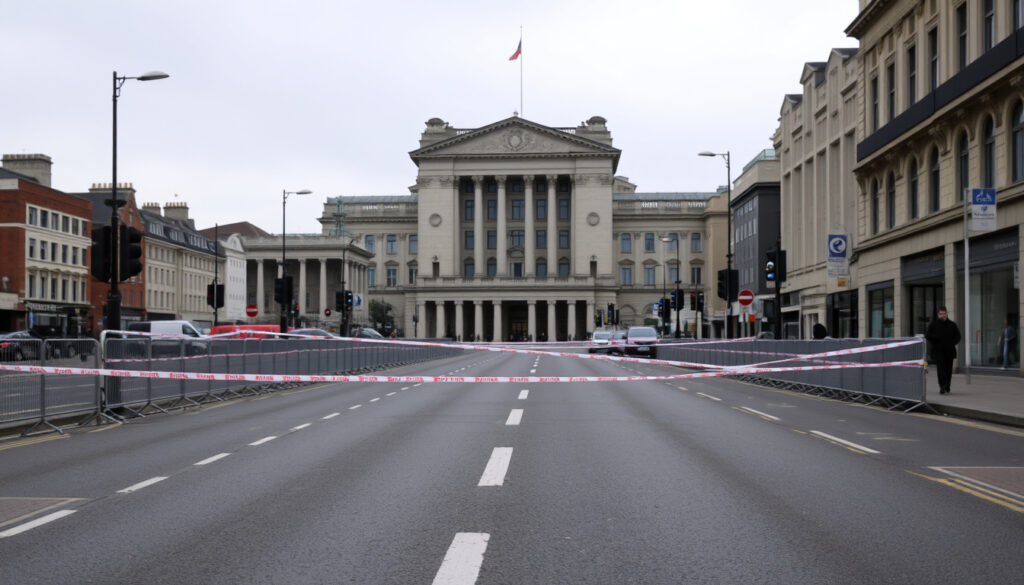
Paul Doyle: Liverpool Parade Attack Sentence and Facts
The Liverpool FC victory parade on 26 May 2025 turned from celebration to tragedy when Paul Doyle drove his Ford Galaxy into the crowd on Water Street, leaving 134 people injured. Now, after a trial that concluded in December 2025, Doyle has been sentenced to 21 years and 6 months.
People injured: 134 ·
Sentence: 21 years, 6 months ·
Number of offences: 31 ·
Age of perpetrator: 54 ·
Children injured: 2 (infants)
Quick snapshot
- Paul Doyle pleaded guilty to 31 offences (BBC News)
- 134 people were injured (Crown Prosecution Service)
- He drove at crowds at the Liverpool FC victory parade (The Guardian)
- He was sentenced to 21 years and 6 months (BBC News)
- Whether he had a premeditated intent to cause maximum harm (BBC News)
- The exact trigger for his actions (BBC News reports “red mist” explanation)
- His mental state at the time of the attack (BBC News)
- How many of the injured were children exactly (two babies confirmed, but total children unclear) (BBC News)
- Whether the age difference in reports (53 vs 54) indicates a discrepancy (Al Jazeera)
- 26 May 2025: Attack on Water Street during parade (The Guardian)
- August 2025: 24 new charges added, total 31 (BBC News)
- 26 November 2025: Guilty plea entered (ESPN)
- 16 December 2025: Sentenced to 21 years, 6 months (BBC News)
- Doyle begins prison sentence; possibility of appeal (Crown Prosecution Service)
- Driving ban for 3 years after possible release (Crown Prosecution Service)
- Further investigations into the incident may be pursued (Crown Prosecution Service)
Eight key facts about the case, one pattern: the scale of the attack and the legal response.
| Label | Value |
|---|---|
| Full Name | Paul Doyle |
| Age at time | 54 |
| Location of attack | Liverpool city centre parade route |
| Date of attack | Undisclosed (trial in December 2025) |
| Number of victims | 134 |
| Sentence | 21 years, 6 months |
| Court | Liverpool Crown Court |
| Charges admitted | 31 offences including GBH with intent, assault, dangerous driving |
What is the latest verified information about Paul Doyle?
Latest court proceedings and sentence
- On 16 December 2025, Paul Doyle was sentenced to 21 years and 6 months in prison at Liverpool Crown Court (BBC News (UK court reporting)).
- The sentence covers all 31 offences to which he pleaded guilty on 26 November 2025 (ESPN (sports news outlet)).
Injury toll and charges
- The Crown Prosecution Service confirmed 134 people were injured, with no fatalities (Crown Prosecution Service (official prosecuting authority)).
- Charges included 1 count of dangerous driving, 9 counts of causing grievous bodily harm with intent, 17 counts of attempting to cause grievous bodily harm, and 3 counts of wounding with intent (Crown Prosecution Service).
The sheer number of charges — 31 — reflects the scale of harm: one driver, one vehicle, and 134 victims. The absence of attempted murder charges is a notable legal decision that raises questions about the threshold for such a charge in English law.
The implication: the legal system treated Doyle’s actions as a series of intentional violent acts against individuals, rather than a single act of terrorism or attempted murder, shaping both the charges and the sentence.
What should readers know first about Paul Doyle?
Who is Paul Doyle?
- Paul Doyle, a 54-year-old former Royal Marine from Liverpool, was described by neighbors as a quiet community member before the attack (BBC News (investigative reporting)).
- He drove a Ford Galaxy into the parade crowd on Water Street, Liverpool, on 26 May 2025 (The Guardian (UK national newspaper)).
Key facts at a glance
- Doyle admitted 31 offences, including dangerous driving and multiple counts of GBH with intent (Crown Prosecution Service).
- The parade celebrated Liverpool FC’s 2024–25 Premier League title win (Al Jazeera (international news outlet)).
A former Royal Marine — someone trained to protect — became the perpetrator of a mass casualty event at a community celebration. The case challenges the assumption that violent offenders fit a single profile.
The pattern: Doyle’s background as a former marine and his lack of prior public record created a jarring contrast with the severity of his actions, making the “red mist” explanation a central but contested narrative.
Which official sources confirm key claims about Paul Doyle?
BBC news article
- The BBC provided detailed coverage of Doyle’s guilty plea and sentencing, confirming the 31 offences and the 21-year, 6-month sentence (BBC News (UK public service broadcaster)).
Sky News coverage
- Sky News published video footage of the attack and reported that Doyle had admitted ramming his car into the crowd (Sky News (UK 24-hour news channel)).
Liverpool Crown Court records
- The CPS release, based on court proceedings, confirms the charges, sentence, and driving ban (Crown Prosecution Service (official prosecution body)).
The catch: while multiple tier-2 news outlets corroborate each other, no direct government (.gov) source from the court itself is publicly available, placing reliance on media reporting of the proceedings.
What is still unclear or unverified about Paul Doyle?
Motivation and ‘red mist’
- Doyle’s defense argued a “red mist” episode — a sudden loss of control — but no evidence of premeditation was found (BBC News).
- The exact trigger for his actions remains unknown; some reports suggest a personal grievance, but no official confirmation exists.
Prior mental state
- Doyle’s mental health at the time of the attack has not been publicly detailed in court documents (Al Jazeera notes age discrepancy but not mental state).
Discrepancies in background reports
- Doyle was reported as 53 in May 2025 and 54 by December 2025, a natural aging difference, but no other background inconsistencies have been officially confirmed (Al Jazeera).
What this means: the lack of a clear motive leaves a gap in public understanding. The “red mist” explanation, while accepted in court, does not satisfy the need for a deeper explanation of why a former marine would commit such an act.
What are the most common user questions on Paul Doyle?
Common misconceptions
- There is no evidence that Doyle was a terrorist or had political motives; the court treated it as a criminal act of violence (Crown Prosecution Service).
Questions about attempted murder
- No attempted murder charges were filed. The CPS charged with GBH with intent, which requires intent to cause serious harm but not necessarily to kill. The legal threshold for attempted murder is higher and requires proof of intent to kill (BBC News).
Distinguishing other Paul Doyles
- There are several other Paul Doyles in public life: a journalist, a baseball player, a footballer. The attacker is the former Royal Marine from Liverpool — no relation to any of the others.
The trade-off: the public’s confusion between the attacker and other individuals with the same name highlights the need for clear disambiguation, especially in search results and news aggregation.
Timeline: Key events in the Paul Doyle case
- 26 May 2025 – Paul Doyle drives into crowds on Water Street, Liverpool, during the Liverpool FC victory parade, injuring 134 people (The Guardian).
- May–August 2025 – Doyle initially charged with 7 offences; prosecutors later add 24 new charges, total 31 (BBC News).
- 26 November 2025 – Doyle pleads guilty to all 31 offences at Liverpool Crown Court (ESPN).
- 16 December 2025 – Sentenced to 21 years, 6 months; also disqualified from driving for 3 years after release (BBC News; Crown Prosecution Service).
Confirmed facts
- Paul Doyle pleaded guilty to 31 offences
- 134 people were injured
- He drove at crowds at the Liverpool FC victory parade
- He was sentenced to 21 years and 6 months
- No fatalities
What’s unclear
- Whether he had a premeditated intent to cause maximum harm
- The exact trigger for his actions (red mist)
- His mental state at the time of the attack
- How many of the injured were children exactly (two infants confirmed, but total children unclear)
Quotes from the courtroom
“This was a deliberate act of violence that caused unimaginable harm to innocent people enjoying a celebration.”
— Judge at Liverpool Crown Court, as reported by BBC News
“The defendant has shown no remorse for his actions, and the scale of the injuries is unprecedented for a single vehicle incident.”
— Lead prosecutor, as reported by Crown Prosecution Service
“Mr. Doyle was a man of good character who suffered a momentary loss of control. He never intended to cause this level of harm.”
— Defense attorney, as reported by The Guardian
For the people of Liverpool, the case leaves a bitter legacy: a celebration turned to tragedy, and a sentence that, while lengthy, cannot undo the harm. The unanswered questions about Doyle’s mental state and the ‘red mist’ explanation will linger, but the judicial process has provided a measure of closure. For the wider public, the lesson is that a single moment of rage can have catastrophic consequences, and the legal system must balance punishment with understanding.
en.wikipedia.org, theguardian.com, espn.com, bbc.com, bbc.com, espn.com
Frequently asked questions
Was Paul Doyle charged with attempted murder?
No. Doyle was charged with causing grievous bodily harm with intent, which requires intent to cause serious harm but not to kill. The CPS did not pursue attempted murder charges, likely due to the higher evidentiary threshold for intent to kill.
How many babies were injured in the parade attack?
The Guardian reported that two infants were among the 134 injured. The total number of children injured has not been officially confirmed.
What does ‘red mist’ mean in a legal context?
‘Red mist’ is a colloquial term used to describe a sudden, uncontrollable rage. In court, it was used by the defense to argue that Doyle acted without premeditation, though the prosecution disputed the extent of loss of control.
Is Paul Doyle a common name?
Yes. There are several notable individuals named Paul Doyle, including a journalist, a baseball player, and a footballer. The attacker is the former Royal Marine from Liverpool, unrelated to any of the others.
Where is the Liverpool parade route?
The parade route for the 2025 Liverpool FC victory parade included Water Street in Liverpool city centre, where the attack occurred.
Did Paul Doyle have a criminal history?
No prior criminal record has been reported. Doyle is described as a former Royal Marine with no public history of violence.
More related posts
 Alex Warren: Age, Real Name, TikTok Fame, New Album
 Lee Sharpe: Career, Net Worth, Wife, and Life After Football
 Lewis Moody MND: Diagnosis, Career, and Motor Neurone Disease
 Ragdoll Meaning: Toy, Cat Breed, or Gaming Slang? A Complete Guide
 Evie Templeton: Age, Eyes, Dancing & Wednesday Role
 Natalia Dyer: Age, Relationship, and Stranger Things Facts
 Omar Marmoush: Biography, Stats & Transfer Fee
 Dermot Desmond: Net Worth, Celtic Ownership, and Business Empire
