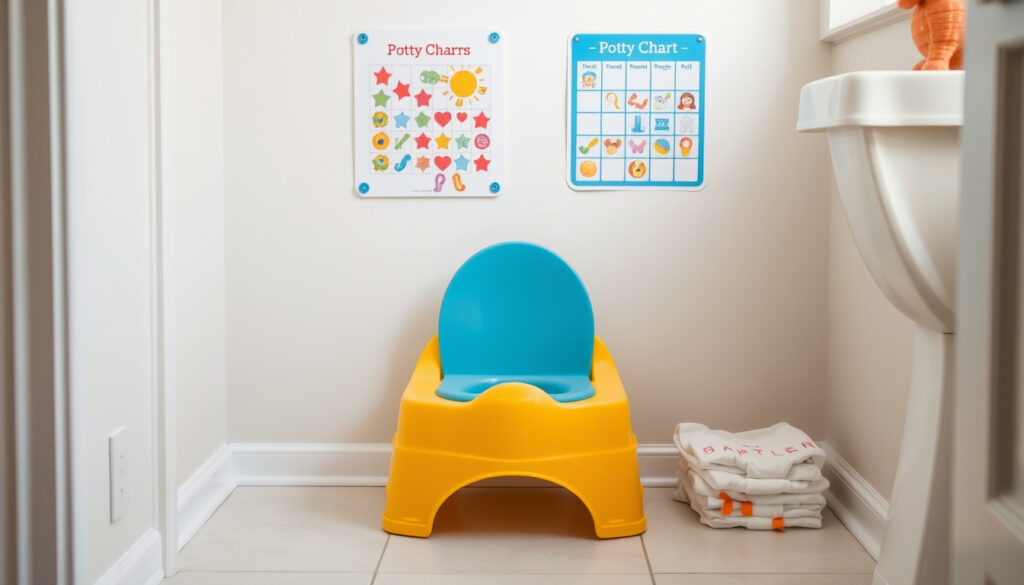
Potty Training Guide: Age, Methods, and Tips for Success
If you’ve ever wondered whether your toddler is ready to say goodbye to nappies, you’re not alone. Potty training is one of those parenting milestones that feels both simple and mystifying at the same time. In this guide, we’ll walk through the evidence-based readiness signs, the most popular training methods, and what to do when things don’t go to plan — with practical advice from Ireland’s Health Service Executive (HSE) and UK health authorities.
Recommended start age range: 12–18 months (Gov Wales) ·
Retry interval if stalled: 2–3 weeks (HSE) ·
Popular methods: 3-day and 10-10-10 rules
Quick snapshot
- Using a potty chair and positive reinforcement improves success (HSE, Ireland’s health service)
- Children show readiness signs between 18–24 months (common range) (HSE, Ireland’s health service)
- Consistency and patience are key factors (Worcestershire Children First Health, an NHS trust)
- Exact optimal age varies per child (HSE, Ireland’s health service)
- Success rate of 3‑day vs gradual methods lacks rigorous comparison (Huggies UK, a parenting resource)
- Effectiveness of specific rewards beyond praise (Beech Hill School PDF)
- Most children achieve daytime dryness between 2 and 3 years old (HSE, Ireland’s health service)
- 3‑day method is designed for a long weekend (HSE, Ireland’s health service)
- If child shows reluctance, stop and try again in 2 to 3 weeks (HSE, Ireland’s health service)
- Consult a GP if child is not showing any interest by age 4 (Worcestershire Children First Health, an NHS trust)
Four key facts about potty training, one pattern: official health bodies agree that readiness is a set of skills, not a single age. Here’s the data.
| Fact | Value |
|---|---|
| Starting age (Gov Wales) | 12–18 months |
| Retry interval (HSE) | 2–3 weeks |
| Essential tools | Potty chair, trainer pants, step stool |
| Typical training duration | 3–6 months for daytime control |
What age is best to potty train?
Signs of readiness in toddlers
- Stays dry for at least 2 hours (HSE, Ireland’s health service)
- Shows interest in the toilet or asks to be changed (HSE, Ireland’s health service)
- Can follow simple instructions (Worcestershire Children First Health, an NHS trust)
- Can pull pants up and down (HSE, Ireland’s health service)
You can start helping your child learn the skills needed for toilet training from the time they are about 12–18 months old, according to Gov Wales, the Welsh Government. But the HSE warns that starting too early can backfire: if your child shows reluctance, stop and try again in 2 to 3 weeks.
When to start potty training a boy vs girl
- Research shows girls often show readiness slightly earlier than boys, but the range is wide (HSE, Ireland’s health service)
- The same readiness signs apply to both genders (Worcestershire Children First Health, an NHS trust)
Parents who wait for clear readiness signs — rather than a calendar date — report fewer accidents and less frustration. The HSE’s checklist is a reliable starting point.
The pattern: readiness is a skill set, not a birthday. The implication: if your child isn’t ready, forcing it can turn potty training into a power struggle.
What is the 3 day rule for potty training?
How to implement the 3-day method
- The 3‑day rule involves intensive potty training over a long weekend (HSE, Ireland’s health service)
- Keep the child in underwear or naked to increase awareness (Huggies UK, a parenting resource)
- Set aside 3 to 4 days at home, with no daycare or nursery (HSE, Ireland’s health service)
Potential challenges and tips
- Expect accidents—they are part of the process (Worcestershire Children First Health, an NHS trust)
- Watch for signals like hopping, holding pants, or hiding (HSE, Ireland’s health service)
- If child refuses, stop and try again in 2–3 weeks (HSE, Ireland’s health service)
What is the fastest way to potty train a toddler?
Comparison: 3‑day vs 10‑10‑10 vs gradual approach
- 3‑day method: Intensive, requires full-time commitment (HSE, Ireland’s health service)
- 10‑10‑10 rule: A community-based phrase that does not appear in official NHS/HSE guidance and is often confused with dog training (Huggies UK, a parenting resource)
- Gradual approach: Child-led, using trainer pants and routine (HSE, Ireland’s health service)
Preparation before starting
- Start a routine of sitting your child on the potty first thing after meals and naps, and before bedtime (HSE, Ireland’s health service)
- Use trainer pants to bridge between diapers and underwear (HSE, Ireland’s health service)
- Have a potty chair and step stool ready (Worcestershire Children First Health, an NHS trust)
The so‑called 10‑10‑10 rule is a confusing term. Our research found it used for puppy training, not child potty training. Parents should treat it with caution and stick to HSE‑endorsed methods.
The fastest method for your child is the one that matches their readiness. The trade-off: speed often comes with more accidents and stress.
Is it normal for a 3 year old to not be potty trained?
Developmental variations in toilet training
- Many children are not fully trained by age 3, and it is often within normal range (ERIC, the UK’s charity for children’s bowel and bladder health)
- Most children achieve daytime dryness between 2 and 3 years old (HSE, Ireland’s health service)
- Nighttime training often takes longer, sometimes until age 5 or 6 (Worcestershire Children First Health, an NHS trust)
When to seek professional advice
- If child shows no interest by age 4, consult a GP (Worcestershire Children First Health, an NHS trust)
- Red flags include persistent withholding of stool or urine (ERIC, the UK’s charity for children’s bowel and bladder health)
- Regression after a period of success may indicate illness or stress (HSE, Ireland’s health service)
A child who isn’t potty trained by age 3 is not behind — they are developing at their own pace. The real concern is persistent physical or emotional distress, not the calendar.
What is a red flag for potty training?
Physical signs that require medical evaluation
- Signs of pain during urination or bowel movements (Mayo Clinic, a US medical centre)
- Persistent constipation or stool withholding (ERIC, the UK’s charity for children’s bowel and bladder health)
- Wetting or soiling after a period of dryness (HSE, Ireland’s health service)
Behavioral concerns
- Extreme fear of the toilet or potty (Worcestershire Children First Health, an NHS trust)
- Regression after a period of success may indicate illness or stress (HSE, Ireland’s health service)
- Consult a GP if child is not showing any interest by age 4 (Worcestershire Children First Health, an NHS trust)
Upsides
- Potty training fosters independence and confidence
- Earlier success can save money on nappies
- Many children respond well to positive reinforcement
Downsides
- Accidents and mess are inevitable
- Starting too early can cause frustration
- Nighttime training takes longer for many children
Steps to potty training success
- Watch for readiness signs (dry periods, interest, physical skills).
- Choose a method: 3‑day intensive or gradual child-led approach.
- Prepare the environment: potty chair, trainer pants, step stool.
- Start a routine: sit on potty after meals, naps, and before bed.
- Use positive reinforcement — praise, stickers, small rewards.
- Handle accidents calmly; never punish.
- If child resists, stop and try again in 2–3 weeks.
- Celebrate successes, but expect setbacks.
“Start a routine of sitting your child on the potty first thing after meals and naps, and before bedtime.”
HSE, Ireland’s health service
“Look for physical readiness — staying dry for at least two hours, showing interest in the toilet, and being able to follow simple instructions.”
“You can start helping your child to learn the skills needed for toilet training from the time they are about 12–18 months old.”
Potty training is a journey, not a race. The evidence from Ireland’s HSE and UK health authorities is consistent: wait for readiness, be consistent, and don’t push too hard. For parents in Ireland and the UK, the choice is clear: follow the official checklists, trust your child’s pace, and remember that most children achieve daytime dryness between 2 and 3 years old. If you’re struggling, the NHS and HSE offer free resources — use them.
storydistrict.co.uk, petsafenest.com, levelupdogtraining.com, customcanineunlimited.com, splootvets.com, petscare.com, mypuppytraining.com, nordicbetting.org
For a detailed breakdown of readiness signs and popular techniques, see this guide on potty training age and methods.
Frequently asked questions
What is the difference between a potty chair and a toilet seat adapter?
A potty chair is a standalone, child-sized seat that sits on the floor. A toilet seat adapter fits onto an existing toilet, reducing the seat size. Both work; the choice depends on your child’s comfort and your bathroom setup.
How do you handle accidents during potty training?
Stay calm and reassure your child. Clean up without fuss, and gently remind them to use the potty next time. Accidents are normal and part of the learning process.
When should you switch from a potty to the toilet?
Once your child is consistently using the potty, you can introduce a toilet seat adapter. Some children prefer the potty for longer; there’s no rush.
What are the best rewards for potty training?
Praise, stickers, or small treats work well. The HSE recommends positive reinforcement without over‑relying on material rewards. The best reward is your child’s pride in their own achievement.
How to potty train a stubborn child?
If your child is resistant, stop and wait 2–3 weeks before trying again. Pushing can create a power struggle. Focus on readiness and make it a fun, low-pressure experience.
Is nighttime training different from daytime training?
Yes. Nighttime dryness depends on physical development and often takes longer — sometimes until age 5 or 6. Use waterproof mattress protectors and limit fluids before bed.
Should I use pull‑ups or underwear?
Trainer pants (pull‑ups) are a good bridge because they feel like underwear but offer absorbency. Once your child is ready, switch to cotton underwear for a more direct sensation.
More related posts
 Ned Porteous: What He’s Doing Now, Roles, and Biography
 Omari Hardwick: Nationality, Wife, 50 Cent Feud, and Ghost Exit
 Prince Michael of Kent: Biography, Net Worth & Controversy
 Snooker Today on TV: Schedule, Channels & Player News
 Madhuri Dixit: Biography, Family, and Unanswered Questions
 Jesse Tyler Ferguson: Biography, Family, Net Worth, and More
 Ramona Marquez: From Outnumbered to Tattoo Artist
 Michelle Williams: Biography, Children, and Heath Ledger
