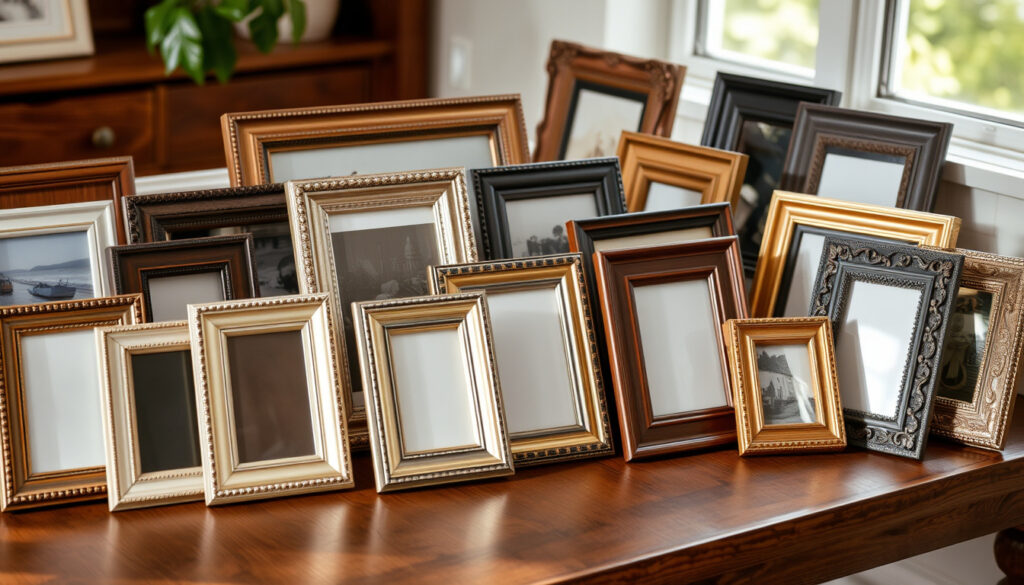
Photo Frames: How to Choose Sizes, Materials, and Styles
Walking into a shop to buy a photo frame can feel surprisingly overwhelming — rows of different sizes, materials, and finishes, each promising to do justice to your favourite print. This guide cuts through the clutter, covering the most common frame sizes from 4×6 to A3, the trade-offs between wood, metal, and gold frames, and tips for creating a striking wall collage.
Most popular frame sizes: 4×6, 5×7, 8×10 inches ·
Common materials: Wood, metal, plastic ·
Typical price range: $5 – $50 USD ·
Top retailers: Ikea, Next, Cotswold Co, Frames.co.uk
Quick snapshot
- 6×4 inches is the most common snapshot print size (Austin Gallery, art education centre)
- Wooden frames are widely available and durable (Archival Methods, framing specialist)
- Conservation-grade matting uses 100% cotton rag board (NEDCC) (Austin Gallery, art education centre)
- Whether gold frames suit all decor styles
- If funky frames are as durable as traditional ones
- How long custom frames take to arrive
- Standard sizes (4×6, 5×7, 8×10) have remained consistent for decades (Austin Gallery)
- Custom frame sizes are increasingly available online from retailers like Frames.co.uk
- Eco-friendly materials (bamboo, reclaimed wood) gaining traction
The table below summarises the key facts at a glance.
| Dimension | Value |
|---|---|
| Most common frame size | 4×6 inches |
| Most common material | Wood |
| Average price for standard frame | $15 – $25 |
| Number of retailers offering photo frames | Thousands (including major chains like Ikea, Next) |
What are the most popular photo frame sizes?
Common photo frame sizes (4×6, 5×7, 8×10, A4, A3)
In the US, standard photo frame sizes follow customary inches. The most common are 4×6, 5×7, 8×10, 11×14, 16×20, and 24×36 inches, according to the Austin Gallery (art education resource). For snapshot prints from typical photo labs, 4×6 predominates. Larger prints such as posters often use 10×8 inches.
Metric markets (UK, Europe, Australia) use centimetres: 10×15 cm, 13×18 cm, 15×20 cm, 20×25 cm, 30×40 cm, 40×50 cm, 45×60 cm, and 60×90 cm. ISO paper formats like A4 (21.0×29.7 cm) and A3 (29.7×42.0 cm) are also common for documents and certificates. Note that US Letter (21.6×27.9 cm) has a slightly different aspect ratio than A4, so a frame labelled for A4 may not fit US Letter prints exactly — this is a frequent point of confusion for online buyers.
How to measure your print for a frame
The frame opening, not the outside dimensions, determines whether a print will fit. Frame It Easy (online framing specialist) advises measuring the artwork’s actual width, height, and depth. If your print is a non-standard size or you want a border, a mat (mount) can bridge the gap. For example, an 8×10 print can fit an 11×14 frame with an appropriately sized mat.
Where to buy standard sizes
Major retailers such as Ikea, Next, and Frames.co.uk carry extensive ranges of standard-size frames in wood, metal, and plastic. Prices typically range from $5 for a basic plastic 4×6 to $50 for a larger wooden frame.
The implication: sticking to standard sizes simplifies shopping and reduces the need for custom solutions.
Why choose wooden photo frames?
Types of wood used in frames
Wooden frames come in a variety of species: oak, walnut, pine, and poplar are common. Each offers a distinct grain and colour — oak is warm and durable, walnut dark and rich, pine light and affordable.
Durability and style of wooden frames
Wood is strong and resistant to warping when properly sealed. Archival Methods (conservation framing supplier) notes that wood frames can be refinished if scratched, extending their life. They suit traditional, rustic, and farmhouse decor.
Comparing wood to metal and plastic
Metal frames (aluminium, steel) are lighter, thinner, and more modern — they work well for posters and minimalist interiors. Plastic frames are the cheapest and lightest but less durable. The trade-off: wood offers timeless aesthetics and repairability; metal offers sleekness and lightness; plastic is a budget option but prone to discoloration.
Wooden frames beat metal and plastic in longevity and classic appeal, but they are heavier and more expensive. For a gallery wall or heirloom prints, wood is the safer bet.
The pattern: wood offers longevity and repairability, making it the preferred choice for heirloom-quality framing.
Are gold photo frames a good choice?
Gold frame styles and finishes
Gold frames range from bright, polished finishes to brushed or antique gold. Many retailers offer gold in standard sizes — 4×6, 5×7, 8×10, and A4. Styles include thin metallic profiles and chunky ornate mouldings.
Matching gold frames with decor
Gold frames add a touch of elegance and work particularly well on neutral (white, beige, grey) and dark (navy, charcoal) walls. They can also complement warm wood tones. However, they may clash with busy patterns or overly bright colours.
Availability and price
Gold frames are widely available from online retailers like Next and Cotswold Co at prices comparable to wood frames. The Archival Methods range includes gold metal frames for about $20–$40 in standard sizes.
Gold frames can look dated if the finish is too shiny or if the room already has multiple metallic accents. Opt for brushed or satin gold for a more versatile look.
The catch: gold frames require careful consideration of room decor to avoid a dated appearance.
How to style funky photo frames on your wall?
Choosing funky designs and colors
Funky frames include unusual shapes (hexagons, circles), bright neon colours, or mixed materials (wood with coloured inlays). They are intended as accent pieces, not the mainstay of a room.
Arranging multiple funky frames
A cluster of funky frames on one wall creates a bold visual statement. For balance, mix them with simple black or white frames so the eye has resting points.
Balancing funky with existing decor
If your room already has a strong colour palette, choose funky frames that echo one of those colours. Avoid mixing too many different shapes on a single wall — repetition of a shape (e.g., all hexagons) keeps the arrangement cohesive.
A gallery wall with even a couple of funky frames becomes a conversation point. The key is restraint: one or two bold pieces per room prevent visual chaos.
What this means: funky frames serve best as accents within a balanced gallery wall.
How to create a photo frame collage on your wall?
Planning your collage layout
Collages can be symmetrical (grid of equal-sized frames) or freeform (mixed sizes and orientations). Both work — symmetrical feels orderly, freeform feels eclectic and personal.
Selecting frame sizes and orientations
Use templates or paper cutouts on the floor to arrange before hammering nails. Include a mix of landscape and portrait orientations to break up monotony. Standard sizes like 4×6 and 5×7 are easy to find and interchangeable.
Tools and tips for hanging a collage
For lightweight frames, adhesive strips (e.g., Command strips) are easier on walls and repositionable. Heavy frames (over 2 kg) require wall anchors or picture hooks. Leave at least 2 inches between frames for breathing space.
Rental dwellers benefit from adhesive strips, but they must be removed carefully to avoid paint damage. Check weight limits on the package.
The trade-off: adhesive strips offer convenience for renters but require careful removal to protect paint.
Specs: common frame sizes reference
Four sizes account for most photo frames sold — the pattern: imperial and metric versions exist side by side, and confusion happens when buyers pick the wrong standard.
| Size name | Imperial (inches) | Metric (cm) | Common uses |
|---|---|---|---|
| 4×6 | 4 × 6 | 10 × 15 | Snapshot prints, small photos |
| 5×7 | 5 × 7 | 13 × 18 | Portrait prints, greeting cards |
| 8×10 | 8 × 10 | 20 × 25 | Larger prints, certificates |
| A4 | ~8.3 × 11.7 | 21.0 × 29.7 | Documents, art prints |
| A3 | ~11.7 × 16.5 | 29.7 × 42.0 | Posters, large art prints |
| 11×14 | 11 × 14 | 28 × 36 | Mat-ready frames, gallery mounts |
Source: Photo Frame Manufacturer (industry size reference) and Austin Gallery.
Upsides
- Wide availability of standard sizes and materials
- Wood frames offer classic durability and repairability
- Gold frames add luxury at reasonable cost
- Funky frames allow creative expression
- Collages make use of multiple photos in one display
Downsides
- Non-standard prints may need custom frames or mats
- Wood frames are heavier and more expensive than plastic
- Gold finishes can clash with bold decor
- Funky frames may not fit every room’s style
- Hanging heavy frames requires careful wall preparation
For the average buyer in the UK or US, the choice comes down to where the frame will live: a desk or shelf calls for a small 4×6 wood frame; a living room wall benefits from a larger 8×10 or 11×14 with a mat. Gold frames work as accents, funky frames as conversation starters, and collage layouts as family story walls. The trade-off between cost, weight, and durability is real — but with the sizing references and preservation tips above, you can pick a frame that both fits your print and keeps it safe for years. For anyone framing a cherished photograph, the clear recommendation is to invest in conservation-grade matting and UV-blocking glazing, or risk fading and acid damage over time.
nedcc.org, w-editions.com, hangit.com.au, capricornframing.com
Frequently asked questions
How to clean a photo frame?
Use a soft, dry microfiber cloth for the frame surface. For glass, spray a small amount of glass cleaner onto the cloth, not directly on the glass, to avoid liquid seeping behind the frame. Avoid abrasive cleaners on wood or gold finishes.
What is the difference between a picture frame and a photo frame?
There is no practical difference — the terms are used interchangeably. “Picture frame” may refer to larger frames for art prints or posters, while “photo frame” often implies a smaller frame for photographic prints, but both function the same way.
Can I use a photo frame for a poster?
Yes, as long as the frame size matches the poster dimensions. Posters typically come in A2 (42×59.4 cm), A1 (59.4×84.1 cm), or 24×36 inches. Look for frames labelled “poster frame” or use a standard size with a mat if the poster is smaller.
What size frame for an A4 print?
A4 paper measures 21.0×29.7 cm. Look for a frame marked “A4” — the frame opening will be approximately that size. If the frame is labelled in inches, an 8.3×11.7 inch frame is the direct equivalent, but it’s easier to search for “A4 frame”.
How do I hang a heavy frame?
Use wall anchors or toggle bolts designed for the wall type (drywall, plaster, brick). Measure the frame’s hanging wire or D-rings to place the hook(s) at the correct height. For frames over 5 kg, consider two hooks spaced evenly.
Are photo frames with matting better?
Matting (mount board) adds a visual border between the photo and the frame and prevents the print from touching the glass, reducing the risk of moisture damage. For valuable photographs, NEDCC (preservation authority) recommends 100% cotton rag mat board and a gap of 1/16 to 1/8 inch total play. So yes, matted frames are better for preservation.
More related posts
 Ashley Cain: Football, Reality TV, and Social Media Controversy
 Lori Harvey Biography: Age, Relationships, Father, Health
 Video Doorbell Rule Fine UK: Key Fact
 Black Dress for Funeral – Modern Guide to Appropriate Attire
 Gabby Allen: Biography, Medical Condition, Relationships, and More
 Lady Louise Windsor: Education, Job, and Why She’s Not a Princess
 Alex Warren: Age, Real Name, TikTok Fame, New Album
 Anonymous Instagram Story Viewer – Top Tools for 2025
