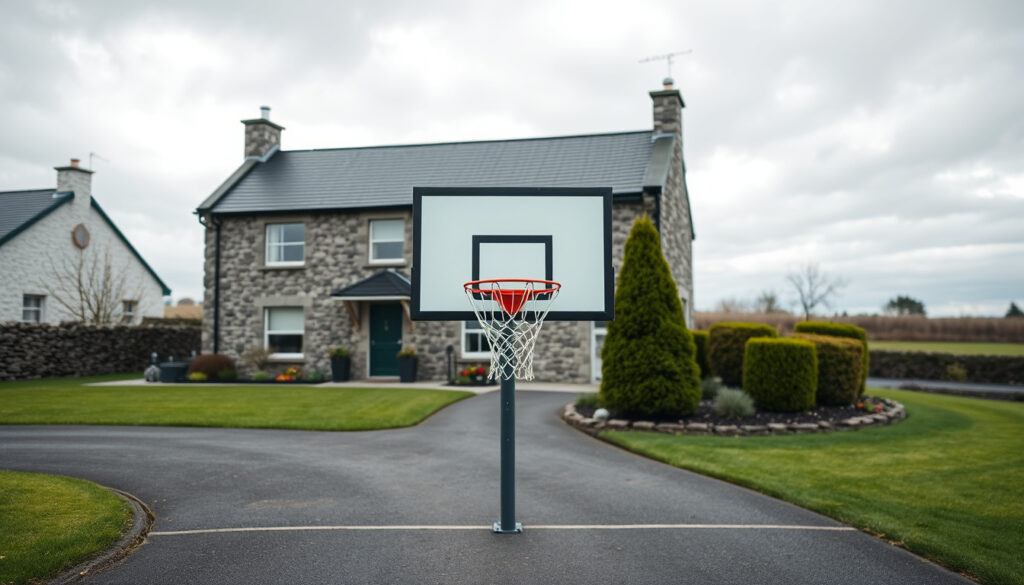
Buying a Basketball Hoop in Ireland: 2025 Guide
When you’re looking for a basketball hoop for your driveway in Ireland, the choice can feel overwhelming between portable and in-ground models, 54-inch and 60-inch backboards, and prices ranging from under €200 to over €1,000. This guide breaks down the key differences and what to consider based on your space, budget, and who’ll be playing.
Standard rim height: 10 feet (3.05 m) ·
Average price range: $300 – $600 ·
Common backboard sizes: 54 inches and 60 inches
Quick snapshot
- NBA rim height is exactly 10 feet (3.05 m) per the NBA official rulebook
- Two common residential backboard sizes: 54 and 60 inches (Wikipedia – free encyclopedia)
- Exact retail pricing varies by region and season
- Which model is “best” changes as brands refresh lines each year
- Three main types: portable, in‑ground, and wall‑mounted – exact stability and cost vary by brand
- McSport portable hoop meets EN1270 safety standard – confirmation depends on product batch
- No major product launch events; most manufacturers update models annually
- Irish buyers should focus on comparing 54 vs 60 inch backboards and portable vs in‑ground systems
Five key specs, one takeaway: the standard rim height is universal, but the choice of backboard material and size dramatically affects both playability and cost.
| Specification | Value |
|---|---|
| Standard height | 10 feet (3.05 m) – NBA official rulebook |
| Popular backboard size | 54 inches |
| Price range | $150 – $1500 |
| Material options | Polycarbonate, acrylic, tempered glass – Wikipedia – free encyclopedia |
| Adjustable height range (example) | 2.44 m to 3.05 m (8 ft to 10 ft 2 in) – McSport (Irish retailer) |
What’s the best basketball hoop to buy?
Three hoop types, one rule of thumb: portable is easier to move, in‑ground is more stable, wall‑mounted saves space. For most Irish driveways and gardens, portable models offer the best balance of cost and flexibility.
Top basketball hoop brands for home use
- Spalding: Long‑trusted brand, often features in McSport (Irish sporting goods retailer) listings
- Hit Sport: Adjustable hoops available through GetLocal Ireland (local classifieds)
- Creative Landscaping Works: Offers adjustable rings with weather‑resistant materials (Creative Landscaping Works)
Best hoop for kids
Adjustable hoops with a height range from 7.5 ft to 9 ft are ideal. The McSport portable hoop offers three height settings starting at 8 ft, and its polypropylene backboard is durable and budget‑friendly. For younger children, a smaller 54‑inch backboard is easier to shoot on.
Best hoop for adults
Adults need a full‑size 10‑foot rim. Portable hoops with a 60‑inch backboard and a steel ring provide a more realistic game experience. According to McSport, their entry‑level model is “suitable for teens or adults” and meets the EN1270 safety standard.
For a family with kids aged 8–14, an adjustable portable hoop with a 54‑inch backboard is the safest bet. For older teens and adults, a 60‑inch backboard and in‑ground installation offer better stability and game feel.
The implication: your choice of backboard size and hoop type directly impacts how much the hoop will be used. A 60‑inch board is forgiving for beginners and satisfying for experienced players, while a 44‑ or 54‑inch board works well in tighter spaces.
Should I buy a 54 or 60 basketball hoop?
Two sizes, one trade‑off: a 54‑inch backboard fits smaller yards and costs less, but a 60‑inch board provides a bigger target and more consistent rebound.
Difference between 54 and 60 inch backboards
- 54‑inch: Often used on portable hoops; works for driveways up to 20 ft wide. Lighter and easier to move.
- 60‑inch: Standard on many in‑ground models; heavier and more stable. Requires a concrete base.
Which size is right for your space and skill level
If you have a small urban garden or a shared driveway, a 54‑inch portable hoop is practical. For a dedicated concrete pad or large driveway, a 60‑inch in‑ground hoop delivers a more authentic experience. The McSport portable hoop uses a 44 × 28 inch backboard, which is smaller than 54 inches; that size saves space but reduces the sweet spot for shooting.
A 60‑inch backboard gives you a 20% larger target area than a 54‑inch board, which translates to more makes and less chasing of stray balls.
The choice ultimately depends on your space and who will be playing.
How much does a good basketball hoop cost?
Three price bands, one reality: you get what you pay for in backboard material and frame durability.
Entry-level hoops ($100–$300)
- Polypropylene or acrylic backboards, often 44–54 inches
- Lightweight frames, limited adjustability
- Best for occasional play and kids
Mid-range ($300–$600)
- Polycarbonate or acrylic backboards, 54–60 inches
- Steel poles and wheels for portability
- Typical price range at McSport in Ireland
High-end ($600–$1500)
- Tempered glass backboards (like professional hoops)
- In‑ground anchors or high‑capacity portable bases
- Better durability and warranty
The pattern: for a family that plays weekly, spending $400–$600 (about €350–€550) on a portable hoop with a 54‑ or 60‑inch backboard offers the best value. The Creative Landscaping Works ring, priced at €39, is a budget wall‑mounted option but lacks the stability of a full portable system.
Why are basketball hoops so expensive?
Four cost drivers, one summary: tempered glass, heavy‑gauge steel, shipping weight, and brand reputation all push prices up.
Material costs (tempered glass, steel)
Tempered glass backboards can cost three times as much as polypropylene ones because the glass is thicker and must be heat‑treated to withstand outdoor weather. Steel frames add cost but resist rust far better than aluminium. The McSport portable hoop uses a steel ring and a polypropylene board to keep costs down while meeting the EN1270 standard.
Shipping and assembly
A portable hoop can weigh over 50 kg (110 lb) before ballast, and in‑ground hoops require concrete and sometimes professional installation. Shipping costs from the factory to Ireland add another €50–€150.
Brand markup
Spalding and other top brands charge a premium for marketing and warranty support. However, less‑known brands like Hit Sport (available through GetLocal Ireland) can offer similar build quality at a lower price if you check the specifications carefully.
A €200 hoop will likely wobble after one season in the Irish weather. Spending €400–€600 buys a steel frame, a UV‑resistant net, and a base that holds 190 kg of sand – enough to keep it stable in wind.
Understanding these cost drivers helps you decide where to invest your budget.
Is the NBA rim 12 feet?
One fact, clear and simple: no, the NBA rim is 10 feet (3.05 m) above the floor. The 12‑foot rumour is a persistent myth – likely because 12 ft sounds impressively tall.
The official NBA rulebook states: “The basket ring shall be 10ʻ above the floor.” The same height is used by FIBA, college, and high school basketball across the world (NFHS (National Federation of State High School Associations)). Youth hoops can adjust to lower heights (often 7.5 ft or 8 ft) to help children develop proper shooting form.
The standard height is unambiguous, so you can trust adjustable hoops that reach 10 feet.
Portable vs In‑Ground vs Wall‑Mounted: comparison
Three mounting options, two key differences: stability versus portability.
| Feature | Portable | In‑Ground | Wall‑Mounted |
|---|---|---|---|
| Cost range | $150 – $800 | $400 – $1500 | $30 – $300 |
| Stability | Good with 190 kg ballast | Excellent (concrete anchor) | Depends on wall strength |
| Mobility | Easy (wheels) | Permanent | Fixed |
| Backboard material | Polypropylene/acrylic | Acrylic/tempered glass | Polyester/steel |
Specifications of a popular portable hoop
The McSport portable adjustable hoop is a good example of what Irish shoppers can expect in the mid‑range.
| Specification | Value |
|---|---|
| Height range | 2.44 m – 3.05 m (8 ft – 10 ft 2 in) |
| Backboard size | 44 × 28 inches (polypropylene) |
| Ring size | 18 inches (steel) |
| Ballast required | 190 kg dry sand or 110 litres water |
| Safety standard | EN1270 |
| Height settings | 3 preset positions |
| Wheels | Yes, for roll‑away |
Pros and Cons of portable basketball hoops
Upsides
- Easy to move and reposition
- No permanent installation required
- Adjustable height suits all ages
- Can be disassembled and stored
Downsides
- Less stable than in‑ground (even with ballast)
- Backboard tends to be smaller (up to 54 inches)
- Base can crack in freezing weather if not drained
- More prone to wobble during aggressive play
Confirmed facts and what remains unclear
Confirmed facts
- NBA rim height is 10 feet (3.05 m) – NBA rulebook
- Two common residential backboard sizes: 54 and 60 inches – Wikipedia – free encyclopedia
What’s unclear
- Which specific model will be “best” in 2025 – brands update annually
- Exact retail prices across all Irish stores – fluctuate by season
- Three main hoop types: portable, in‑ground, wall‑mounted – brand‑specific stability varies
- McSport portable hoop meets EN1270 standard – confirmation depends on product batch
Quotes from the court and the shop floor
The basket ring shall be 10ʻ above the floor.
NBA Official Rulebook (governing body of professional basketball)
Our entry‑level portable adjustable basketball hoop is suitable for teens or adults.
This hoop is adjustable with a typical height range of 2.3 m to 3.05 m, suitable for gardens, driveways, and patios across Ireland.
Creative Landscaping Works (Irish landscaping and garden retailer)
The clear message from both official rules and retailers is that height adjustability and backboard material are the two most important specs for home buyers in Ireland.
Summary
Choosing the right basketball hoop for an Irish home comes down to three decisions: backboard size (54 or 60 inches), hoop type (portable, in‑ground, or wall‑mounted), and whether you need height adjustability. For most families, a portable hoop with a 54‑inch backboard and adjustable height from 8 to 10 feet offers the best value and flexibility. For a dedicated concrete pad, a 60‑inch in‑ground hoop delivers a more authentic game. For Irish buyers considering Smyths Toys or McSport, the trade‑off is clear: spend €300–€600 on a sturdy, adjustable portable system, or invest €600+ for an in‑ground setup that will last a decade.
Frequently asked questions
What size basketball hoop should I buy for my child?
For children aged 5–10, an adjustable hoop that goes down to 7.5 ft is ideal. A 54‑inch backboard gives them a big target without being too heavy for the portable base.
How long does it take to assemble a basketball hoop?
A portable hoop typically takes 1–2 hours to assemble with two people. In‑ground hoops require concrete curing time (24–48 hours) before the pole can be installed.
Can I use a basketball hoop indoors?
Yes, but only with wall‑mounted models designed for indoor use. Portable hoops are too heavy for most indoor floors and may damage surfaces.
What is the best backboard material for durability?
Tempered glass is the most durable and provides the truest rebound. Acrylic is a good mid‑range option, while polypropylene is lightweight and budget‑friendly but can warp over time in sunlight.
Do I need to fill the base of a portable hoop with water or sand?
Yes. Ballast is essential for stability. Sand is heavier and offers better wind resistance than water. The McSport hoop requires 190 kg of dry sand or 110 litres of water to meet the EN1270 safety standard.
How to adjust the height of an adjustable basketball hoop?
Most adjustable hoops use a telescopic pole with a locking pin system. Simply raise or lower the pole to the desired height setting and secure the pin. Always adjust with the hoop empty (no ballast) to prevent tipping.
More related posts
 Bella Thorne 2025: Net Worth, OnlyFans, Zendaya Feud
 False Widow Spider UK: Identification, Bite Advice & Facts
 Pat Cash: Wimbledon Champion, Tennis Coach & Cannabis Advocate
 Lisa Stansfield: Biography, Net Worth, Latest News & Songs
 Matthew Gray Gubler: Biography, Health & Career Facts
 Candice King: TVD Star’s Life, Relationships & Career
 Shane Lowry: Age, Net Worth, Wife, Religion, and Career Facts
 Charles Hanson: Hair Transplant, Legal Case & BBC Return
