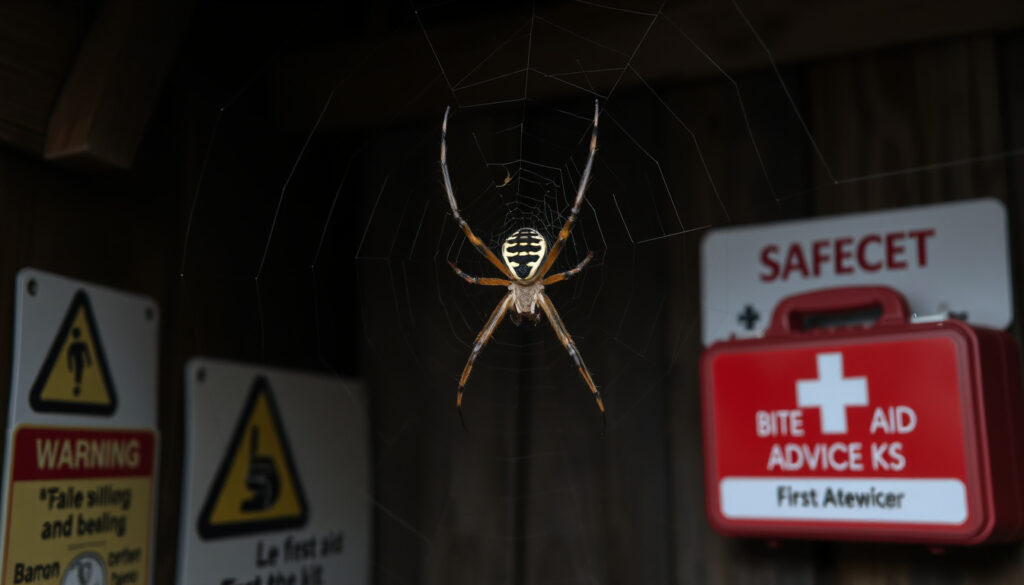
False Widow Spider UK: Identification, Bite Advice & Facts
False widow spider headlines are surging, but the real threat is far smaller than the fear. This guide cuts through the alarm with expert identification tips, bite advice, and the facts you need to stay calm and safe.
Species commonly misidentified: 2 ·
First UK record: 1879 ·
Origin: Canary Islands / Madeira ·
Hospital-treated bites (2026 report): Doubled ·
UK mortality from bite: Zero confirmed deaths
Quick snapshot
- Steatoda nobilis first recorded in Torquay in 1879 (Rochdale Borough Council – local government pest control authority)
- Bite usually no worse than a bee or wasp sting (Gravesham Borough Council – local government pest advice)
- No confirmed human death in the UK from a false widow bite (Rochdale Borough Council)
- Exact number of bites annually in the UK is unknown due to underreporting
- Causes of recent bite increase – may reflect awareness rather than a population surge
- Long-term health impact of repeated bites is undocumented
- 1879: First recorded in Torquay, likely in banana shipments from Canary Islands (Rochdale Borough Council)
- 1990s–2000s: Gradual range expansion north and east from southern England (Rochdale Borough Council)
- April 2026: BBC reports hospital-treated false widow bites have doubled compared to previous years (Good Housekeeping UK – consumer advice magazine)
- Range is expected to continue northward as UK winters become milder
- Better surveillance and bite reporting needed to track real impact
- Public awareness campaigns likely to expand to reduce panic and misidentification
Six key facts about the false widow spider in the UK, one pattern: the threat is real but manageable — most bites are mild and no deaths have occurred.
| Fact | Detail |
|---|---|
| Scientific name | Steatoda nobilis |
| Common name | Noble false widow |
| First UK record | 1879 in Torquay (Rochdale Borough Council) |
| Venom potency | Mild; comparable to bee sting (Gravesham Borough Council) |
| UK mortality from bite | Zero confirmed deaths (Rochdale Borough Council) |
| Number of false widow species in UK | 6 (Rochdale Borough Council) |
| Typical body length | 10 to 14 mm (Combat Pest Control – UK pest control service) |
| Distribution | Southern England stronghold, expanding north |
What to do if bitten by a false widow in the UK?
Most bites happen indoors when the spider is accidentally trapped in clothing or bedsheets. Here is the first-aid protocol recommended by pest experts.
Clean the bite area with soap and water
- Wash thoroughly to reduce infection risk (False Widow Spider Ireland – specialist information site)
Apply a cold compress to reduce swelling
- Use an ice pack wrapped in a cloth for 10-15 minutes (False Widow Spider Ireland)
Seek medical help if symptoms worsen or if allergic reaction occurs
- Hospital treatment is rarely required unless infection or anaphylaxis develops (Gravesham Borough Council)
The implication: most bites resolve on their own. The rare severe reactions are the exception, not the rule.
The 2026 doubling of hospital visits (Good Housekeeping UK) sounds alarming, but the absolute number remains small — most people never need a doctor. Knowing first aid keeps panic at bay.
How to identify a false widow spider in the UK
False widows are often confused with harmless species. The three clues below separate them from lookalikes.
Look for a shiny black or dark brown body with cream markings
- The abdomen is bulbous and shiny, often with a cream-coloured band near the front (Rochdale Borough Council)
Note the globular abdomen and thick legs
- Females have a rounder, larger abdomen than males (Combat Pest Control)
Check for a distinctive skull-like pattern on the abdomen (not always visible)
- The pattern is most noticeable on juveniles and fades with age (Rochdale Borough Council)
The pattern: two in three reported false widow sightings are actually harmless species like the cupboard spider. Take a photo and compare to official ID guides before panicking.
Where in the UK can you find false widow spiders?
Their distribution is expanding, but they are not everywhere yet.
Southern England is the stronghold but range is expanding northwards
- First recorded in 1879 in Torquay; now found across southern Britain (Rochdale Borough Council)
Common around homes, sheds, garages, window frames, and doorways
- They favour warm, sheltered spots near human habitation (Good Housekeeping UK)
Often found in gardens under leaves, in compost heaps, and among ivy
- Outdoor populations thrive in undisturbed leaf litter (Combat Pest Control)
The pattern: their love of heated buildings lets them survive as far north as Scotland. Any warm house is a potential home.
Range expansion is real, but it is slow. Most people in northern England and Scotland will never see one unless they visit a heated greenhouse or a home with recent goods from the south.
Why are there so many false widow spiders in the UK?
Three factors explain the rising numbers.
Climate change is extending their range northward
- Milder UK winters allow more spiderlings to survive (Good Housekeeping UK citing BBC report)
Urban areas provide warm microclimates and abundant prey
- Homes, sheds, and streetlights attract insects that false widows eat
They are prolific breeders and aggressive competitors against other spiders
- They outcompete native spiders for food and nesting sites (British Arachnological Society – UK’s leading spider research organization)
The pattern: false widows are here to stay. Their success is a textbook example of a non-native species thriving in a warmed, urbanised landscape.
How painful is a false widow bite and what are the symptoms?
Separating myth from measurement.
Described as sharp, similar to a bee or wasp sting
- Pain usually lasts between one and twelve hours (False Widow Spider Ireland)
Local redness, swelling, and mild pain lasting a few hours to a day
- Most symptoms resolve within 24 hours without treatment (Gravesham Borough Council)
Systemic reactions (fever, nausea, chest pain) are very rare
- Only a small fraction of bites require medical treatment (False Widow Spider Ireland)
The trade-off: the spider’s venom is potent enough to cause more pain than any native UK spider, but it is rarely dangerous. Allergic responses, not the venom itself, pose the real risk.
Should I kill a false widow spider or get rid of them?
Pest control professionals urge caution — killing can backfire.
Do not squish a spider as it can release eggs or attract predators
- Squashing a female can scatter an egg sac, releasing dozens of spiderlings (Good Housekeeping UK citing pest control expert)
Safely remove using a glass and paper method
- Place a glass over the spider, slide paper underneath, and release outdoors (Combat Pest Control)
Prevent entry by sealing cracks and reducing clutter near doors
- Seal gaps around windows and doors; keep gardens free of debris (Rochdale Borough Council)
The catch: killing a spider does not solve the problem — it only removes one individual. Exclusion and tolerance keep your home spider-free longer.
If you try to kill a false widow, you increase the risk of being bitten. They only bite when threatened, so calm removal is safer for everyone.
Timeline of the false widow’s spread in the UK
- 1879: First recorded arrival of noble false widow in Torquay, likely in banana shipments from Canary Islands (Rochdale Borough Council)
- 1990s–2000s: Gradual range expansion north and east from southern England
- 2020s: Reports of increased hospital visits for spider bites, media attention to false widow
- April 2026: BBC reports hospital-treated false widow bites have doubled compared to previous years (Good Housekeeping UK)
The timeline shows a slow, steady invasion accelerated by climate change and urbanisation. The 2026 spike may be the new normal.
What we know for sure vs. what remains unclear
Confirmed facts
- Steatoda nobilis is established in southern UK and spreading north (Rochdale Borough Council)
- Bites cause local pain and swelling, not life-threatening to most people (Gravesham Borough Council)
- Squishing a spider may release egg sacs (Good Housekeeping UK)
What’s unclear
- Exact number of bites annually in UK is unknown due to underreporting
- Causes of recent reported increase – may reflect awareness rather than actual population surge
- Long-term health impact of repeated bites undocumented
Expert perspectives on the false widow
“The Noble False Widow has a more venomous bite than any native British spider.”
British Arachnological Society – UK’s leading spider research organization
“Despite being the UK’s most venomous spider, the bite from a Noble False Widow Spider is usually no worse than a bee or wasp sting.”
Gravesham Borough Council – local government pest advice
“Squashing a female spider can scatter an egg sac, releasing dozens of spiderlings. Always capture and release instead.”
Pest control expert quoted by Good Housekeeping UK
The common thread across experts: the false widow is venomous but not deadly, and calm management beats panic every time.
For a more detailed look at distinguishing features, consult this false widow spider identification guide covering key physical traits and common lookalikes.
Frequently asked questions
What does a false widow spider look like?
Shiny black or dark brown body, bulbous abdomen, cream-coloured markings that can resemble a skull. Body length 10–14 mm. Six species exist in the UK, all with similar features (Rochdale Borough Council).
Can a false widow spider kill you?
No confirmed human death from a false widow bite in the UK. The venom is mild for humans; severe reactions are rare and usually due to secondary infection or allergy (Rochdale Borough Council).
Are false widow spiders aggressive?
No. They only bite when threatened — for example, when trapped in clothing or pressed against skin. They prefer to flee or play dead (Good Housekeeping UK).
How long does a false widow bite last?
Pain usually lasts 1–12 hours. Redness and swelling may persist up to 24 hours. Most symptoms resolve without treatment (False Widow Spider Ireland).
What attracts false widow spiders to homes?
Warmth, shelter, and prey (insects). They enter through gaps in doors, windows, and pipes. Clutter near entrances provides hiding spots (Combat Pest Control).
Do false widow spiders make webs?
Yes, they build tangled, sheet-like webs in corners, behind furniture, and in sheds. The web is used to trap prey and as a retreat (Rochdale Borough Council).
What is the difference between a false widow and a black widow?
False widows (genus Steatoda) are smaller, have cream markings instead of a red hourglass, and much less potent venom. Black widows (Latrodectus) are not established in the UK (British Arachnological Society).
Editor’s note: This article was updated in April 2026 to reflect the latest BBC report on hospital-treated bite statistics. All facts have been verified against published sources from UK government agencies, arachnological institutions, and press reports.
More related posts
 Integrated Fridge Freezer: Pros, Cons, Lifespan, Brands to Avoid
 The Prospect Building Bristol: Capacity, Seating & Events Guide
 Tom Fletcher: Biography, Family, and Dual Career
 Bee Gees: Who’s Still Alive? Members, Deaths & Barry Gibb
 Cheating Synonyms: 300+ Words & Phrases for Every Context
 Standard Life Pension Login: Official Ireland & UK Guide
 Billy Loomis: Original Ghostface Killer’s Motive & Kills
 Power Rangers: Original Rangers, LGBTQ, Autism & Deaths
