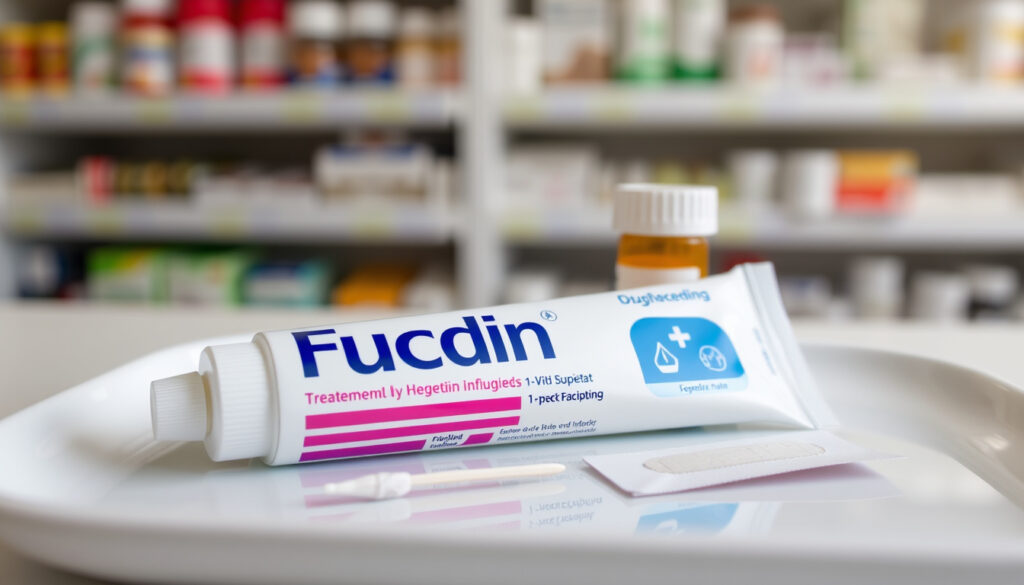
What Is Fucidin Cream Used For? Impetigo, OTC & Alternatives
Few things cause more worry than a skin rash that seems to be spreading. If you are already reaching for that half-used tube of cream, you deserve to know exactly what it can and cannot fix. Fucidin cream (fusidic acid 20 mg/g) is a targeted topical antibiotic prescribed in the UK for bacterial skin infections like impetigo and infected eczema. This guide walks you through its uses, prescription rules, how quickly it works, where not to put it, and what alternatives exist — so you can use it safely and avoid common mistakes.
Active ingredient: Fusidic acid 20 mg/g ·
Prescription required: Yes (UK) ·
Common uses: Impetigo, infected eczema, infected cuts/grazes ·
Typical treatment duration: 5 to 7 days ·
Drug class: Topical antibiotic
Quick snapshot
- Impetigo (NHS (UK health authority))
- Infected eczema (NHS (UK health authority))
- Infected dermatitis (NHS (UK health authority))
- Infected cuts and grazes (NHS (UK health authority))
- Prescription-only in the UK (NHS (UK health authority))
- Active: fusidic acid 20 mg/g (NHS England PGD)
- Not a steroid cream (NHS (UK health authority))
- Apply 2–3 times daily for 5–7 days (NHS England PGD)
- Eyes, mouth, inside nose (medicines.org.uk (official leaflet))
- Fungal or viral infections (NHS (UK health authority))
- Severe burns or large open wounds (medicines.org.uk (official leaflet))
- Allergy to fusidic acid (medicines.org.uk (official leaflet))
- Efficacy against MRSA is not well established for topical use
- Optimal duration for mild vs. severe infections may vary; always follow doctor’s advice
Six key facts about Fucidin cream, one pattern: it’s a narrow-spectrum antibiotic, not a steroid. The table below summarises the essentials.
| Active ingredient | Fusidic acid 20 mg/g |
| Prescription required | Yes (UK) |
| Common uses | Impetigo, infected eczema, infected cuts/grazes |
| Typical duration | 5–7 days |
| Application frequency | 2–3 times daily |
| Steroid content | None (Fucidin H contains hydrocortisone) |
The pattern is clear: Fucidin cream is a specialised tool for bacterial infections, not a general-purpose rash cream.
What skin infections does Fucidin treat?
Fucidin cream is licensed for bacterial skin infections where Staphylococcus aureus is the primary culprit. The NHS (UK health authority) medicine page lists impetigo, infected eczema, infected dermatitis, and infected cuts and grazes as the main indications. It is not effective against viral, fungal, or non-infected skin conditions.
What bacteria does Fucidin cream treat?
- Fusidic acid targets gram-positive bacteria, particularly Staphylococcus aureus (HPRA (Irish regulator) patient information).
- It also works against some streptococci species (medicines.org.uk (official leaflet)).
- Resistance can develop, which is why the NHS recommends using the full course and not sharing antibiotics (NHS guidance on usage).
Is Fucidin effective for impetigo?
- Yes — it is a first-line topical treatment for localised non-bullous impetigo in children aged 1+ and adults, as per the NHS England Pharmacy First Patient Group Direction.
- The PGD limits use to 3 or fewer lesions or clusters and specifies applying a thin layer three times daily for 5 days (NHS England PGD).
The implication: Fucidin cream works on bacteria, not on the redness from eczema itself. Using it on a non-infected rash will not help and may fuel resistance.
Fucidin cream works on bacteria, not on the redness from eczema itself. Using it on a non-infected rash will not help and may fuel resistance.
Bottom line: Fucidin is a selective antibiotic for Staph skin infections. For impetigo, it is the standard topical option under NHS Pharmacy First. For fungal or viral rashes, it is useless.
Can I buy Fucidin over the counter?
In the UK, Fucidin cream is a prescription-only medicine (POM). As the NHS (UK health authority) explains, you cannot buy it from a pharmacy without a prescription. However, under the NHS Pharmacy First scheme, pharmacists can supply it under a Patient Group Direction for impetigo without a GP appointment (NHS England PGD).
Is Fucidin available without prescription?
- No — it is not licensed for OTC sale in the UK (NHS (UK health authority)).
- Some online pharmacies offer it after an online consultation, but that still requires a prescription issued through the consultation (Boots Online Doctor (UK pharmacy service)).
Do I need a doctor’s prescription for Fucidin?
- Yes, except when a pharmacist provides it under the NHS England Pharmacy First PGD for impetigo (NHS England PGD).
- For other conditions like infected eczema, a GP must prescribe it (NHS (UK health authority)).
The catch: Buying Fucidin without a proper prescription risks the wrong diagnosis. A red rash could be fungal, viral, or even eczema — and treating it with an antibiotic delays the right care.
Buying Fucidin without a proper prescription risks the wrong diagnosis. A red rash could be fungal, viral, or even eczema — and treating it with an antibiotic delays the right care.
Bottom line: UK patients cannot grab Fucidin off a pharmacy shelf. For impetigo, the Pharmacy First scheme offers fast access; for other infections, a GP visit is still needed.
How long does Fucidin cream take to work?
Improvement is often visible within 2–3 days of starting regular application, according to Boots Online Doctor (UK pharmacy service). The NHS England PGD specifies a 5-day treatment course; the NHS general guidance says 1–2 weeks, with the full course always finished even if symptoms clear.
When should I see improvement after using Fucidin?
- Most patients notice the infection starting to clear within 48 hours (Boots Online Doctor (UK pharmacy service)).
- If there is no improvement after 7 days, the NHS advises consulting a doctor (NHS guidance on usage).
How many days should I use Fucidin cream?
- Typical course: 5–7 days, but the NHS says sometimes longer (NHS (UK health authority)).
- Under Pharmacy First for impetigo: exactly 5 days (NHS England PGD).
The trade-off: Stopping early because the spot looks better invites relapse and antibiotic resistance. The NHS explicitly warns: finish the course even if you feel better.
Stopping early because the spot looks better invites relapse and antibiotic resistance. The NHS explicitly warns: finish the course even if you feel better.
Where not to use Fucidin cream?
The medicines.org.uk (official leaflet) and NHS guidelines are clear about safe application areas.
Can I use Fucidin cream on my face?
- Yes, but avoid the eyes, mouth, and nostrils (medicines.org.uk (official leaflet)).
- Do not apply to large areas of broken skin or severe burns (medicines.org.uk (official leaflet)).
What areas should be avoided?
- Eyes, mouth, inside the nose, and any mucous membranes (medicines.org.uk (official leaflet)).
- Fungal infections like athlete’s foot, ringworm, or vaginal thrush (NHS (UK health authority)).
- Viral infections such as cold sores, chickenpox, or shingles (NHS (UK health authority)).
- Acne – not effective and may worsen irritation (medicines.org.uk (official leaflet)).
The paradox: The same red, crusty skin that looks like impetigo could be a herpes outbreak or eczema with no infection. Using Fucidin on the wrong condition wastes time and money.
The same red, crusty skin that looks like impetigo could be a herpes outbreak or eczema with no infection. Using Fucidin on the wrong condition wastes time and money.
What is a good substitute for Fucidin cream?
Alternatives exist both as other topical antibiotics and as combination products. The right choice depends on the specific infection and patient history.
Are there over-the-counter alternatives?
- No direct OTC antibiotic cream matches Fucidin’s action. For mild impetigo, a pharmacist may offer chlorhexidine-based antiseptic creams, but these are not equivalent (Boots Online Doctor (UK pharmacy service)).
- For infected eczema, an emollient plus a moderate steroid may help, but antibiotics are needed for bacterial infection (NHS Eczema Treatment).
What about mupirocin or other topical antibiotics?
- Mupirocin (Bactroban) is another topical antibiotic used for impetigo and MRSA colonisation (NHS Mupirocin).
- Retapamulin (Altargo) is also an option for impetigo (medicines.org.uk (retapamulin leaflet)).
- Fucidin H cream combines fusidic acid with hydrocortisone for infected eczema where inflammation is present (NHS combination products).
The implication: No OTC alternative matches Fucidin. For impetigo, mupirocin or retapamulin are prescription alternatives. For infected eczema, Fucidin H adds a steroid. Always verify with a GP.
Bottom line: No OTC alternative matches Fucidin. For impetigo, mupirocin or retapamulin are prescription alternatives. For infected eczema, Fucidin H adds a steroid. Always verify with a GP.
Confirmed facts and what remains unclear
Confirmed facts
- Fucidin cream is a prescription-only topical antibiotic (NHS (UK health authority)).
- It is effective against Staphylococcus aureus skin infections (HPRA (Irish regulator)).
- It should not be used on fungal or viral infections (NHS (UK health authority)).
- Improvement typically occurs within 2–3 days (Boots Online Doctor (UK pharmacy service)).
What remains unclear
- Efficacy against MRSA for topical use is not well established; oral fusidic acid is sometimes used but resistance is a concern.
- Optimal treatment duration for mild versus severe infections may vary; always follow a doctor’s prescription.
“Fusidic acid comes as a cream, an ointment or eye drops. The main difference between fusidic acid cream and ointment is how it feels.”
NHS (UK health authority) – Fusidic Acid Overview
“Fucidin cream is used to treat conditions where the skin is infected by germs (bacteria), such as impetigo, infected eczema, dermatitis, infected cuts and grazes.”
medicines.org.uk (official package leaflet)
“It is used to treat skin infections such as those caused by bacteria called Staphylococcus aureus.”
For UK patients, the Pharmacy First scheme makes Fucidin cream more accessible for impetigo without a GP appointment, but the ongoing rise of antibiotic resistance means topical fusidic acid should be used sparingly and only when clearly necessary. The choice is clear: use it for confirmed bacterial infections under professional guidance, or risk both treatment failure and resistance.
theindependentpharmacy.co.uk, pmc.ncbi.nlm.nih.gov, cloudpharmacy.co.uk, click2pharmacy.co.uk, onlinedoctor.boots.com
A more in-depth look at Fucidin cream’s applications, including impetigo and infected eczema, can be found in this in-depth look.
Frequently asked questions
What bacteria does Fucidin cream treat?
It treats gram-positive bacteria, especially Staphylococcus aureus and some streptococci. The HPRA (Irish regulator) confirms this.
Is Fucidin a strong steroid cream?
No — Fucidin cream contains no steroid. Only Fucidin H cream adds hydrocortisone. The NHS (UK health authority) clarifies this distinction.
What is the difference between Fucidin and Fucidin H cream?
Fucidin H contains fusidic acid plus hydrocortisone (a mild steroid) for infected eczema where inflammation is present. Plain Fucidin is antibiotic-only.
Can I use Fucidin cream on my face?
Yes, but avoid the eyes, mouth, and nostrils. The official leaflet warns against contact with mucous membranes.
How should I apply Fucidin cream?
Apply a thin layer to the affected area 2–3 times daily. Wash hands after applying. The NHS usage guide has full details.
Can I use Fucidin cream for acne?
No — acne is not caused by Staph bacteria, and antibiotics like fusidic acid are not recommended. The leaflet does not list acne as an indication.
Does Fucidin cream treat fungal infections?
No. It is ineffective against fungi. The NHS (UK health authority) states it should not be used on fungal conditions.
Related reading
More related posts
 Tony Hawk: Skateboarding Legend’s Life, Family & Net Worth
 Rio Ferdinand’s Wife, Children, and Life in Dubai Now
 EU Shoe Size to UK: Complete Conversion & Size Charts
 Courteney Cox: Biography, Age, Relationships, Health Rumors 2026
 Knights Templar: History, Myths, and Modern Legacy
 Emotionally Abusive: 7 Signs, Brain Effects, Healing
 Air Source Heat Pump – UK Guide to Costs Efficiency Installation
 Sophia Loren at 90: Her Life, Marriage, and Home in Switzerland
