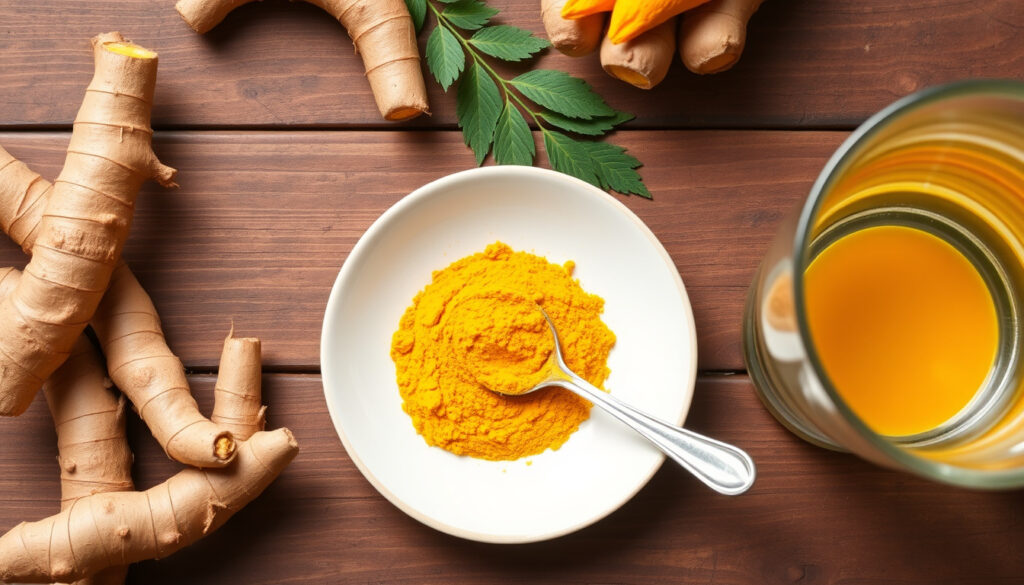
Is Turmeric Good for You? Benefits, Risks and Daily Use
Turmeric is often called a superfood, but the science behind its benefits is more complicated than many claims suggest. This warm spice contains curcumin, a compound linked to reduced inflammation and joint relief, yet it also carries real risks—especially with supplements or certain medications.
Curcumin content: 2–8% of turmeric by weight ·
Inflammation reduction: CRP levels may drop up to 50% in some studies ·
Short-term safe dose: Up to 8 grams curcumin daily ·
Supported benefit: Osteoarthritis pain management (Johns Hopkins Medicine, Harvard Health)
Quick snapshot
- Curcumin reduces markers like CRP (Cleveland Clinic)
- May help with osteoarthritis pain (Johns Hopkins Medicine)
- Potential to improve blood vessel function (Medical News Today)
- Mixed evidence for blood pressure (NCCIH)
- Short-term safe at up to 8g curcumin (Harvard Health)
- Risk of liver injury in rare cases (Health Canada)
- Anticoagulants (blood thinners) (NCCIH)
- Diabetes medications (Medical News Today)
Here is a quick-reference table of key facts about turmeric.
| Fact | Details |
|---|---|
| Active compound | Curcumin (2–8% of turmeric by weight) (NCCIH) |
| Safe daily dose (short-term) | Up to 8 grams curcumin (Harvard Health) |
| Main supported benefit | Osteoarthritis pain management (Cleveland Clinic) |
| Primary risk | Drug interactions, especially with blood thinners (NCCIH) |
| Absorption enhancer | Piperine (black pepper extract) increases absorption by 2000% (Medical News Today) |
What happens when I take turmeric every day?
Daily turmeric and inflammation
Taking turmeric regularly may reduce chronic inflammation. A 2016 study on ulcerative colitis found that people taking 2 grams of curcumin daily alongside prescription medication were more likely to stay in remission than those on medication alone (Cleveland Clinic). Curcumin targets inflammatory pathways and can lower C-reactive protein (CRP) levels. However, the NCCIH (National Institutes of Health) cautions that overall evidence is not strong enough to definitively recommend turmeric for any health purpose.
Curcumin’s low bioavailability means that turmeric used in cooking likely won’t deliver measurable benefits. Supplements with piperine boost absorption, but also carry higher risk.
Long-term safety of turmeric supplements
- Harvard Health (Harvard Medical School’s health publication) states that up to 8 grams of curcumin per day is safe for short-term use, but high doses often cause abdominal pain, nausea, and diarrhea.
- Health Canada, the national regulator, found a possible link between curcumin-containing supplements and liver injury in rare cases.
- Daily use for more than 2–3 months lacks robust safety data, especially for highly bioavailable formulations.
Bottom line: Daily turmeric can modestly help with inflammatory conditions, but the safety window is narrow. Long-term users should monitor liver function and check for interactions.
The person who takes turmeric supplements every day hoping for broad health protection may actually be exposing themselves to digestive upset or rare liver issues — without clear proof of benefit for most conditions.
What are the 5 benefits of turmeric?
Anti-inflammatory and antioxidant effects
Curcumin is a potent antioxidant that neutralizes free radicals and reduces inflammation at the molecular level (Medical News Today). This mechanism underlies most of turmeric’s proposed benefits.
Joint health and osteoarthritis
Multiple studies cited by Cleveland Clinic (a leading US academic medical center) show that turmeric supplements reduce joint pain and stiffness in osteoarthritis, comparable to some NSAIDs but with fewer gastrointestinal side effects.
Heart health and blood pressure
Some animal and preliminary human research indicates curcumin may improve blood vessel function (Medical News Today). However, the NCCIH (National Center for Complementary and Integrative Health) says human evidence for blood pressure reduction is not conclusive.
What cannot be mixed with turmeric?
Medications that interact with turmeric
Curcumin can interfere with several drug classes. The NCCIH (National Institutes of Health) warns that turmeric supplements may increase bleeding risk when taken with anticoagulants like warfarin. Medical News Today adds that turmeric can bind to iron and reduce absorption, potentially leading to iron deficiency — a case report described a doctor who developed deficiency after taking high-dose curcumin for osteoarthritis.
The pattern: three medication categories with known interactions warrant caution.
- Blood thinners (warfarin, aspirin, clopidogrel) — increased bleeding risk
- Diabetes drugs (metformin, insulin) — potential additive blood-sugar-lowering effect
- Stomach acid reducers (omeprazole, ranitidine) — possible altered absorption
Supplements to avoid combining with turmeric
Avoid mixing turmeric with other natural blood thinners like garlic, ginkgo, and fish oil without medical supervision. Johns Hopkins Medicine (a tier-1 US medical institution) advises consulting a doctor before adding turmeric supplements if you take any prescription medication.
Is turmeric good for high blood pressure?
Turmeric and blood pressure regulation
Animal studies suggest curcumin may lower blood pressure by improving nitric oxide production and reducing vascular inflammation (Medical News Today). However, the British Heart Foundation (UK’s leading heart charity) says there isn’t enough human evidence to recommend turmeric for hypertension, and it should not replace prescribed medication.
The trade-off: relying on turmeric instead of proven blood pressure drugs can delay effective treatment. Harvard Health notes that while some preliminary data is interesting, patients should treat turmeric as an adjunct at best.
Why do doctors not recommend turmeric?
Concerns about absorption and purity of supplements
The supplement market is poorly regulated. Many turmeric products contain low levels of curcumin or are contaminated with heavy metals (Medical News Today). Without third-party testing, consumers cannot verify what they’re getting.
Potential side effects and drug interactions
NCCIH (NIH) lists side effects including nausea, diarrhea, and acid reflux. Highly bioavailable formulations may increase liver injury risk (Health Canada). Johns Hopkins Medicine warns that people with gallbladder disease should avoid turmeric because it can worsen symptoms.
The implication: doctors hesitate because the risk-benefit calculus shifts unfavorably for most people — modest, condition-specific benefits versus real drug interaction and liver safety concerns.
Is turmeric good for you when sick?
Turmeric for cold and flu symptoms
Curcumin may modulate immune response and reduce the inflammation that causes throat pain and congestion (Medical News Today). Honey-turmeric tea is a traditional remedy, but no high-quality human trials confirm it speeds recovery. NCCIH (NIH) states there is insufficient evidence to recommend turmeric for acute illness.
Taking large doses of turmeric when sick, especially with other cold remedies, can stress the liver. Stick to culinary amounts in food or tea.
Timeline of turmeric research
- Ancient times — Turmeric used in Ayurvedic and traditional Chinese medicine for inflammation.
- 1990s — Curcumin identified as the main active ingredient; anti-inflammatory mechanism discovered (Medical News Today).
- 2005–2010 — Multiple small human trials show benefit for osteoarthritis and metabolic syndrome (Cleveland Clinic).
- 2020s — Systematic reviews confirm moderate evidence for arthritis; growing concerns about supplement quality and liver interactions (Health Canada).
What’s clear and what’s not
Confirmed facts
- Curcumin reduces inflammation markers in human studies (Cleveland Clinic)
- Turmeric supplements can interfere with blood thinners like warfarin (NCCIH)
- Turmeric is generally safe for short-term use up to 8 grams daily (Harvard Health)
What’s unclear
- Whether turmeric effectively lowers blood pressure in humans (NCCIH)
- Long-term safety of high-dose curcumin supplements (Health Canada)
- Whether turmeric can significantly reduce visceral fat or belly fat (no human trial evidence)
What experts say
Turmeric and its component curcumin are some of the most powerful natural anti-inflammatories available.
— Johns Hopkins Medicine (tier-1 academic medical center)
If you take a turmeric supplement, check with your GP first — especially if you are on medication.
— British Heart Foundation (UK’s leading cardiovascular charity)
The evidence for turmeric’s health benefits is not as strong as some claim. It may help with osteoarthritis pain, but we need more research.
— Harvard Health Publishing (Harvard Medical School’s consumer health division)
Upsides
- Natural anti-inflammatory with some human trial support
- May relieve osteoarthritis pain without NSAID side effects
- Widely available and affordable as a culinary spice
Downsides
- Poor bioavailability unless combined with piperine
- Significant drug interactions, especially with blood thinners
- Potential liver toxicity with high-dose or enhanced formulations
- Supplement quality varies wildly
For anyone considering turmeric supplements, the choice is clear: use them only for specific conditions like osteoarthritis with a doctor’s guidance, and never as a replacement for prescribed medication. Without careful attention to dose, purity, and interactions, the golden spice can do more harm than good.
Frequently asked questions
Can turmeric help with arthritis pain?
Yes, moderate evidence from human trials shows turmeric supplements reduce pain and stiffness in osteoarthritis (Cleveland Clinic).
Does turmeric interact with blood pressure medication?
Possibly. Turmeric may lower blood pressure and can add to the effect of antihypertensives. The British Heart Foundation advises checking with your doctor before taking turmeric supplements.
How much turmeric should I take daily?
For supplements, up to 8 grams of curcumin daily appears safe short-term (Harvard Health). Start with lower doses (500–1000 mg curcumin with piperine).
Is it safe to take turmeric with ibuprofen?
Both can increase bleeding risk. The NCCIH (NIH) advises against combining turmeric supplements with NSAIDs unless supervised by a healthcare professional.
Does turmeric cause kidney stones?
Turmeric contains oxalates, which can contribute to kidney stone formation in susceptible individuals (Medical News Today). People with a history of kidney stones should be cautious.
Can I take turmeric if I am pregnant?
Culinary amounts are safe, but high-dose supplements are not recommended due to lack of safety data. Johns Hopkins Medicine advises pregnant women to stick to food sources.
More related posts
 Jenny Ryan: Partner, Weight Loss, Wigs, and Illness – Facts
 Peter Parker: Complete Guide to Spider-Man’s Age and Death
 Curtis Pritchard: Biography, Relationships, and Career
 Fara Williams: Career, Retirement, and Broadcasting Now
 Ian McShane: Bio, Net Worth, Height, and Key Roles
 Belle Hassan: Biography, Age, and Love Island Exit
 Freya Ridings: Biography, Career, Songs & Personal Life
 Clare Grogan: Singer, Actress, and EastEnders Star – Biography
