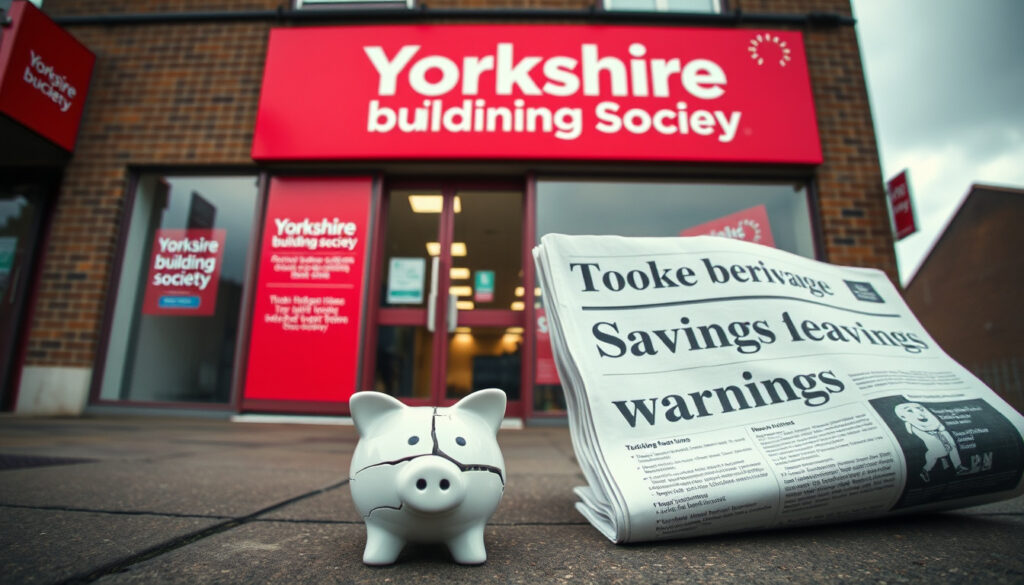
Yorkshire Building Society Savings Warning: Key Facts
If your current account balance sits above £5,000 and earns next to nothing, you’re one of millions. A recent warning from Yorkshire Building Society, reported by GB News, revealed that over 12 million UK current accounts pay 1% interest or less on balances above £5,001 — a quiet drain that has cost savers billions in lost interest plus tax.
Britons lost to savings tax raid over last decade: £28 billion (GB News, March 2026) ·
Current accounts earning 1% or less on balances above £5,001: over 12 million (Express, December 2025) ·
Potential interest earned on £5,000 in easy access account at 4.76%: around £243 per year (GB News, December 2025) ·
Yorkshire Building Society’s warning issued to savers: March 2026
Quick snapshot
- Yorkshire Building Society warned about low-interest current accounts in December 2025 and March 2026 (GB News)
- Over 12 million current accounts earn ≤1% on balances above £5,001 (Express)
- FSCS covers deposits up to £120,000 per person per institution across YBS brands (Yorkshire Building Society FSCS Page)
- Britons lost £28 billion to savings tax over the past decade (GB News)
- Whether the £28 billion figure includes all UK savings or only those in building societies
- Exact number of YBS customers directly affected by the low-interest warning
- December 2025 — YBS issues initial warning about low-interest current accounts (GB News)
- March 2026 — YBS updates warning, cites £28 billion lost to savings tax (GB News)
- Check your current account interest rate and compare with YBS easy access rates (YBS Savings Page)
- Move excess cash above £5,001 to a higher-interest savings account (YBS Savings Page)
- Review your FSCS protection — keep deposits under £120,000 across YBS brands (YBS Savings Page)
Six key facts from the warning and related data show the scope of the savings gap:
| Fact | Value |
|---|---|
| YBS warning date | March 2026 |
| Number of low-interest accounts referenced | over 12 million (Express) |
| Interest rate of those accounts | 1% or less (GB News) |
| Potential earnings on £5,000 at 4.76% | around £243 per year (GB News) |
| Savings tax lost over 10 years (UK total) | £28 billion (GB News) |
| FSCS protection limit | £120,000 per person per institution across YBS brands (Yorkshire Building Society FSCS Page) |
How secure is YBS?
FSCS protection for Yorkshire Building Society deposits
Yorkshire Building Society is authorised by the Prudential Regulation Authority (PRA) and regulated by the Financial Conduct Authority (FCA). Your eligible deposits are protected by the Financial Services Compensation Scheme (FSCS) up to £120,000 per person per institution. This limit applies across all YBS brands — Yorkshire, Chelsea, and Norwich & Peterborough Building Societies — so if you hold savings across these brands, the total protected amount is still £120,000 (YBS FSCS Information Sheet). Joint accounts can claim up to £240,000 (£120,000 each). Deposits linked to offset mortgages via Accord Mortgages Limited count towards the same limit (YBS FSCS Page).
For most savers with less than £120,000 across YBS accounts, the safety net is solid. But if you hold more than that — or spread money across YBS brands unaware of the aggregate limit — part of your savings could be at risk if the society fails.
The implication: while FSCS cover is dependable, the aggregated limit across brands demands careful account management for larger balances.
YBS’s own security measures for online accounts
YBS employs two-factor authentication and fraud monitoring to protect online accounts. In a recent case, the Financial Ombudsman Service (FOS) upheld a complaint against YBS, ordering it to refund a £39,000 authorised push payment (APP) scam loss plus savings interest — highlighting that while protections exist, customers should remain vigilant about sharing account details.
Is your money safe in a Building Society?
FSCS coverage for building societies versus banks
FSCS protection applies equally to banks and building societies (FSCS official site). The key structural difference: building societies are mutual organisations owned by their members, not shareholders, which can lead to a more conservative risk profile. No UK building society has failed since the 1990s, though some have merged (British Bankers’ Association).
Historical stability of UK building societies
The mutual model encourages stability — societies don’t chase shareholder returns, so they tend to avoid the riskiest lending. The Bank of England’s Prudential Regulation Authority supervises them under the same rules as banks. While no system is risk-proof, the post-2008 regulatory framework means a building society failure would still trigger FSCS payouts quickly — YBS advises keeping your contact details updated for prompt compensation (YBS FSCS Information Sheet).
Building societies often offer competitive savings rates precisely because they don’t have to pay dividends. But the flip side: fewer branches and digital tools compared to big high-street banks. For savers focused on returns and safety, the mutual advantage is real.
What this means: mutual structure adds a layer of resilience, but depositors should still verify FSCS limits and branch availability.
How much can you withdraw from Yorkshire Building Society?
Withdrawal limits for different account types
Easy access savings accounts typically allow unlimited withdrawals — but some accounts may impose restrictions (YBS Savings Page). Notice accounts require a set notice period — 30, 60, or 90 days before you can access cash. Fixed-rate bonds lock your money for a term (1 to 5 years) and early withdrawal usually incurs a penalty of lost interest.
How to make withdrawals online, in branch, or by phone
Large withdrawals — typically over £5,000 — may require identity verification or an appointment in branch, especially for cash. YBS recommends using online banking for most transactions. The FOS decision on the APP scam case shows that YBS may challenge contentious withdrawals, but routine transfers are straightforward.
The catch: while easy access is convenient, notice accounts may trap funds during emergencies, so match withdrawal needs to account type.
Can someone take money from my bank account with my sort code and account number?
Common scams and protections against unauthorised transactions
Your sort code and account number alone are generally not enough for someone to withdraw money without additional authentication. However, Direct Debits and standing orders can be set up with this information — the Direct Debit Guarantee protects you against wrongful debits, and YBS offers fraud alerts and transaction monitoring (YBS Security).
What to do if you suspect fraud
If you spot an unauthorised transaction, contact YBS immediately. Under FCA rules, you are protected from most unauthorised payments if you report them promptly. The recent FOS ruling against YBS for a £39,000 scam loss shows that customers can challenge the bank if they believe adequate protections were not applied.
Why are so many current accounts paying low interest?
Yorkshire Building Society’s warning about accounts earning 1% or less
According to GB News, YBS revealed that £366 billion sits in UK current and savings accounts earning 1% or less. Chris Irwin, YBS Savings Director, warned that “large pockets of savers are missing out on interest despite a lot of attention on rates” (GB News). The average balance in a low-interest account is £23,700. Switching that to YBS’s Easy Access Saver at 4.80% (as of late 2025) would earn an extra £1,141 per year — compared to just £11.61 at 0.05% (GB News).
The impact of low interest on savings above £5,001
The warning specifically targets the £5,001 threshold — 13 million accounts hold more than that, and the interest they earn is often negligible. With inflation eroding purchasing power, leaving large sums in a 1% account effectively loses you money every year.
The Bank of England base rate fell from 4.25% to 4.00% in August 2025 (YBS Savings Page), but easy access savings rates still hover around 4–5% — meaning a gap of over 3 percentage points between the best savings accounts and the worst current accounts. That’s hundreds or thousands of pounds in missed earnings each year for anyone with a typical balance.
The pattern: inertia among savers, combined with low base rates, perpetuates a wealth drain that YBS hopes to highlight with its warning.
What is the savings tax threshold and how does it affect me?
The personal savings allowance for basic, higher, and additional rate taxpayers
Basic rate taxpayers (income up to £50,270) can earn up to £1,000 in savings interest tax-free. Higher rate taxpayers (income £50,271–£125,140) get £500. Additional rate taxpayers (income over £125,140) have zero allowance (HMRC Personal Savings Allowance). Interest earned above the allowance is taxed at your marginal rate.
How the savings tax raid has cost Britons £28 billion over a decade
According to GB News (March 2026), UK savers have lost an estimated £28 billion to savings tax over the past 10 years. This includes tax paid on interest that, in many cases, barely kept pace with inflation. The combination of low interest on current accounts and tax on what little interest is earned creates a double squeeze: you lose purchasing power on the balance, and the interest you do get is partly taxed.
The consequence: moving cash to higher-interest accounts may push you over the allowance, so factor in tax when calculating net gains.
What we know and what’s uncertain
Confirmed facts
- Yorkshire Building Society warned about low-interest current accounts in December 2025 and March 2026 (GB News)
- Over 12 million current accounts earn ≤1% on balances above £5,001 (Express)
- FSCS covers deposits up to £120,000 per person per institution across YBS brands (YBS FSCS Information Sheet)
What’s unclear
- Whether the £28 billion figure includes all UK savings or only those in building societies
- Exact number of YBS customers affected by the low-interest warning
- How much of the £366 billion in low-interest accounts is held by customers who could easily switch
- Whether the £28 billion estimate accounts for all savings or only building society deposits – the methodology is not fully transparent
- The precision of the switching calculation example (£1,141 saved) – it assumes a specific rate and balance that may not apply to every saver
“Large pockets of savers are missing out on interest despite a lot of attention on rates.”
Chris Irwin, Savings Director, Yorkshire Building Society (GB News)
“Yorkshire Building Society has urged savers to check they are not missing out on hundreds of pounds a year in interest by leaving cash in accounts that pay little or nothing.”
Yorkshire Building Society spokesperson, as reported by GB News
The message from YBS is clear: millions of UK savers are leaving money on the table by sticking with current accounts that pay near-zero interest. For those with balances above £5,001, the gap between a 1% current account and a 4–5% easy access savings account can mean hundreds of pounds lost each year. Add in the savings tax on interest that does trickle in, and the total drag on household wealth over a decade runs into tens of billions. The first step is simple: check your current account rate, move any excess cash to a savings account that works harder, and make sure you stay within FSCS limits. For the typical saver with £23,700 in a low-interest account, the choice is between earning £11.61 a year or over £1,100 — a difference worth acting on.
For savers looking to move their money, checking the latest Yorkshire Building Society ISA rates can help identify accounts that beat the low rates highlighted in the warning.
Frequently asked questions
What does Yorkshire Building Society’s savings warning say?
YBS warned that over 12 million UK current accounts earn 1% or less on balances above £5,001, costing savers billions in lost interest and tax. The warning was issued in December 2025 and updated in March 2026 (GB News).
How much interest do typical current accounts pay?
Many current accounts pay 1% or less; some pay as little as 0.05%. By contrast, easy access savings accounts from YBS were offering around 4.80% in late 2025 (YBS Savings Page).
How does the personal savings allowance work?
Basic rate taxpayers can earn £1,000 in savings interest tax-free; higher rate taxpayers get £500; additional rate taxpayers get zero. Interest above the allowance is taxed at your marginal rate (HMRC).
What should I do if my current account pays low interest?
Move excess cash above £5,001 to a higher-interest savings account. YBS offers easy access, notice, and fixed accounts. Check your FSCS protection to ensure you stay under £120,000 across YBS brands (YBS Savings Page).
Is Yorkshire Building Society part of the FSCS?
Yes. YBS is authorised by the PRA and FCA, and eligible deposits are protected by the FSCS up to £120,000 per person per institution across its brands (YBS FSCS Page).
Can I withdraw money from YBS without penalty?
Easy access accounts allow unlimited withdrawals. Notice accounts require 30–90 days’ notice. Fixed-rate bonds charge a penalty for early access (YBS Savings Page).
How does YBS compare to other building societies on savings rates?
YBS rates are competitive among building societies. As of early 2026, its Easy Access Saver offered around 4.76% AER, while many rivals offered similar or slightly lower rates. Always compare across providers (MoneySavingExpert).
Related reading: Credit Building Credit Cards for Bad Credit UK & Ireland · Standard Life Pension Login: Official Ireland & UK Guide
More related posts
 Jade Goody cervical cancer: her story, symptoms and legacy
 Luke Donald: Career, Net Worth, Wife, and Ryder Cup Captain
 Quentin Tarantino: His 10 Films, Style, and Legacy
 Full Suspension Mountain Bike – Pros, Cons and Vs Hardtail
 Grace Kelly’s Death: Accident, Stroke, and Unanswered Questions
 Rayan Ait-Nouri: Nationality, Salary, Injury & Career Stats
 Tom Basden: Career, Music, and Personal Life – Verified Facts
 Green Screen: Complete Beginner’s Guide to Setup and Use
