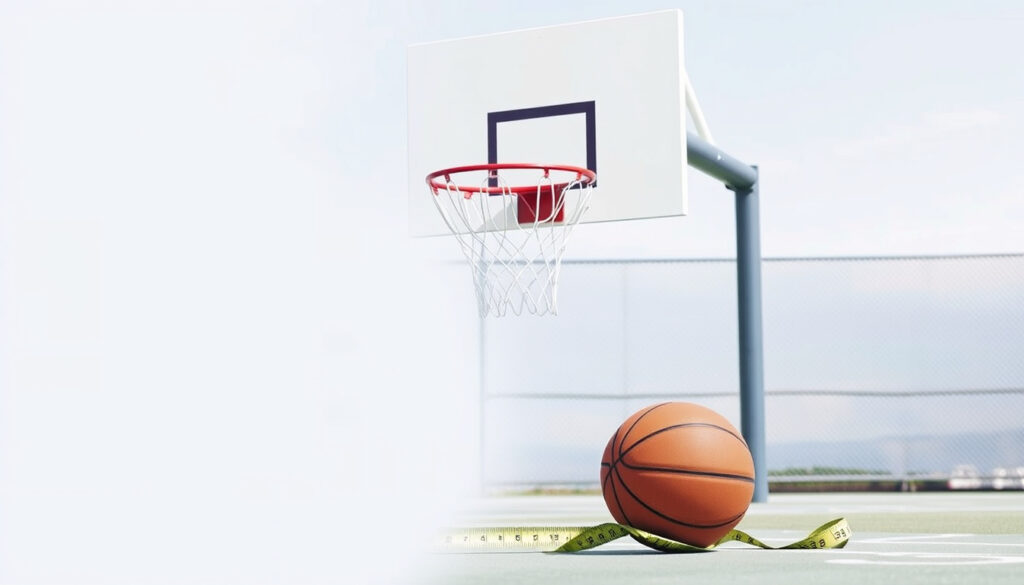
Basketball Hoop Buying Guide: Cost, Size & Height
Few things in a driveway signal “family fun” quite like a basketball hoop. The official rim height is 10 feet (First Team Inc., a basketball equipment manufacturer), but most families aren’t shopping for the NBA, so this guide breaks down cost, sizing, and age-specific recommendations to help you choose.
Standard rim height: 10 feet (3.05 m) · Adjustable hoops range: 7.5 to 10 feet · Backboard sizes (common): 44, 54, 60, 72 inches · Average cost (mid-range): $200 – $500 · Typical hoop diameter: 18 inches (46 cm)
Quick snapshot
- Backboard size and adjustability drive price: 54-inch models are budget-friendly, 60-inch models balance cost and play, and 72-inch models reach premium levels (First Team Inc. buying guide)
- Portable systems start lower but trade stability; in-ground goals offer longevity at a higher investment (YouTube home-hoop guide)
- 44-inch backboards suit children ages 5-7; 54-inch models fit youth ages 8-12 (First Team Inc. buying guide)
- 60-inch backboards work well for teens and recreational adults; 72-inch boards match regulation play (First Team Inc. buying guide)
- Ages 7-8: 8 feet; Ages 9-11: 9 feet; Ages 12+: 10 feet regulation (Superior Play height guide)
- Adjustable hoops can start as low as 5 feet 6 inches for young children (First Team Inc. buying guide) (Superior Play height guide)
- Portable models with wheels are easy to move and often cost under $250 (Pro Sports Equip)
- Wall-mounted units save space and start around $150; best value adjustable hoops combine polycarbonate backboards with a height range that grows with kids (US Sports Camps tip guide) (Pro Sports Equip)
Key specifications confirm the standard.
| Feature | Specification | Source |
|---|---|---|
| Official regulation height (NBA, FIBA, NCAA) | 10 feet (3.05 m) | First Team Inc. |
| Common backboard widths | 44, 54, 60, 72 inches | First Team Inc. buying guide |
| Most popular residential backboard size | 60 inches | First Team Inc. buying guide |
| Adjustable height range (typical) | 7.5 to 10 feet | US Sports Camps |
How much does a nice basketball hoop cost?
Entry-level vs. mid-range vs. premium price brackets
- Entry-level ($80 – $200): Portable hoops with plastic backboards and limited adjustability. Suited for casual play and young children.
- Mid-range ($200 – $500): Portable or wall-mounted systems with a polycarbonate or acrylic backboard and smoother height adjustment. These cover most home needs (First Team Inc. buying guide).
- Premium ($500 – $1,500+): In-ground or high-end portable units with tempered glass backboards, pro-style rims, and a lifetime warranty.
Factors that affect cost: material, portability, backboard size
Backboard material is the biggest price driver: polyethylene is cheap but warps, acrylic is clearer but less durable, tempered glass matches pro play but costs more. Portability adds wheels and a base that must be weighted, while in-ground models avoid base weight but require concrete installation. A 72-inch backboard always costs more than a 54-inch, but it also offers a much more realistic rebound (YouTube home-hoop guide).
Spending more doesn’t just buy a bigger backboard — it buys years of adjustability. A $400 mid-range hoop that drops to 7.5 feet can serve a family from kindergarten through high school, while a $150 budget model may need replacement in three years.
The implication: Most families should budget at least $300 if they want a system that remains usable as their children grow. The extra cost for a 60-inch adjustable hoop pays for itself in longevity.
Should I buy a 54 or 60 basketball hoop?
Differences in backboard size: 54-inch vs. 60-inch
The 54-inch backboard is roughly 4.5 feet wide—enough for a driveway where space is tight and players are under age 12. The 60-inch board adds a full foot of width, which improves rebounding and makes the hoop feel more like a real court (First Team Inc.). For a standard two-car driveway, the 60-inch is often the recommended midpoint (YouTube home-hoop guide).
Recommended user age and skill level for each size
- 54-inch: Youth recreational use, ages 8–12, players still developing fundamentals.
- 60-inch: Teens and adults, pickup games, players who want a more realistic bounce and passing surface.
The table below summarizes the appropriate backboard sizes by user.
| Backboard size | Width | Typical users | Skill level | Price range |
|---|---|---|---|---|
| 54 inches | 4 ft 6 in | Ages 8–12, recreational | Beginner–intermediate | $150–$300 |
| 60 inches | 5 ft 0 in | Teens to adults | Intermediate–advanced | $250–$500 |
| 72 inches | 6 ft 0 in | Competitive players, regulation practice | Advanced | $500–$1,200 |
What this means: If you’re buying for a 10-year-old who will grow, a 60-inch backboard avoids an upgrade in three years. For a fixed backyard space under 15 feet wide, a 54-inch may be the practical max.
What height hoop for a 12 year old?
Recommended height for 12-year-old players
Youth basketball experts widely suggest lowering the rim to 9 feet for 12-year-olds. This lets them develop proper shooting technique without straining from a 10-foot rim (Superior Play height guide). The recommended free-throw distance for this age group is 14 feet from the basket (USA Basketball youth guidelines).
Official youth basketball guidelines
- Ages 7–8: 8-foot rim, free throws 14 feet out (USA Basketball 2018 guidelines).
- Ages 9–11: 9-foot rim (Superior Play height guide).
- Ages 12+: 10-foot rim for those ready for regulation, though 9 feet remains a healthy middle ground for developing form.
Keeping a 12-year-old on a 10-foot rim before they have the leg strength for proper arc often leads to “throwing” the ball instead of shooting. A 9-foot rim reinforces correct movement patterns and makes the game more fun.
The pattern: Height recommendations descend from governing bodies, not from opinions. If your child is 12 and average height, start at 9 feet and let their shooting confidence dictate when they’re ready for 10 feet.
What is the best budget basketball hoop?
Key features of a good budget hoop
A solid budget hoop doesn’t need to be cheaply made. Look for a polycarbonate backboard (far better than polyethylene), at least 54 inches wide, and a height adjustment range of 7.5 to 10 feet. Avoid models with plastic rims that bend; choose one with a spring-action rim to reduce injury on dunks (US Sports Camps tip guide).
Top affordable models available in 2025
Portable systems from Spalding and Lifetime dominate the under-$250 segment. Many come with 54-inch backboards and adjustable poles. For a wall-mounted solution, brands like Gared and First Team offer entry-level acrylic models that can be installed directly above a garage door (First Team Inc.). The trade-off is that sub-$200 hoops often have inferior backboard material and may wobble during play.
The catch: A budget hoop that frustrates players because it wobbles or doesn’t adjust smoothly isn’t a bargain. Spending $50 more for a system with a steel pole and weighted base can turn a frustration into years of outdoor play.
Should I get a 60 or 72 basketball hoop?
Backboard size impact on gameplay
The jump from 60 to 72 inches is about more than width. A 72-inch backboard (6 feet wide) behaves almost exactly like a regulation school-yard hoop. It offers predictable rebound angles and enough surface for passing drills. The 60-inch board is still good for driveway games but narrower rebounds reward taller players who can cover more ground (First Team Inc.).
Space requirements and installation considerations
A 72-inch hoop needs at least 32 feet of driveway depth (10 feet for the hoop overhang plus 22 feet for the court) to feel usable. A 60-inch hoop fits more comfortably in a standard two-car driveway. Installation is comparable for both sizes if you choose in-ground, but a 72-inch backboard catches more wind, so the pole and concrete anchor must be heavy-duty.
Compare the two sizes side by side.
| Backboard size | Width | Minimum driveway depth | Rebound feel | Wind resistance |
|---|---|---|---|---|
| 60 inches | 5 ft 0 in | 25 ft recommended | Good for recreational play | Moderate |
| 72 inches | 6 ft 0 in | 32 ft recommended | Near-regulation feel | Higher – sturdier pole required |
The trade-off: If you have the space and will play seriously, 72 inches is the most satisfying purchase. But for most residential driveways and casual games, the 60-inch model wins on practicality and cost.
What Age is a Basketball Hoop Suitable For?
Age-based recommendations: toddlers to adults
For toddlers and early elementary (ages 3–5), a mini hoop at 5–6 feet works best. Ages 5–7 benefit from 44-inch backboards set to 6–7 feet. Ages 7–9 should use 8-foot rims, ages 9–11 use 9 feet, and ages 12+ can step up to 10 feet regulation (Superior Play height guide; First Team Inc. buying guide).
Safety and adjustability considerations
Adjustable hoops allow a single purchase to span ages: models that drop to 7.5 feet serve young children, then rise to 10 feet for teens (US Sports Camps). Ensure the base is weighted and the pole is stable to prevent tipping.
The implication: An adjustable hoop with a 54- or 60-inch backboard covers ages 5 through adult, making it the most versatile option for families.
Is it difficult to dunk on a 10-foot hoop?
Vertical jump requirements for a standard dunk
Dunking on a 10-foot rim typically requires a vertical leap of 24–30 inches, depending on the player’s height and arm length. A 6-foot player needs a 30-inch vertical; a 6’5″ player might need only 18 inches. Most recreational players cannot dunk without significant training. For families looking for a versatile option, an adjustable hoop with a 54- or 60-inch backboard is ideal, and you can find more information on Van Haren schoenen dames here. Van Haren schoenen dames
Factors affecting dunkability: height, athleticism, technique
Height is the primary determinant. A taller player has a shorter distance to lift the ball. Athleticism, leg strength, and jumping technique also play roles. The average male vertical leap is around 16–20 inches, which is insufficient for a 10-foot dunk (First Team Inc. buying guide).
The catch: Dunking is rare outside competitive basketball. For most players, a lower rim (9 feet) provides a more rewarding experience for practicing jams.
Key comparisons: Portable vs. In-ground hoops
Choosing between portable and in-ground comes down to stability vs. flexibility.
| Type | Mobility | Installation | Stability | Cost range | Lifespan |
|---|---|---|---|---|---|
| Portable | Moves on wheels, requires weighted base | Minimal assembly, no concrete | Fair – can tip if base not filled | $80 – $500 | 5–10 years |
| In-ground | Permanent | Concrete pour, more complex | Excellent – very stable | $300 – $1,500+ | 10–15 years |
| Wall-mounted | Mounted to garage or building | Wall anchors required | Very good if anchored correctly | $100 – $400 | 8–12 years |
Upsides
- Portable: easy to move, adjust location, lower upfront cost.
- In-ground: best stability and realistic play, longer lifespan.
- Wall-mounted: saves driveway space, good stability.
Downsides
- Portable: can wobble during aggressive play, base takes up space.
- In-ground: permanent, expensive installation, difficult to move.
- Wall-mounted: requires wall space and anchor points, less common.
The verdict: Portable hoops win for renters or families who may move; in-ground hoops offer the best long-term value for homeowners with dedicated driveway space.
What we know for sure
Confirmed facts
- Regulation hoop height is universally 10 feet for adult play (First Team Inc. regulation height article).
- Lowering to 9 feet is recommended for 12-year-olds by multiple youth programs (Superior Play; USA Basketball).
- 60-inch backboards are the most common residential choice (First Team Inc. buying guide).
- Adjustable hoops commonly range from 7 to 10 feet, letting one hoop serve multiple ages (US Sports Camps).
What’s unclear
- The exact cost breakpoint where “cheap” becomes “good” varies by brand and material quality.
- Dunk difficulty on a 10-foot hoop depends heavily on the player’s height and vertical leap — no single formula fits everyone.
“A 9-foot rim for 12-year-olds isn’t just coddling — it’s biomechanics. Shooting at a lower rim builds the arc and wrist snap that carry into regulation play.”
— USA Basketball youth guidelines (2018)
“The difference between a 54-inch and a 60-inch backboard is the difference between a toy and a training tool. The extra foot gives you a game-like rebound.”
— First Team Inc. buying guide
“If you’re on a budget, skip the cheapest portable. A mid-tier wall-mounted hoop with an acrylic backboard will last longer and play better.”
— US Sports Camps tip guide
For a family buying their first hoop, the choice is clear: start with an adjustable 54-inch or 60-inch model that can drop to 7.5 feet, or risk your child developing poor shooting habits on a permanently high rim. The extra $100 spent today will be forgotten the first time a 10-year-old sinks a three-pointer on a hoop that fits them.
networldsports.com, youthguidelines.nba.com, dominatorhoop.com, youtube.com, kidsgottaplay.com, samtidsbladet.se
Frequently asked questions
Can I mount a basketball hoop on a wall?
Yes, wall-mounted hoops are common for garages or building walls. They require masonry anchors or wooden studs. Most models fold flat when not in use, freeing driveway space.
What is the difference between a portable and in-ground hoop?
Portable hoops sit on a weighted base and can be moved; in-ground hoops are cemented into the ground for maximum stability. Portable is easier to install and relocate, while in-ground offers superior sturdiness and a more realistic feel.
How do I install a basketball hoop in my driveway?
For portable hoops: fill the base with sand or water per instructions. For in-ground: dig a hole about 2 feet deep, fill with concrete, and set the pole plumb while it cures. Follow the manufacturer’s directions precisely.
Do basketball hoops come assembled?
Most portable and wall-mounted hoops require partial assembly — usually attaching the backboard, rim, and pole base. In-ground models require more assembly. Always check the product description for assembly level.
What is the best material for a backboard?
Tempered glass offers the truest rebound and durability, but it’s the most expensive. Acrylic is a good mid-tier choice. Polyethylene is cheapest but warps over time and doesn’t bounce like a real court.
How do I adjust the height on a basketball hoop?
Most adjustable hoops use a telescoping pole with a locking pin or a crank mechanism. Always adjust with the hoop empty and the base stable. Practice the steps before children use it.
What size basketball hoop fits in a garage?
A wall-mounted hoop with a foldable 54-inch backboard is the best fit for most garages. Make sure the mounting location is high enough to allow a full 10-foot height if desired. Measure your garage ceiling height first.
The bottom line: The right hoop grows with your family, so prioritize adjustability and backboard size over initial price. A well-chosen hoop becomes a backyard fixture for a decade.
Related reading: Basketball Hoop Buying Guide — covers types, features, and maintenance tips.
More related posts
 Arti Shah: Star Wars Actress & Diversity Speaker
 Aristotle Onassis: His Fortune, Marriages, and Legacy
 Laurence Llewelyn-Bowen Estate Transfer and Net Worth
 Alastair Campbell: Breakdown, Resignation, and Political Career
 Susan Attenborough: Biography, Age, and What Happened
 What Is Hamilton About? Full Storyline & Plot Summary
 Chiwetel Ejiofor Biography: Career, Personal Life & Net Worth
 Cherry Healey: Age, Children, Net Worth, and TV Career
