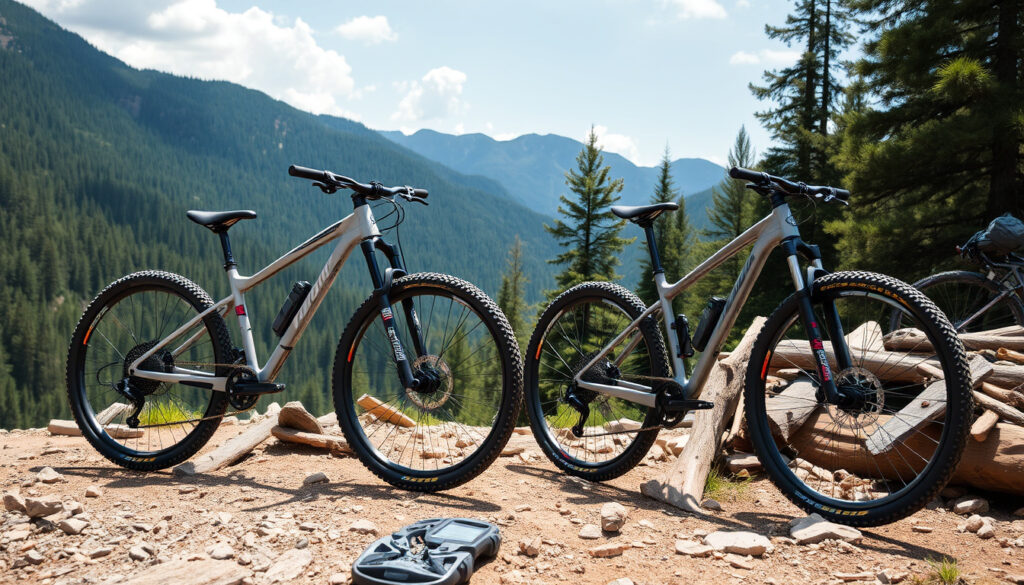
Full Suspension Mountain Bike – Pros, Cons and Vs Hardtail
Full suspension mountain bikes represent one of the most significant advancements in off-road cycling technology, offering riders dual-plane shock absorption that transforms how cyclists navigate rough terrain. Whether you are a beginner exploring trail networks or an experienced rider seeking maximum control on aggressive descents, understanding the mechanics, benefits, and limitations of full suspension designs helps inform purchasing decisions that align with your riding style and budget.
The market for full suspension mountain bikes has expanded considerably in recent years, with manufacturers offering models across wide price ranges. However, navigating the terminology—suspension travel, geometry angles, wheel sizes, and component specifications—can feel overwhelming for newcomers. This guide breaks down essential information about full suspension technology, compares these bikes against hardtail alternatives, and provides practical advice for selecting the right model for your needs.
What Is a Full Suspension Mountain Bike?
A full suspension mountain bike incorporates both front and rear suspension systems, allowing the frame to absorb impacts at both ends of the vehicle. The front fork handles obstacles encountered through steering, while the rear triangle—connected through pivots and linkage mechanisms—moves independently to maintain tire contact with the ground over rough surfaces. This dual-plane system distinguishes full suspension bikes from hardtails, which only feature front suspension.
The rear suspension typically consists of a shock absorber mounted within the frame’s rear triangle, working through a linkage system that compresses and extends based on terrain input. This design allows the rear wheel to articulate over rocks, roots, and drops without transferring full impact forces to the rider. The result is improved traction, reduced fatigue, and greater confidence when navigating technical sections.
Suspension travel refers to how far the front fork and rear shock can compress. Measured in millimeters, this specification directly correlates with the type of riding a bike is designed for. Cross-country bikes typically offer 100-120mm of travel, trail bikes range from 120-150mm, and enduro or downhill models can exceed 200mm.
Suspension Design
Front and rear travel ranging from 100-200mm depending on category
Wheel Size
29″ for stability, 27.5″ for agility, or mullet (mixed) configurations
Intended Use
Trail, all-mountain, enduro, or downhill riding applications
Price Range
Entry-level around $1,500 to premium models exceeding $10,000
Key Insights About Full Suspension Technology
- Full suspension bikes excel on rough terrain where hardtails transmit vibration directly to the rider
- Rear suspension improves tire contact on uneven surfaces, enhancing traction during climbs and descents
- Modern full suspension designs use virtual pivot points to balance pedaling efficiency with bump absorption
- Weight penalty compared to hardtails typically ranges from 3 to 8 pounds depending on component quality
- Suspension adjustment options include air pressure tuning, compression damping, and rebound control
- Linkage systems vary by manufacturer, affecting leverage ratios and overall feel
- Electronic suspension systems represent emerging technology in premium models
| Aspect | Full Suspension | Hardtail Comparison |
|---|---|---|
| Travel | 120-200mm (front and rear) | Front only 100-160mm |
| Weight | 28-35lbs typical | 20-28lbs typical |
| Cost | Higher entry point | Lower initial investment |
| Efficiency | Slight pedaling loss on climbs | More efficient on smooth terrain |
| Maintenance | Servicing both fork and shock | Front fork only |
| Terrain Suitability | Technical trails and descents | Smoother paths and climbing |
Full Suspension vs Hardtail: Key Differences
Choosing between a full suspension mountain bike and a hardtail involves weighing multiple factors including intended riding terrain, budget constraints, and long-term maintenance willingness. Each design offers distinct advantages that align with different rider priorities and skill levels.
Riding Feel and Performance
Full suspension bikes absorb trail irregularities through both wheels, creating a smoother ride quality that reduces physical fatigue during extended sessions. On technical descents, the rear suspension maintains tire grip through roots, rocks, and drops, allowing riders to carry more speed through challenging sections. The trade-off involves slightly reduced pedaling efficiency since energy can dissipate into suspension movement rather than pure forward momentum.
Hardtails deliver power more directly to the ground because the rear triangle remains fixed, making them feel more responsive during accelerations and climbs. Riders who spend significant time on smoother fire roads or climbing-focused trails often appreciate the efficient feel of hardtail designs. However, rough descents can feel jarring without rear suspension assistance, potentially limiting confidence and speed on technical terrain.
Terrain Handling Comparison
Trail and all-mountain bikes with 120-150mm of travel represent the most versatile full suspension category for mixed terrain riding. These bikes balance climbing efficiency with descending capability, handling everything from flowy singletrack to moderate rock gardens with composure. The Specialized Stumpy 15 and Santa Cruz Jon Jones 15 Evo exemplify models excelling across this range, with the latter offering 160mm for riders leaning toward aggressive trail and enduro applications.
Enduro and downhill-focused models extend suspension travel to 150-200mm or beyond, featuring slack geometry that prioritizes stability at speed over climbing efficiency. These bikes require stronger wheel builds, more robust brakes, and components designed for repeated aggressive use. Hardtails simply cannot match the control these machines provide when pointed downhill at high speeds over gnarly terrain.
Many experts suggest starting with a hardtail if your budget sits under $3000, particularly if you primarily ride smoother trails and want to develop fundamental skills before investing in full suspension technology.
Cost Considerations Under $3000
Budget-conscious buyers face meaningful compromises when seeking full suspension options below $3000. Entry-level models like the Leoguar Trailblazer (priced around $2899) deliver 150mm front and 140mm rear travel with quality components, though electric assist versions push toward this ceiling. Aluminum-framed bikes from manufacturers like Canyon occasionally reach this price range during sales events.
The Specialized Chisel offers an interesting alternative position—technically a hardtail but featuring modern geometry and kinematics that approach full suspension efficiency at approximately 28.5 pounds. This bike demonstrates how hardtail designs have evolved, potentially satisfying riders who want aggressive trail capability without the full suspension price premium.
Are Full Suspension Mountain Bikes Worth It?
Determining whether a full suspension mountain bike represents a worthwhile investment depends heavily on your riding frequency, terrain preferences, and progression goals. For riders who regularly tackle technical trails with rocks, roots, and significant elevation changes, the control and comfort benefits typically justify the additional cost and maintenance requirements.
Performance Advantages on Rough Terrain
Full suspension designs genuinely excel when descending over challenging terrain. The rear wheel maintains contact with the ground through successive bumps, improving traction during braking, cornering, and acceleration. This advantage becomes increasingly apparent as trail difficulty increases, making full suspension particularly valuable for riders exploring more aggressive terrain or competing in enduro events.
Comfort during long rides represents another meaningful benefit. Without constant vibration and impact transmission through the frame, riders experience less fatigue and reduced physical strain over multi-hour sessions. This factor becomes especially relevant for riders recovering from injuries or those sensitive to repeated vibration exposure.
Limitations and Trade-offs
Full suspension bikes carry inherent disadvantages that merit consideration. The additional moving parts increase both weight and complexity, requiring more frequent maintenance than hardtail alternatives. Pivots and suspension seals accumulate dirt during rides, necessitating regular cleaning to maintain smooth operation and prevent premature wear.
Pedaling efficiency on smooth terrain suffers slightly due to suspension movement that can absorb rider input. While modern designs incorporate pedaling platforms and anti-squat geometry to minimize this effect, hardtails still maintain an efficiency advantage during climbing-focused riding. Riders prioritizing cross-country racing or smooth trail adventures may find this trade-off less appealing.
How to Choose the Best Full Suspension Mountain Bike
Selecting the right full suspension mountain bike requires evaluating multiple specifications beyond simple price comparisons. Understanding how suspension travel, geometry, wheel size, and component quality interact helps buyers make informed decisions aligned with their current abilities and future progression expectations.
Matching Travel to Your Riding Style
Cross-country full suspension bikes offer 100-120mm of travel with lightweight builds optimized for climbing efficiency and racing performance. These models suit riders focused on endurance events and smoother trails where speed on ascents matters more than descending aggression. The Canyon Lux represents a benchmark in this category, featuring a lightweight carbon frame that competes effectively on climbs while maintaining competent descending capability.
Trail and all-mountain categories provide 120-150mm of versatile travel, handling mixed terrain competently without extreme specialization in either climbing or descending. These bikes appeal most strongly to recreational riders seeking one bike that handles diverse trail conditions effectively. Current 2025 reviews highlight 140-150mm 29ers as particularly capable all-rounders for riders developing their skills.
Enduro and downhill bikes with 150-200mm or more travel sacrifice climbing efficiency for maximum descending capability. Slack head angles below 65 degrees create stable platforms at speed, while heavy-duty components withstand repeated abuse. Gravity-focused riders who shuttle lifts or concentrate primarily on descent quality find these models essential despite their climbing disadvantages.
Geometry and Sizing Fundamentals
Frame geometry significantly influences how a bike handles across different conditions. Head tube angle affects steering responsiveness and high-speed stability—slacker angles below 65 degrees provide confidence on steep descents but feel less agile at lower speeds. Steeper head angles improve quick handling but can feel nervous on steep terrain.
Reach and stack measurements determine rider position and weight distribution. Longer reaches place riders more forward for descending control, while shorter reaches maintain an upright position better suited for climbing. Modern trail bikes generally trend toward longer reaches with shorter stems, though personal preference and flexibility should guide sizing choices. Always consult manufacturer sizing guides and test ride when possible before committing to a frame size.
29-inch wheels roll over obstacles more easily and maintain momentum better on rough terrain, making them dominant in cross-country and trail categories. 27.5-inch wheels offer quicker acceleration and snappier handling for aggressive riding. Mullet configurations (29″ front, 27.5″ rear) combine rollover capability with rear-wheel agility, particularly effective for technical trails.
Essential Components to Prioritize
Budget constraints in the under-$3000 range require strategic component choices. Hydraulic disc brakes provide essential stopping power and modulation, particularly important as bike speed and terrain difficulty increase. Lower-end full suspension models sometimes compromise brake quality, so evaluating this specification helps identify true value propositions.
Dropper seatposts have become essential equipment for trail riding, allowing riders to lower the saddle quickly without stopping. This capability improves descending control by moving body weight lower and more rearward. While budget models sometimes omit dropper posts or include low-quality versions, prioritizing this component significantly improves trail experience.
Drivetrain quality matters considerably for maintenance intervals and shifting precision. 1x drivetrains (single front chainring) have become standard in mountain biking, simplifying operation and reducing weight compared to traditional 2x or 3x setups. Entry-level bikes may use less durable components that require more frequent adjustment, particularly in muddy conditions.
Buying Channels and Budget Strategy
Direct-to-consumer manufacturers like Canyon offer quality full suspension frames at competitive prices by eliminating retail middlemen. These brands provide detailed online sizing guides and sell accessories alongside complete bikes. Checking current sales events reveals opportunities to access normally higher-priced models within constrained budgets.
Setting a clear budget before shopping helps maintain focus on value rather than aspirational upgrades. Under $3000 limits options primarily to aluminum-framed models with entry-level to mid-range components. Deciding whether to prioritize frame quality, component specification, or wheel durability guides purchasing decisions within these constraints.
Full Suspension MTB Maintenance Essentials
Maintaining a full suspension mountain bike involves more frequent attention than hardtail alternatives due to additional moving parts and suspension components. Regular maintenance preserves performance, extends component lifespan, and ensures safety during aggressive riding sessions.
Routine Care Schedule
After each ride, cleaning accumulated dirt from suspension pivots and seals prevents abrasive particles from accelerating wear. Water and gentle cleaning products applied with soft brushes remove debris without forcing contaminants deeper into bearing surfaces. Pay particular attention to the rear linkage area where mud commonly accumulates during wet conditions.
Weekly maintenance includes lubricating pivot points with appropriate greases and checking suspension sag settings. Sag refers to how much the rear suspension compresses under rider weight alone, typically set between 25-35% of available travel depending on riding preferences and terrain conditions. Incorrect sag settings compromise both comfort and performance.
Fork and shock servicing should occur annually or every 50-100 riding hours, whichever comes first. Professional service includes air spring inspection, seal replacement, and damping circuit evaluation. Budget approximately $150-300 per service for quality suspension components.
Annual Service Requirements
Yearly professional suspension service maintains air seal integrity and damping performance. Shock and fork internals contain precise tolerances that degrade over time and use. Attempting to service suspension components without proper training and tools risks damage and potentially dangerous failure.
Annual maintenance costs for full suspension bikes typically range from $200-500 depending on component quality and riding frequency. This figure exceeds hardtail maintenance costs, representing a meaningful ongoing expense alongside the higher initial purchase price. Riders should factor these costs into purchasing decisions rather than focusing solely on bike price.
The Evolution of Full Suspension Technology
Full suspension mountain bike technology has progressed substantially since early experimental designs emerged in the 1980s. Understanding this development context helps riders appreciate current design choices and anticipate future innovations.
- 1980s: Early prototypes experimented with rear suspension concepts, though weight and reliability issues limited practical application
- 1990s: Commercial full suspension models entered the market, with designs evolving rapidly as manufacturers refined linkage geometries
- 2000s: Virtual pivot point designs emerged, addressing pedaling efficiency while maintaining bump absorption
- 2010s: 29-inch wheel adoption reshaped full suspension geometry, with manufacturers redesigning frames around larger wheels
- 2020s: Electronic suspension systems and advanced carbon manufacturing techniques pushed capability boundaries
- 2025 and beyond: Lightweight carbon frames and smart suspension integration represent current innovation directions
What Is Clear and What Remains Uncertain
| Established Information | Information That Remains Unclear |
|---|---|
| Full suspension improves descending control over rough terrain | Specific long-term reliability data for newer frame designs |
| Hardtails offer better climbing efficiency on smooth terrain | Precise component lifespan under different riding styles |
| Maintenance costs are higher for full suspension bikes | Optimal suspension settings for individual riders |
| Budget full suspension options exist under $3000 | Future pricing trends as materials costs fluctuate |
| 140-150mm travel represents best all-around category for 2025 | Impact of emerging wheel sizes on future geometry standards |
Understanding Full Suspension in Context
Full suspension mountain bikes emerged from a specific problem: riders wanted to ride aggressive terrain faster without physically punishing consequences. Early mountain biking culture accepted rough rides as inherent to the sport, but as trails became more refined and rider expectations evolved, technology followed suit.
The decision between full suspension and hardtail ultimately reflects priorities rather than absolute quality distinctions. Riders valuing efficiency, simplicity, and lower costs naturally gravitate toward hardtails. Those prioritizing comfort, control, and descending confidence find full suspension worthwhile despite trade-offs. Modern mountain biking benefits from both approaches serving distinct rider populations effectively.
Expert Perspectives on Full Suspension Technology
For riders tackling technical terrain regularly, the control advantage of full suspension isn’t optional—it’s essential for both performance and safety.
— Canyon Full Suspension Buyer’s Guide, 2024
The Specialized Chisel demonstrates how far hardtail geometry has evolved, approaching full suspension efficiency while maintaining simpler maintenance requirements.
— Bicycling Magazine 2025 Mountain Bike Awards
Summary: Key Takeaways
Full suspension mountain bikes offer meaningful advantages for riders seeking comfort, control, and confidence on rough terrain. The additional cost and maintenance requirements should factor into purchasing decisions alongside performance benefits. Beginners with budgets under $3000 may find hardtail alternatives more appropriate unless terrain heavily favors descending. For those committed to technical trail riding, investing in quality full suspension provides tangible benefits that enhance both skill development and riding enjoyment.
Understanding your specific terrain preferences, riding frequency, and maintenance willingness helps determine whether full suspension technology aligns with your goals. Test riding both configurations when possible provides the clearest indication of personal preference before committing to a purchase. Explore our comprehensive guides on New Balance Running Trainers – Top Models for Every Runner and Rugby Autumn Internationals 2025 – Complete Schedule and Guide for additional athletic gear recommendations.
Frequently Asked Questions
What suspension travel do I need for trail riding?
Trail riding typically requires 120-150mm of travel, balancing climbing efficiency with descending capability. This range handles most singletrack conditions effectively without extreme specialization.
Are full suspension bikes worth the extra cost for beginners?
For beginners on moderate budgets, hardtails often provide better value unless riding terrain is predominantly technical. Full suspension benefits become more apparent as riders progress to more aggressive trails.
How much does full suspension maintenance cost annually?
Annual maintenance for full suspension bikes ranges from $200-500, including professional suspension servicing and regular cleaning. This exceeds hardtail maintenance costs by approximately $100-200 per year.
What is the best full suspension mountain bike under $3000?
The Leoguar Trailblazer at approximately $2899 offers the most capable budget full suspension option. Canyon Spectral entry models occasionally reach this price range during sales events.
How do I choose the correct frame size for a full suspension bike?
Consult manufacturer sizing guides based on rider height, and prioritize standover height and reach measurements. Test riding provides the most reliable fit assessment before purchase.
What wheel size should I choose for trail riding?
29-inch wheels dominate trail riding due to superior rollover capability and momentum maintenance. 27.5-inch wheels offer agility advantages, while mullet configurations blend both benefits.
How often should I service my suspension fork and shock?
Professional suspension service should occur annually or every 50-100 riding hours. Regular cleaning and sag checking can be performed by owners between professional services.
More related posts
 EU Shoe Size to UK: Complete Conversion & Size Charts
 De Vere Latimer Estate – Location Facilities Reviews Guide
 Kevin Hart: Net Worth, Wife, Children, Height, and FAQ
 Hermione Norris: Career, Roles, and Latest Updates (2024)
 Ella Anderson: Age, Net Worth & Japanese Heritage
 Jace Norman: Age, Net Worth, Dyslexia, and Life Now
 Viggo Mortensen: Biography, Languages, Career & Personal Life
 0% Car Finance Deals Ireland 2026: Worth It or a Trap?
