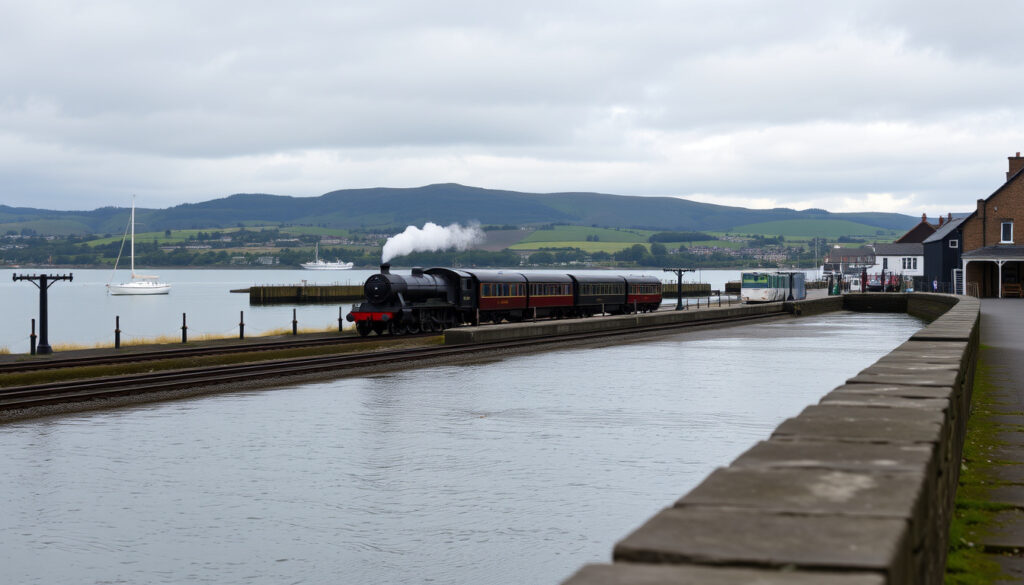
Is Bo’ness Worth Visiting? Complete Travel Guide
Most people speed past Bo’ness on the way to somewhere bigger, which is exactly why it still feels like a find. Sitting on the south bank of the Firth of Forth, this compact coastal town packs a working steam railway, Scotland’s oldest cinema, and a Roman frontier fortlet into a few walkable streets — we’ve pulled together what official tourism bodies and local guides say about visiting and living here, so you can decide if it belongs on your Scotland itinerary.
Location: south bank of the Firth of Forth · Known for: vibrant heritage and strong community · Tourism highlight: James Bond private tours · Landmark: prominent tower in town centre
Quick snapshot
- The Bo’ness and Kinneil Railway is a headline steam-railway attraction (VisitScotland (Scotland’s national tourism body))
- Remains of a Roman fortlet sit within Kinneil Estate, marking the line of the Antonine Wall (Bo’net (local community site))
- Kinneil House, the estate’s mansion, dates to 1677 (Wikivoyage (crowdsourced travel guide))
- Exact population figures beyond the approximate 14,000 are not published in the sources reviewed
- Details of the early Borrowstounnes name etymology are debated
- The specific James Bond productions behind local tours are not documented in official visitor materials
- The Hippodrome cinema dates to 1912 (Adventures Around Scotland (Scotland travel blog))
- First recorded as Borrowstounnes in the 12th century (local history outline) (Adventures Around Scotland (Scotland travel blog))
- Visit Falkirk promotes a combined Bo’ness and Blackness heritage trail (Visit Falkirk (official tourism site))
- Allow a full day if you want the railway, the estate, and the castle trail in one visit (Visit Falkirk (official tourism site))
Six reference points, one pattern: a small Scottish town with a surprisingly dense heritage stack. Here’s the quick reference:
| Fact | Detail |
|---|---|
| Population | Approximately 14,000 (local estimate) |
| Location | South bank of the Firth of Forth, Falkirk district |
| Name origin | Shortened from Borrowstounnes |
| Steam railway | Bo’ness and Kinneil Railway |
| Railway museum | Museum of Scottish Railways |
| Cinema | The Hippodrome, billed as Scotland’s oldest cinema |
Is Boness worth visiting?
The short answer is yes for most travellers — if you treat it as a planned stop rather than a drive-by. VisitScotland points to the railway, the Museum of Scottish Railways, Kinneil House and Museum, and the Hippodrome as the town’s main heritage stops. Wikivoyage is even more direct, calling the Bo’ness and Kinneil Railway the main reason to visit.
Top attractions in Bo’ness
- Bo’ness and Kinneil Railway — steam train rides and themed days
- Museum of Scottish Railways — on site at the railway and billed as Scotland’s largest railway museum
- Kinneil House and Museum — the 1677 mansion and its estate, with the Antonine Wall fortlet nearby
- The Hippodrome — Scotland’s oldest cinema
What visitors say
- Visitor vlogs describe a “great day in Bo’ness” built on the town’s streets, history, and local pubs
- Tripadvisor’s attraction listing places Kinneil Museum in the 17th-century stable block of Kinneil House, where it doubles as the estate’s information centre (Tripadvisor (travel review platform))
If you enjoy this kind of “worth it or not” decision, the same question comes up at Scotland’s most famous lochs: Loch Lomond vs Loch Ness: Which is the Better Scottish Trip weighs two classic days out against each other.
Bo’ness’s biggest draw is also its most conditional. The steam railway runs on scheduled and themed days, so travellers who get the most from the town are the ones who check the calendar before they book, not after.
The implication: Bo’ness is a genuinely good day out, but its strength is variety, not one unmissable monument. Plan around the railway’s running dates and the rest of the town will fill the day.
What’s it like to live in Boness?
Living in Bo’ness means trading big-city pace for a Forth-side town with visible history and a vocal local identity. Local descriptions keep returning to the same phrase: vibrant heritage and strong community, which is what the town’s tourism snapshot leads with.
Community and amenities
- Shops, schools, and pubs cover the daily essentials
- Coastal living with access to Falkirk and Edinburgh
- Kinneil Estate provides green space and history steps from the town centre
- Local guides describe a steeply terraced townscape above a restored waterfront
Cost of living
- No current cost-of-living index appears in the official visitor sources reviewed for this guide
- The practical reading: Bo’ness works as a smaller-town base, so budgets depend on current property and transport listings rather than published averages
Scotland’s day-trip math is often the same: one destination, one big question. Our guide to Loch Lomond Worth Visiting? Guide to Scotland’s Largest Loch applies the same test to the country’s biggest loch.
What this means: Bo’ness looks strongest for people who want coastal character with Falkirk and Edinburgh within reach. The exact cost picture is something you verify from live listings rather than tourism pages.
What is Boness famous for?
Bo’ness is famous for doing heritage at a human scale: no queue-heavy megacastle, just a working steam railway, a 1912 cinema, and a Roman frontier that still leaves traces in the grass. The official tourism profile frames it as a historic coastal town, and the heritage list explains the pull.
Heritage and history
- A working steam railway: the Bo’ness and Kinneil Railway runs more than five miles of track between Bo’ness and Manuel Junction (The Travel Fox (Scottish travel guide))
- Kinneil Estate: a combination of Kinneil House, a museum, and the remains of a Roman fortlet (Bo’net local community site)
- The Hippodrome: a pre-art-deco picture palace dating back to 1912 (Adventures Around Scotland)
- Museum of Scottish Railways: on site at the railway and billed as Scotland’s largest railway museum
Film locations
- James Bond tours: private tours are marketed around the area, though official visitor materials don’t detail which productions they cover
- Blackness Castle: the coastal centrepiece of an official Bo’ness and Blackness heritage trail (Visit Falkirk official tourism site)
The James Bond talking point is strong in local marketing, but the official visitor sources reviewed here don’t pin down which productions used the town. Plan the day around the railway, the cinema, and the Roman frontier, which are documented.
The pattern: Bo’ness’s fame is a cluster, not a single box to tick. A steam railway, a 1912 picture palace, and a Roman fortlet within one compact town is a combination you won’t find at most Scottish stops.
Why is Boness called Boness?
Bo’ness’s name is a contraction with a long tail. The town was historically recorded as Borrowstounnes, and everyday usage squeezed that longer form into the modern one.
Origin of the name Borrowstounnes
- Bo’ness is a shortened form of Borrowstounnes, the settlement’s older recorded name
- Borrowstounnes is generally understood to derive from an Old English or Scots phrase meaning “farmstead of the borrows”
- The precise early form of the name is debated, and the public record is thinner than for larger Scottish towns
The apostrophe in Bo’ness marks the squeeze: the middle of Borrowstounnes dropped away as the name got shorter in speech and writing. The takeaway: the name is a small lesson in Scottish place-name evolution — a medieval farmstead name compressed by centuries of use, with the precise roots argued over in specialist sources rather than tourism pages.
How many people live in Bo Ness?
The most commonly repeated figure for Bo’ness is roughly 14,000 residents. It’s an estimate rather than a precise census count, and the official tourism sources reviewed here don’t publish a fresher number.
Population statistics
- Approximately 14,000 residents (local estimate)
- Part of the Falkirk council area
- South bank of the Firth of Forth
Scale matters more than the exact count: roughly 14,000 people gives Bo’ness daily amenities without turning it into a city. For anyone comparing Scottish towns, Bo’ness reads as a moderate-sized settlement with a compact centre — the kind of place where the railway, the museum, and the pub are all on the same wander.
The upsides and downsides of a Bo’ness visit
Upsides
- Heritage density: railway, museum, and Kinneil Estate within one compact town
- Walking links: the John Muir Way connects Bo’ness toward Blackness Castle, Linlithgow, and South Queensferry
- A strong local character that visitor guides sum up as “vibrant heritage and strong community”
- A manageable scale for a first visit: the town-centre stops cluster together
Downsides
- Logistics: attractions are split between town-centre stops and Kinneil Estate, so the route needs planning
- Seasonal reality: steam train rides and themed days depend on operating dates
- Scale: Bo’ness is a small-town heritage stop, not a multi-day base
The trade-off: Bo’ness gives you a lot per hour, but only if you arrive knowing what’s open and where things sit. Spontaneous visitors get less out of it than planners do.
Bo’ness through the years
The town’s history is compressed but legible: a medieval settlement, a 17th-century mansion, an industrial port era, and a modern heritage revival. Key markers:
- 12th century: first recorded settlement as Borrowstounnes (local history outline)
- 1677: Kinneil House built in Kinneil Estate (Wikivoyage (crowdsourced travel guide))
- 18th–19th century: Bo’ness grows into a busy port and industrial centre (local history outline)
- 1912: the Hippodrome opens (Adventures Around Scotland (Scotland travel blog))
- 20th century: heavy industry declines and the town shifts toward heritage tourism (local history outline)
- Present: steam railway, Roman remains, and cinema history make Bo’ness a compact heritage stop
The pattern: every era left something visible. The medieval name stuck, the 1677 mansion survived, the industrial port shaped the streets, and the 20th-century decline made room for the heritage economy.
What’s confirmed and what’s still unclear
Research on Bo’ness is thinner than for bigger Scottish towns, so it helps to separate the documented from the merely repeated.
Confirmed by named sources
- The Hippodrome is presented as Scotland’s oldest cinema (VisitScotland)
- Kinneil House dates to 1677 (Wikivoyage)
- The remains of a Roman fortlet sit in Kinneil Estate (Bo’net)
- The town sits on the John Muir Way (The Travel Fox)
Unclear or thinner evidence
- Exact population: roughly 14,000 is repeated, but no official source in the reviewed material publishes a precise census figure
- Name etymology: Borrowstounnes is broadly read as a farmstead-related name, but the precise roots are debated
- James Bond link: private tours are marketed, but official visitor materials don’t document which productions are involved
- The Travel Fox’s “compact heritage destination” framing is one travel blog’s useful label, not an official designation
For a town this size, verified details matter more than big-name marketing. Bo’ness rewards visitors who treat the steam railway as the anchor, the estate as the walk, and Blackness Castle as the finale.
The trade-off: Bo’ness’s low profile is why it still feels undiscovered, but it also means travellers have to verify practical details before visiting rather than trusting a thick guidebook chapter.
What the sources say about Bo’ness
“The Bo’ness and Kinneil Railway runs over more than five miles of track between Bo’ness and Manuel Junction via Kinneil Halt and Birkhill.”
“The Bo’ness and Blackness heritage trail combines the steam railway and Blackness Castle.”
Visit Falkirk (official tourism site)
Read together, the two sources underline the same conclusion: Bo’ness works best when you treat its heritage as connected — railway, castle, and estate in one itinerary.
The takeaway
Bo’ness is a heritage town that rewards travellers who stop rather than pass through. For heritage-minded visitors, the decision is clear: check the railway’s running dates, give Kinneil Estate and the John Muir Way at least half a day, and treat Blackness Castle as the natural add-on — or save Bo’ness for a return trip when you have the time it actually deserves.
expedia.com, en.wikipedia.org, en.wikivoyage.org, scots2travel.com, sobt.co.uk, adventuresaroundscotland.com
Frequently asked questions
What are the best pubs in Bo’ness?
Visitor vlogs describe a “great day in Bo’ness” that pairs history with “the best local pubs and beer,” but no single pub shows up consistently across official tourism sources. The practical approach is to walk the town centre and follow the local crowd.
What James Bond film locations are near Bo’ness?
James Bond private tours are marketed around the area, and the official heritage trail pairs Bo’ness with nearby Blackness Castle. The specific productions connected to local sites aren’t detailed in the official sources we reviewed, so ask the tour operator exactly what’s included before you book.
What is the prominent tower in Bo’ness?
Local social media describes the town-centre tower as “an important and highly prominent landmark in the town centre.” Its deeper history isn’t detailed in the official visitor sources used for this article.
What are The Arches in Bo’ness?
The Arches doesn’t have a consistent official description in the tourism sources used for this article. It’s a gap worth checking with Bo’net, the local community site, for current listings and events.
How do I get to Bo’ness from Edinburgh?
Bo’ness sits on the south bank of the Firth of Forth, and the John Muir Way links the town toward Blackness Castle, Linlithgow, and South Queensferry on foot. The official visitor sources reviewed here don’t publish current bus or rail schedules, so check local transport operators for up-to-date times.
Does Bo’ness have a waterfront trail?
Yes. Local guides describe a Forth-side trail and restored waterfront beneath a steeply terraced townscape, with the John Muir Way passing through the area.
More related posts
 Codes for Basketball Zero April 2026: All Active Roblox Codes
 Vincent D’Onofrio: Health, Net Worth, and Career 2024
 Law Firm Definition, Top Rankings in Ireland, UK & World
 Gene Pitney’s Life, Hit Songs, and Death Explained
 Francis Bacon: The Painter Behind the Screaming Popes
 Bernard Hill: Titanic, Lord of the Rings and Oscars Snub
 Alex Warren: Age, Real Name, TikTok Fame, New Album
