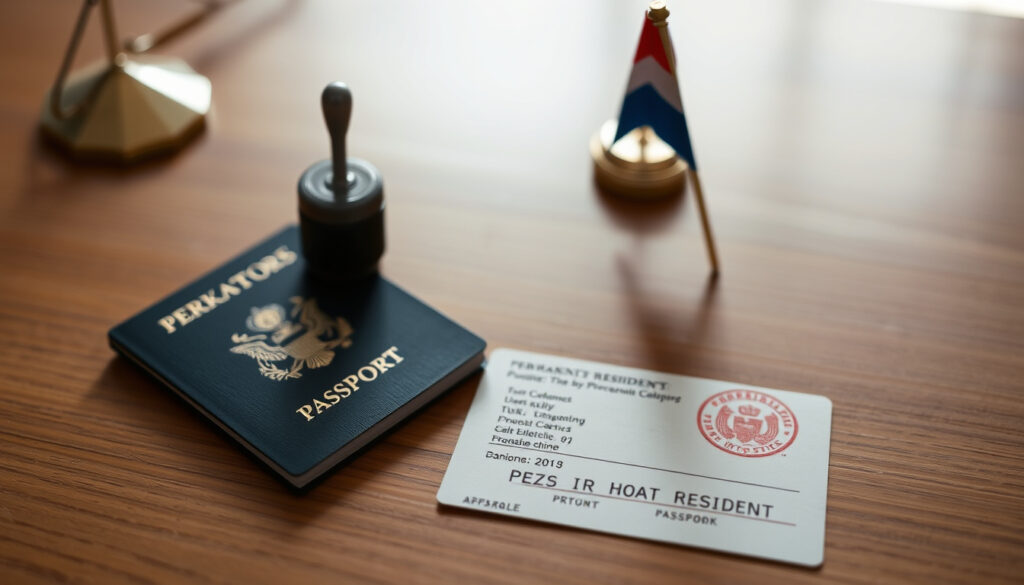
Permanent Resident: Definition, Rights, and How to Get Status
Few things feel as solid as knowing you can stay put. Permanent residency offers that certainty—the legal right to live and work in a country indefinitely, without being a citizen—and this guide walks through what it takes to get and keep that status in Ireland, with comparisons to the US and Australia.
Countries with permanent resident programs: over 50 ·
Typical residency requirement for permanence: 5 years ·
Annual US green card issuances: ~1 million ·
Australia permanent migrant intake 2024-2025: 185,000
Quick snapshot
- Permanent residency allows indefinite stay but not citizenship (Immigrant Council of Ireland (advocacy body))
- Ireland grants permanent residency after 5 years for EU citizens (Citizens Information (Irish government portal))
- Whether long absences from Ireland (over 12 months) automatically void Stamp 4 status (Immigration Service Delivery (official Irish immigration authority))
- Exact processing times vary widely (Immigration Service Delivery) (Immigration Service Delivery (official Irish immigration authority))
- Whether all employment permissions count equally toward the 60-month reckonable residence requirement (Berkeley Solicitors (immigration law firm))
- Whether the good character requirement has published criteria for assessment (Berkeley Solicitors) (Immigration Service Delivery (official Irish immigration authority))
- Ireland’s long-term residency page last updated June 2026 (Immigration Service Delivery)
- Application is paper‑based; no online portal yet (Immigration Service Delivery)
- After approval, confirmation of long-term residence on Stamp 4 (IAS Services (immigration advisory))
- Approval fee (€300 after approval) must be paid within 28 days (IAS Services) (IAS Services (immigration advisory))
Four key facts about permanent residency, one pattern: the rules are held together by residence time, employment condition, and the line between permission and citizenship.
| Attribute | Detail |
|---|---|
| Definition | A person with legal permission to reside indefinitely in a country of which they are not a citizen. |
| Renewal period (common) | Every 10 years (US Green Card), indefinite for Ireland Stamp 4 |
| Minimum residency requirement (Ireland) | 5 years continuous for EU citizens; 2 years for Critical Skills work permit holders |
| Leading source of information | Irish Immigration Service (immigration.service.delivery@justice.ie) |
| Processing method (Ireland) | Paper form submitted by post to Burgh Quay, Dublin 2 (Immigration Service Delivery) |
| Fee (Ireland) | €300 after approval, payable within 28 days (IAS Services) |
| Eligibility basis (Ireland) | Employed under work permit, work authorisation, or Critical Skills permit (Berkeley Solicitors) |
| Good character requirement | Yes – applicant must be of good character (Berkeley Solicitors) |
| Loss grounds | Criminal conviction, fraud, extended absence, abandonment (USCIS (US immigration agency)) |
The takeaway: permanent residency is a renewable permission, not a one‑time grant. The biggest variable is how much time you spend outside the country.
What does “permanent resident” mean?
Permanent resident versus citizen
A permanent resident is someone who holds the legal right to live and work indefinitely in a country of which they are not a citizen. Unlike citizens, permanent residents cannot vote in national elections and do not hold the country’s passport. The Immigrant Council of Ireland describes permanency as “permission to remain for five years with the right to work, study and live in Ireland, but without full citizenship.” That distinction is fundamental: you can stay, but you are still a foreign national for certain rights.
Citizenship is forever; permanent residency is a strong lease. An immigration authority can revoke it for serious reasons.
Common rights granted to permanent residents
- Access to public healthcare and education
- Right to work for any employer (once Stamp 4 is held)
- Protection under employment and social welfare laws
- Ability to sponsor certain family members for residence (varies by country)
These rights are substantial, but they stop short of full civic participation. For example, Citizens Information (Irish government portal) notes that non‑EEA nationals in Ireland can vote in local elections but not in national or European Parliament elections.
The pattern: permanent residency is the second‑best status a foreign national can hold. The only step up is naturalisation.
How long does permanent residency last?
Conditions that maintain permanent residency
Most countries grant permanent residency for an indefinite period but require periodic renewal. In the United States, a Green Card must be renewed every 10 years (USCIS). Ireland’s Stamp 4 permission does not require renewal in the same way—once granted as long‑term residency, it is valid for 5 years and can be extended. However, you must continue to meet the conditions: being of good character and not committing an offence that leads to deportation (Berkeley Solicitors).
Ireland’s official page says applicants need “evidence that they have been living and working in Ireland for the previous five years” (Immigration Service Delivery). That means any break in legal residence resets the clock.
When permanent residency can expire
- Extended absence from the country (e.g., more than 2 years for US Green Card holders; rules for Ireland are less defined)
- Abandonment of residence (moving abroad with no intention to return)
- Failure to renew or pay fees
- Revocation due to criminal activity or fraud
The USCIS warns that even a single trip abroad of more than one year may be considered abandonment. In Ireland, the lack of a published automatic‑void rule for Stamp 4 means each case is judged individually.
The catch: permanent residency lasts a lifetime only if you keep up with renewal, avoid long absences, and stay on the right side of the law.
Can you lose permanent residency?
Abandonment and revocation
Yes, and the grounds are broadly similar across countries. The most common reasons are voluntary abandonment (moving abroad) and failure to meet residency requirements. For US Green Card holders, USCIS explicitly lists “abandonment” via extended stay outside the US. Ireland’s Immigrant Council of Ireland notes that permanency is “permission to remain for five years” and implies that leaving for too long could jeopardise renewal.
Criminal grounds for losing status
- Serious criminal convictions: US law automatically removes green card for aggravated felonies (Immigration and Nationality Act (US legislation))
- Immigration fraud: lying on an application can lead to revocation in any country
- In Ireland, a criminal conviction does not automatically cancel Stamp 4, but it can lead to a deportation order (Immigration Act 1999 (Irish legislation))
The trade‑off: permanent residency is durable but not bulletproof. One serious mistake—or just being away too long—can cost you the status.
How to get permanent residency in Ireland
For EU citizens
EU/EEA citizens obtain the right of permanent residence automatically after five years of continuous legal residence in Ireland, as explained by Citizens Information. No application is required; the right is conferred by EU law. To evidence it, you can apply for a Permanent Residence Certificate from the Department of Justice.
For non-EU citizens (Critical Skills, Stamp 4)
The official long‑term residency route is for people legally resident in Ireland for at least 60 months as holders of eligible employment permissions (Immigration Service Delivery). Key eligibility conditions include:
- Being in gainful employment at the time of application (Berkeley Solicitors)
- Having up‑to‑date immigration permission
- Being of good character
- Only employment‑based permissions (work permit, work authorisation, Critical Skills) count as reckonable residence (Berkeley Solicitors)
Steps to apply:
- Download the long‑term residency application form from Immigration Service Delivery.
- Complete all sections of the form (paper‑based, no online option).
- Gather supporting documents: passport, current and past work permits, employment letters, tax records.
- Send the form and documents by post to: Long Term Residence Section, PO Box 12244, 13‑14 Burgh Quay, Dublin 2.
- Wait for an acknowledgement; processing times are not published but can take months.
- If approved, you receive a letter requiring a €300 fee, payable within 28 days (IAS Services).
- After payment, you are issued Stamp 4 permission for five years, renewable.
Ireland’s system calls it “long‑term residency” not “permanent residency”, but the practical effect is the same. The paper‑based process feels outdated, yet it remains the only route for non‑EU workers. For related guidance on settling in Ireland, see our guide on Clothing Stores in Ireland: Top Brands & Shopping Guide.
What is the 3-year residency rule in Ireland?
The “3‑year rule” is a specific provision that applies to non‑EEA parents of Irish citizen children. Under this rule, a parent who has been residing in Ireland for three years with a child who is an Irish citizen may apply for residence based on custody and dependency. It is not a general path to permanent residency. Citizens Information (Irish government portal) explains that the parent must show they are the primary carer and that the child’s citizenship was not obtained by fraud. This rule is distinct from the Stamp 4 long‑term residency route.
The takeaway: the 3‑year rule is a narrow exception, not a standard path. Most applicants will rely on the five‑year employment‑based route.
Confirmed facts vs. what remains unclear
Confirmed facts
- Permanent residency allows indefinite stay but not citizenship (Immigrant Council of Ireland)
- Ireland grants permanent residency after 5 years for EU citizens (Citizens Information)
- Critical Skills holders in Ireland can apply after 2 years (Immigration Service Delivery)
- US Green Cards must be renewed every 10 years and can be lost for criminal convictions (USCIS)
What’s unclear
- Whether long absences from Ireland (over 12 months) automatically void Stamp 4 status
- Exact processing times for permanent residency applications vary widely
- Whether all employment permissions count equally toward the 60-month reckonable residence requirement
- Whether the good character requirement has published criteria for assessment
“Long‑term residency is for people legally resident in Ireland for at least 60 months as holders of eligible employment permissions.”
— Immigration Service Delivery (official Irish immigration authority)
“After five years of legal residence in Ireland, EU citizens acquire the right of permanent residence automatically.”
— Citizens Information (Irish government portal)
Permanent residency is a powerful tool for building a life in a new country, but it comes with strings attached—renewal conditions, absence limits, and the risk of revocation. For anyone on an Irish employment permit, the message is clear: keep your permission current, don’t disappear for long stretches, and treat good character as a requirement, not a footnote. The Critical Skills route offers a fast track, but the paper‑based process demands patience. For US Green Card holders, the clock started the day you left home—absence of more than a year can trigger abandonment. In Australia, the four‑year path to citizenship means permanent residency is often a stepping stone, not a destination. For the Irish applicant, the choice is simple: start the five‑year timer today, or risk resetting it tomorrow.
total.law, nomadcredit.com, sgimmigrationservices.ie, ndtv.com, consiliojus.com, gyandhan.com, irishimmigration.ie, total.law, celinas.se
For a closer look at how these rules apply in Ireland, see the detailed breakdown of Irish permanent residency rules.
Frequently asked questions
What documents are needed for permanent residency application in Ireland?
You need your passport, current and previous work permits or employment permissions, employment letters, proof of residence (e.g., utility bills), tax records, and the completed application form. Immigration Service Delivery specifies that evidence of “living and working in Ireland for the previous five years” is mandatory.
Can international students apply for permanent residency in Ireland after study?
Not directly. Student (Stamp 2) time does not count toward the five‑year reckonable residence for long‑term residency, because it is not an employment‑based permission. After graduation, you would need a Critical Skills or general work permit, and then the clock starts from the date of that permit (Berkeley Solicitors).
Does permanent residency in Ireland expire if I move to another country?
Ireland does not have an automatic expiry rule for Stamp 4, but extended absence (e.g., more than 12 months) could be considered abandonment when you next apply for renewal. The Immigrant Council of Ireland advises keeping residence continuous to avoid risk.
Is Stamp 4 equivalent to permanent residence in Ireland?
Yes and no. Stamp 4 is the permission granted after approval of long‑term residency, but it is technically a permission to remain for five years, renewable. It is the closest equivalent to a permanent residence permit in Ireland. The Immigrant Council of Ireland calls it “permission to remain for five years with the right to work, study and live in Ireland.”
How long does it take to process a permanent residency application in Ireland?
The Immigration Service Delivery does not publish standard processing times. Practitioners report wait times of several months to over a year (Berkeley Solicitors).
Can permanent residents vote in national elections?
No. In Ireland, only Irish citizens can vote in national elections (Dáil and Seanad) and referendums. Permanent residents (non‑citizens) can vote in local elections if they are resident (Citizens Information).
More related posts
 Charli XCX Biography: Age, Ethnicity, and Personal Life
 Joe Burrow 2025: Contract, Net Worth, Girlfriend, Stats & Updates
 Nicholas Brendon Dies at 54: Cause of Death Finally Revealed
 Best Pyjama Sets for Women in Ireland
 Giorgia Meloni biography: religion, education, family, languages
 De Vere Latimer Estate – Location Facilities Reviews Guide
 Bellatrix Lestrange: Life, Love, Death – Harry Potter Explained
 Tracy Cortez: UFC Record, Relationships, Next Fight
